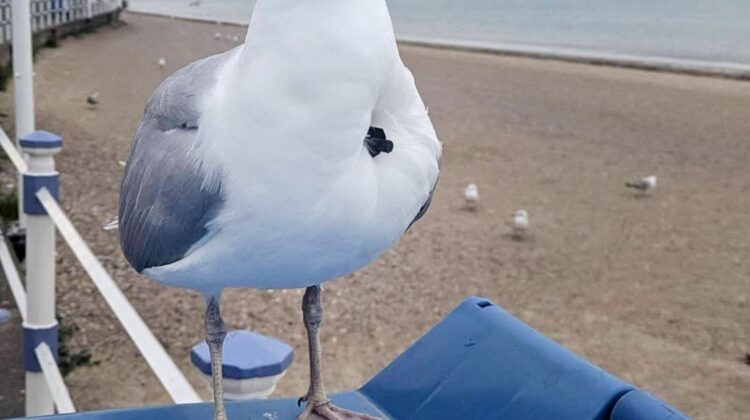
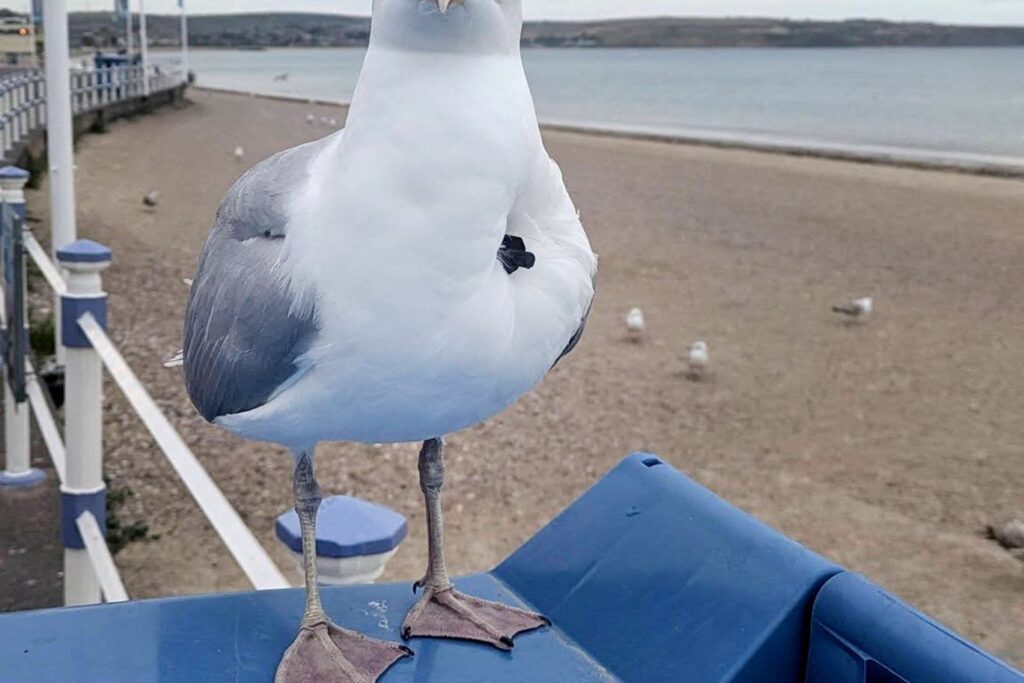
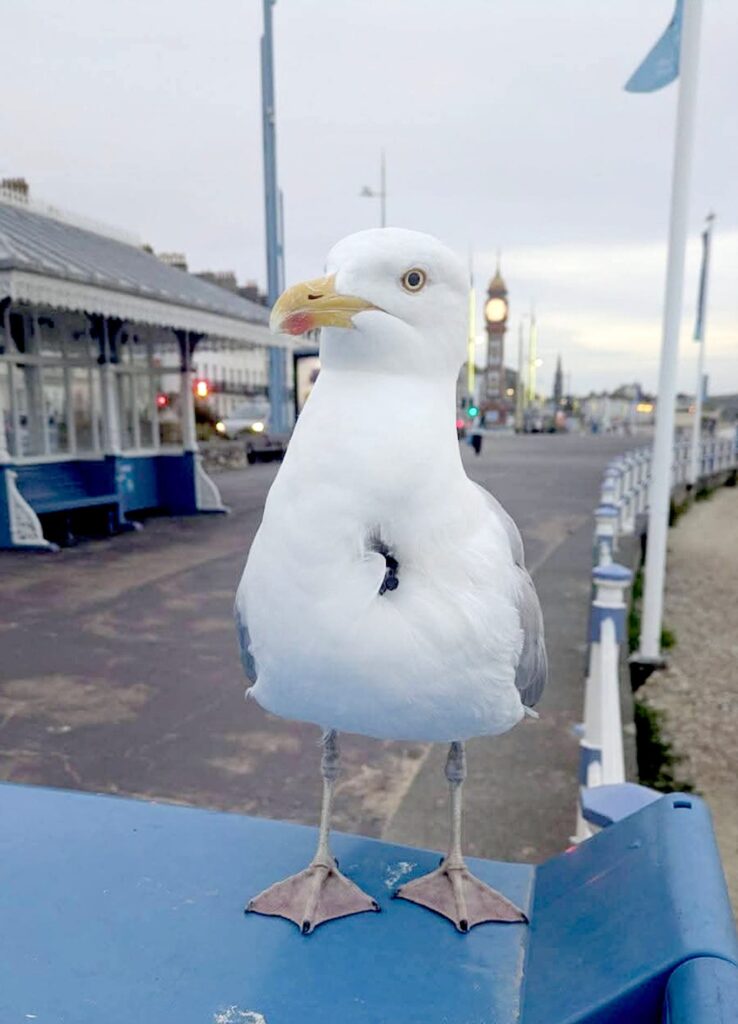
A seagull carrying a crossbow bolt lodged through its chest has shocked visitors to Weymouth Beach in Dorset, prompting renewed concern over deliberate attacks on wildlife.
The injured gull was spotted perched alone on a beach bin on Monday evening, where people quickly noticed a long projectile protruding from its body. Despite the severe-looking injury, the bird appeared alert and was still able to fly away when members of the public attempted to rescue it.
Witness Ellie Hooper said she initially thought the object sticking from the gull was a crossbow bolt. Although there was no visible blood, the sight left her deeply distressed. She searched for local wildlife rescue organizations but struggled to find help because it was late in the evening. The gull remained approachable for a short time before eventually flying off across the beach.
The discovery has sparked outrage online, particularly after several residents claimed the same bird had been seen with what appeared to be the identical injury nearly a year earlier. If true, the gull has somehow survived for months despite carrying the embedded bolt.
Local wildlife charity Animals in Need reportedly attempted to capture the bird during previous sightings but were unsuccessful. Because the gull remains free, rescuers continue to hope another opportunity will arise to safely examine and treat the injury.
The remarkable bird has even earned an unofficial nickname from locals—”Steven,” inspired by action star Steven Seagal—reflecting both its resilience and apparent ability to survive an extraordinary injury.
The incident has also renewed calls for stronger protection of wild birds. In the United Kingdom, all gull species receive legal protection under the Wildlife and Countryside Act 1981. Intentionally injuring or killing a gull is a criminal offence that can result in substantial fines or imprisonment.
Animal welfare advocates say the case highlights a wider problem. The RSPCA has repeatedly warned that gulls are among Britain’s most persecuted wild birds, despite playing important ecological roles along the country’s coasts. The charity reports receiving regular complaints involving deliberate cruelty toward gulls, ranging from physical attacks to poisoning and other forms of abuse.
Wildlife experts urge anyone who encounters an injured wild bird not to chase or handle it unless it can be done safely. Instead, they recommend contacting licensed wildlife rescue organizations, which have the training and equipment needed to capture and treat injured animals while minimizing additional stress.
While this resilient gull has managed to survive against the odds, conservationists hope it can eventually be rescued before its remarkable endurance finally runs out.
Cases like this highlight the growing importance of animal welfare laws, veterinary care, and responsible pet ownership in protecting vulnerable animals from cruelty. Experts say that reporting suspected abuse, supporting licensed animal rescue organizations, and ensuring access to professional veterinary treatment can make a life-saving difference. As more cases are uncovered through security cameras and public awareness, investments in pet insurance, veterinary services, animal protection programs, and wildlife conservation initiatives continue to play a vital role in improving animal welfare and holding offenders accountable. Every rescued animal is a reminder that compassion, education, and stronger legal protections are essential to building a safer future for both domestic pets and wildlife.
Leave a Reply