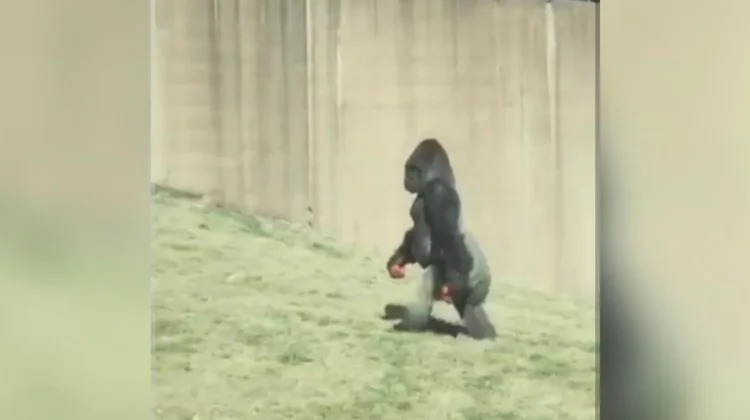
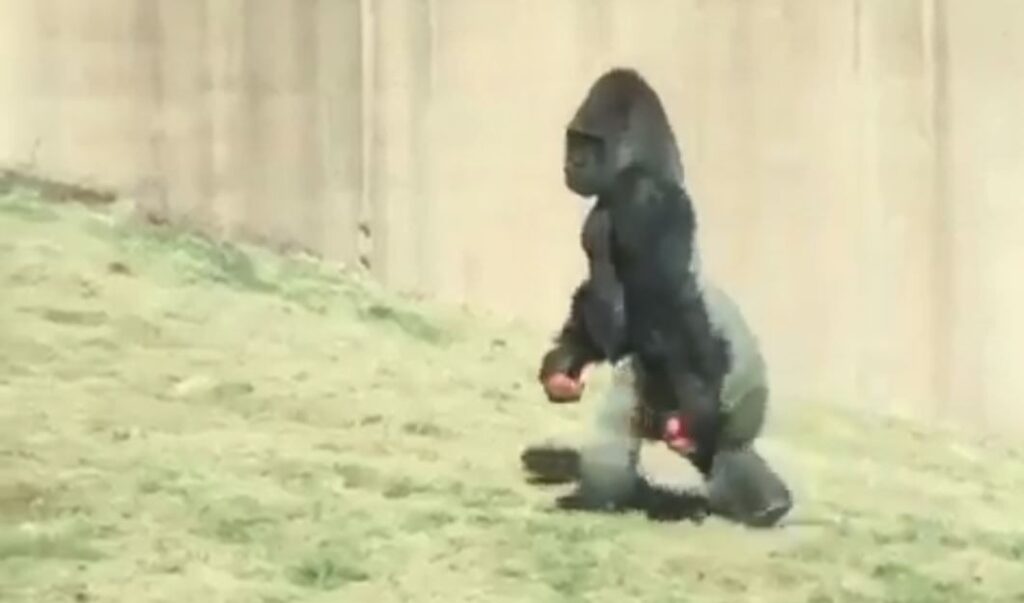
Ambam, a remarkable silverback gorilla at Port Lympne Wild Animal Park in Kent, England, has taken the internet by storm with his human-like ability to walk upright on two legs. Weighing an impressive 34 stone (476 pounds) and standing over six feet tall, Ambam’s unique skill has left scientists, visitors, and wildlife enthusiasts in awe.
How Did Ambam Learn to Walk on Two Legs?
Unlike most gorillas, which primarily rely on knuckle-walking, Ambam taught himself to balance and walk upright. According to experts at Port Lympne, he developed this ability without any formal training, possibly by observing and mimicking his zookeepers.
His curiosity, intelligence, and keen observational skills have allowed him to refine this behavior, setting him apart from other gorillas. While some gorillas may stand or walk short distances on two legs, Ambam has perfected this skill to an astonishing degree.
Why Is Ambam’s Behavior So Unique?
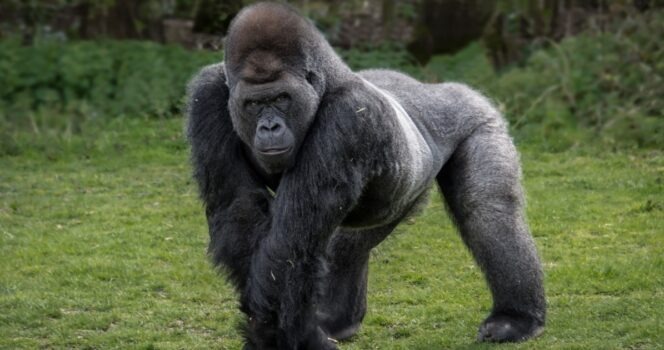
Gorillas are known for their high intelligence and problem-solving abilities, but walking upright is rarely seen in the wild. Unlike humans, gorillas have shorter legs and longer arms, making it difficult to maintain balance while walking bipedally.
Ambam’s ability to do so consistently has sparked discussions among primatologists and animal behavior experts, who believe this could provide insights into the evolutionary development of bipedalism in humans.
Where to See Gorillas Like Ambam in the Wild
For wildlife enthusiasts who want to go beyond zoo encounters, several African destinations offer the chance to observe wild gorilla populations in their natural habitat:
- Volcanoes National Park, Rwanda – Home to mountain gorillas and considered one of the most accessible gorilla trekking destinations, with permits managed by the Rwanda Development Board.
- Bwindi Impenetrable Forest, Uganda – Shelters roughly half of the world’s remaining mountain gorilla population across dense rainforest terrain.
- Virunga National Park, DR Congo – Africa’s oldest national park, home to both mountain and eastern lowland gorillas, though travel advisories should be checked before planning a visit.
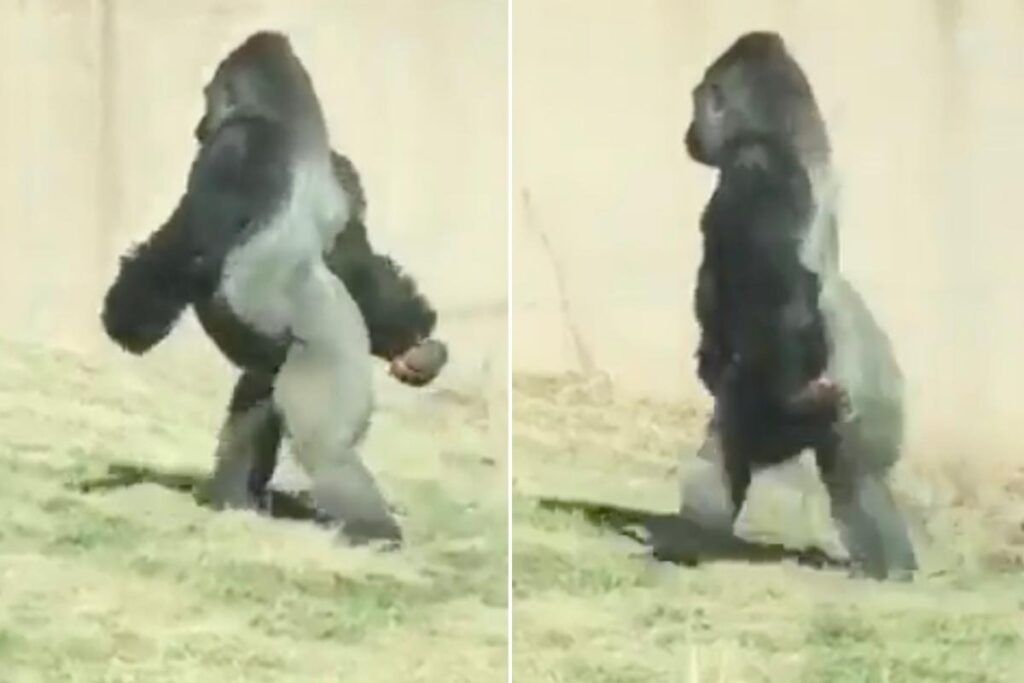
Watching gorillas in the wild offers a very different experience from a zoo setting — troops move, forage, and interact across a much wider territory, and guides can often point out individual behaviors similar to Ambam’s upright stance.
Photographing Wild Gorillas: What You’ll Need
Capturing sharp images of gorillas — whether at a wildlife park or on a trek — is challenging because of low light in forest canopies and strict distance rules designed to protect the animals. A few practical considerations for anyone planning to photograph primates:
- A telephoto zoom lens (roughly 100–400mm) lets you fill the frame without approaching too closely.
- A camera with strong low-light/high-ISO performance helps in the dim conditions typical of forest habitats.
- Image stabilization matters more than usual, since tripods are often impractical on a trek.
Even a well-chosen mid-range zoom lens can make a significant difference in image quality compared to a standard kit lens.
A Conservation Icon: Raising Awareness for Gorillas
Beyond being an internet sensation, Ambam serves as an ambassador for gorilla conservation. Port Lympne Wild Animal Park plays a crucial role in protecting endangered species, including western lowland gorillas, which face threats such as deforestation, poaching, and habitat destruction.
By highlighting Ambam’s intelligence and unique behavior, his story draws global attention to the urgent need for wildlife conservation efforts. Organizations such as the Gorilla Organization and the Dian Fossey Gorilla Fund continue to support anti-poaching patrols, habitat protection, and community education programs across gorilla range countries.
Experience Ambam’s Incredible Walking Skills in Person
For those visiting Port Lympne Reserve, witnessing Ambam’s upright walk is an unforgettable experience. His confident stride often astonishes visitors, reinforcing the deep connection between humans and great apes.
Ambam’s remarkable ability to walk on two legs not only showcases the intelligence and adaptability of gorillas but also serves as a powerful reminder of why we must protect these magnificent creatures for future generations.
Frequently Asked Questions
Does Ambam walk upright all the time? No. Ambam walks upright periodically, often when carrying food or navigating his enclosure, but like other gorillas he still knuckle-walks for most locomotion.
Is it normal for gorillas to walk on two legs? Occasional short bipedal movement is seen in wild gorillas, usually to see over vegetation or carry something, but sustained upright walking like Ambam’s is considered unusual.
Where can I see Ambam today? Ambam remains at Port Lympne Wild Animal Park in Kent, England, one of two wildlife parks run by the Aspinall Foundation.
Can gorillas’ upright walking tell us anything about human evolution? Researchers studying bipedalism sometimes reference great ape behavior like Ambam’s as a data point for how balance and gait may have evolved, though gorillas and early hominins diverged millions of years ago and aren’t a direct model for human walking.
Leave a Reply