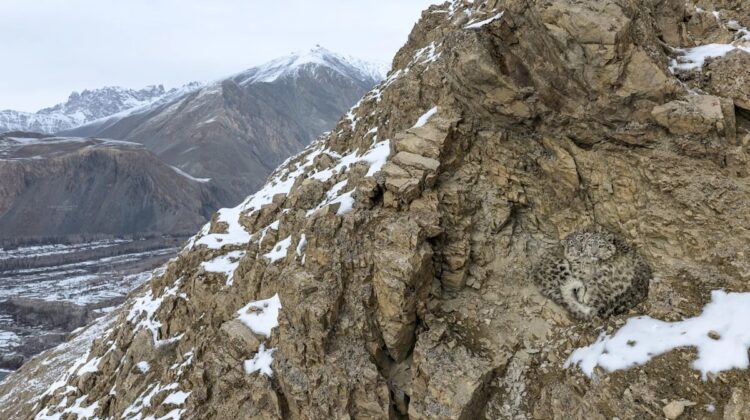
At first, it looks like a rocky Himalayan mountainside. Look again, on the right.
The Photo
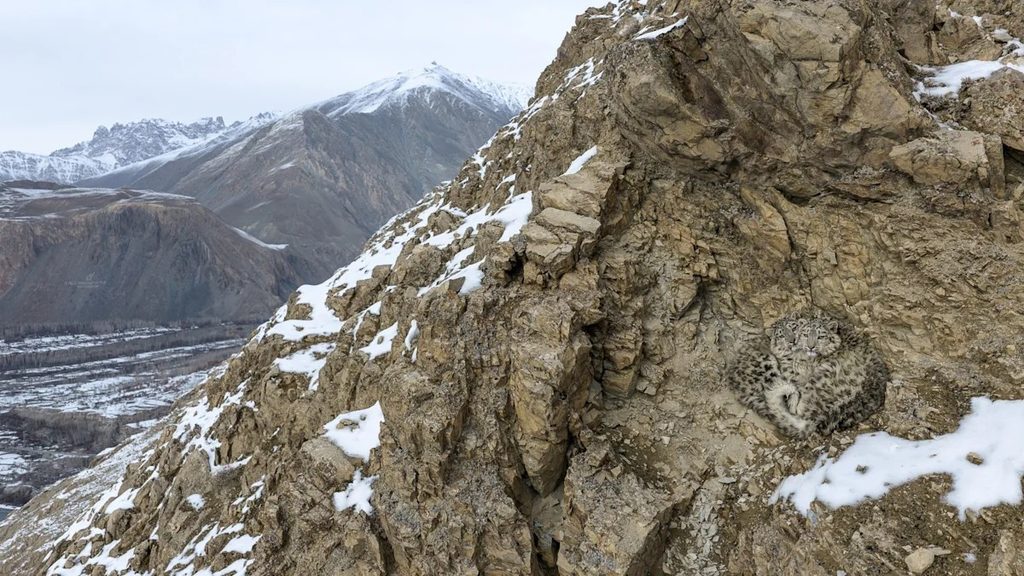
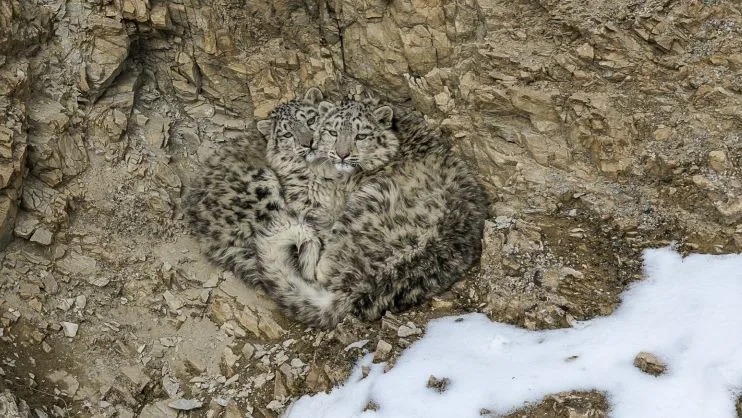
The image, titled Hidden in Plain Sight, shows a craggy rock face, snow-dusted peaks and a deep valley. But on a ledge at the right-hand side, two snow leopard cubs are curled up together, their gray spotted coats merging almost perfectly with the stone.
It was taken near Ghalapan village in Gilgit-Baltistan, northern Pakistan, by wildlife photographer and filmmaker Awais Ali Sheikh. The picture has just won the Pure Nature – Land category of the OurNature Environmental Photo & Video Award.
Sheikh says the cubs are almost invisible at first glance. “Only after a few moments does the mountain reveal its secret,” he explains.
Why Snow Leopards Are the “Ghosts of the Mountains”
Snow leopards live high in the remote mountain ranges of Central and South Asia, and their camouflage is so effective that they’re often called the “ghosts of the mountains.” Seeing even one is rare, and seeing two cubs together is rarer still. Female snow leopards typically have between one and five cubs per litter, according to WWF, and the cubs begin following their mother out of the den at about three months old.
The species is listed as vulnerable by the International Union for Conservation of Nature. The United Nations Environment Programme says it is threatened by poaching, habitat fragmentation, loss of prey and climate change.
A Photographer’s Choice to Pull Back
Sheikh was born and raised in Pakistan, is now based in Portugal and has a lifelong passion for snow leopards and other wild mammals. His work has appeared in National Geographic, with WWF and other conservation groups.
Faced with such an elusive subject, many photographers would have zoomed in to fill the frame. Sheikh did the opposite. He pulled back and showed the cubs as a tiny part of a vast landscape, which draws viewers into the challenge of spotting them and makes the picture feel like a moment of discovery.
How the Shot Was Made
He used a DJI Mavic 4 Pro drone with its main Hasselblad camera, which has a 28mm-equivalent field of view. Settings were manual: 1/640 second at f/2.8 and ISO 100. He took the picture in the depths of the Himalayan winter, about 3,000 meters above sea level. The camera was held nearly level, so the picture feels like a view from a neighboring ridge instead of a typical overhead drone shot.
About the Award
The OurNature Environmental Photo & Video Award is an annual competition that showcases inspiring nature and environmental photography from around the world.
Dreaming of Wildlife Photography or Himalayan Travel?
If this image inspires you to explore nature or take your own wildlife photos, here are some options to compare:
- Cameras and drones. Look at wildlife photography cameras, telephoto lenses and camera drones.
- Learning. Explore online photography courses, wildlife filmmaking workshops and nature photography books.
- Travel. Browse Pakistan trekking tours, Himalayan adventure travel and wildlife safari packages.
- Protection. Review travel insurance, high-altitude trekking insurance and photography equipment insurance.
- Support conservation. Consider snow leopard conservation donations and wildlife adoption programs.
Frequently Asked Questions
Who took the photo? Awais Ali Sheikh, a wildlife photographer and filmmaker from Pakistan who is now based in Portugal.
Where was it taken? Near Ghalapan village in Gilgit-Baltistan, northern Pakistan, about 3,000 meters above sea level.
What award did it win? The Pure Nature – Land category of the OurNature Environmental Photo & Video Award.
How was it shot? With a DJI Mavic 4 Pro drone and its Hasselblad camera, using manual settings of 1/640 second, f/2.8 and ISO 100.
Why are snow leopards hard to see? Their spotted gray coats blend into the rocks of their mountain habitat, which is why they’re known as “ghosts of the mountains.”
Sources: Digital Camera World, Refocus Awards, Live Science, WRAL, and CNN, all covering Awais Ali Sheikh’s award-winning drone photo “Hidden in Plain Sight,” his work photographing snow leopards in Gilgit-Baltistan, and the conservation status of the species.
Leave a Reply