
Recent studies have unveiled a chilling reality: the heart of our oceans, the Atlantic Meridional Overturning Circulation (AMOC), is faltering. This pivotal system, akin to the circulatory system in our bodies, could be on the brink of collapse, with dire consequences for life as we know it. The ramifications of such an event, as projected by scientists, could rewrite the climate narrative, plunging us into an era of unprecedented turmoil.
A study by Utrecht University, published in the prestigious journal Science Advances, has painted a bleak picture. It suggests that the AMOC might cease functioning by the year 2100. This revelation sends shivers down the spine, conjuring images reminiscent of the catastrophic freeze portrayed in the 2004 blockbuster “The Day After Tomorrow.” While such a scenario may not play out exactly like Hollywood fiction, the ramifications are no less terrifying. A breakdown of the AMOC could plunge temperatures in the Northern Hemisphere by a staggering 40 degrees Fahrenheit or more, spelling disaster for life on Earth.

However, a Danish sibling duo has thrown another sobering prediction into the mix. According to their research, published in Nature Communications, the AMOC could grind to a halt as early as 2025, although they suggest a more plausible timeframe somewhere in the middle of the century. This controversial study sparked widespread debate and scrutiny, yet it underscores the urgency of the situation.
At the heart of this unfolding crisis lies the AMOC, a crucial component of the Ocean Conveyor, a global circulation system regulating temperatures across the planet. This intricate mechanism, ten times more powerful than all the world’s rivers combined, orchestrates the movement of warm and cold waters between hemispheres, sculpting the climates we inhabit. Central to this system is the Greenland Pump, a metaphorical heartbeat that propels the circulation forward.
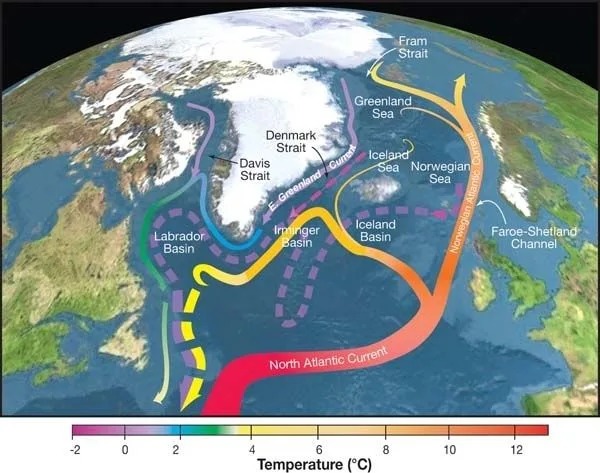
Yet, this once robust system is showing signs of fatigue. Climate change, driven by human activities, is pushing Greenland towards warmer temperatures, disrupting the delicate balance of the AMOC. As Greenland’s ice melts at an alarming rate, fresh, cold water inundates the salty currents, weakening the pump’s force. Should this trend persist and reach a tipping point, the consequences would be catastrophic.
The historical record, gleaned from ice cores drilled deep into Greenland’s icy terrain, serves as a sobering reminder of the AMOC’s volatility. These cores unveil a narrative of past collapses and subsequent climate upheavals, underscoring the gravity of our current predicament. The work of Susanne and Peter Ditlevsen, honing in on the mathematical underpinnings of tipping points, offers a stark warning. Their model suggests that the tipping point may be closer than previously thought, urging swift and decisive action.

In the face of uncertainty, the urgency of the situation cannot be overstated. Climate models, while invaluable tools, can only offer projections limited by available data. Waiting for absolute certainty is a luxury we can ill afford. Susanne Ditlevsen’s call to action reverberates with urgency: we must act decisively to curb fossil fuel usage and greenhouse gas emissions if we are to avert disaster.
The stakes are high, and the window of opportunity is closing. The slowing pulse of the AMOC serves as a harbinger of impending crisis. The time to act is now, for the engine that drives our oceans is faltering, and the consequences of inaction are too grave to contemplate.
Leave a Reply