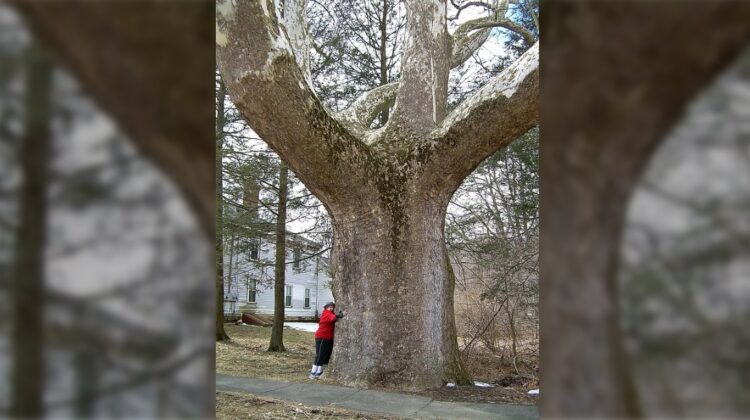
On a quiet residential stretch of North Main Street in Sunderland, Massachusetts, stands a tree so large that first-time visitors often assume they’ve taken a wrong turn and ended up somewhere else. The Buttonball Tree, an American sycamore, has been growing on this spot since before the United States existed as a country — and it’s still expanding today.
The Numbers Behind the Legend
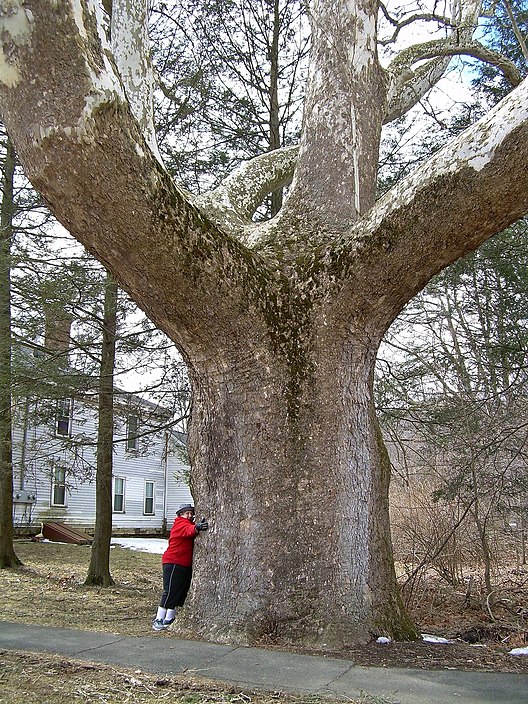
The tree’s dimensions alone explain why it draws visitors from well outside Massachusetts. It stands over 113 feet tall, with a canopy spread of roughly 140 feet — wide enough to shade much of the surrounding street. Its trunk measures around 24 to 25 feet in circumference, making it, by most measurements, the largest tree of its kind in the state, and one of the largest sycamores anywhere on the East Coast.
Its exact age isn’t known with certainty, since the tree predates any written record of its planting. Arborists generally estimate it at somewhere between 350 and 400 years old, based on growth-rate calculations tied to its trunk diameter — meaning it likely took root sometime in the mid-1600s, decades before Sunderland was even formally settled.
A Tree Older Than the Country Around It
A stone plaque set in front of the tree in 1987 — placed jointly by the National Arborist Association and the International Society of Arboriculture — commemorates its remarkable age with a simple inscription:
“1787 THE NATIONAL 1987 ARBORIST ASSOCIATION AND THE INTERNATIONAL SOCIETY OF ARBORICULTURE JOINTLY RECOGNIZE THIS SIGNIFICANT TREE IN THIS BICENTENNIAL YEAR AS HAVING LIVED HERE AT THE TIME OF THE SIGNING OF OUR CONSTITUTION.”
In other words: this tree was already well over a century old when delegates were signing the U.S. Constitution in 1787. It has stood through the entire span of American independence, plus generations of colonial history before it.
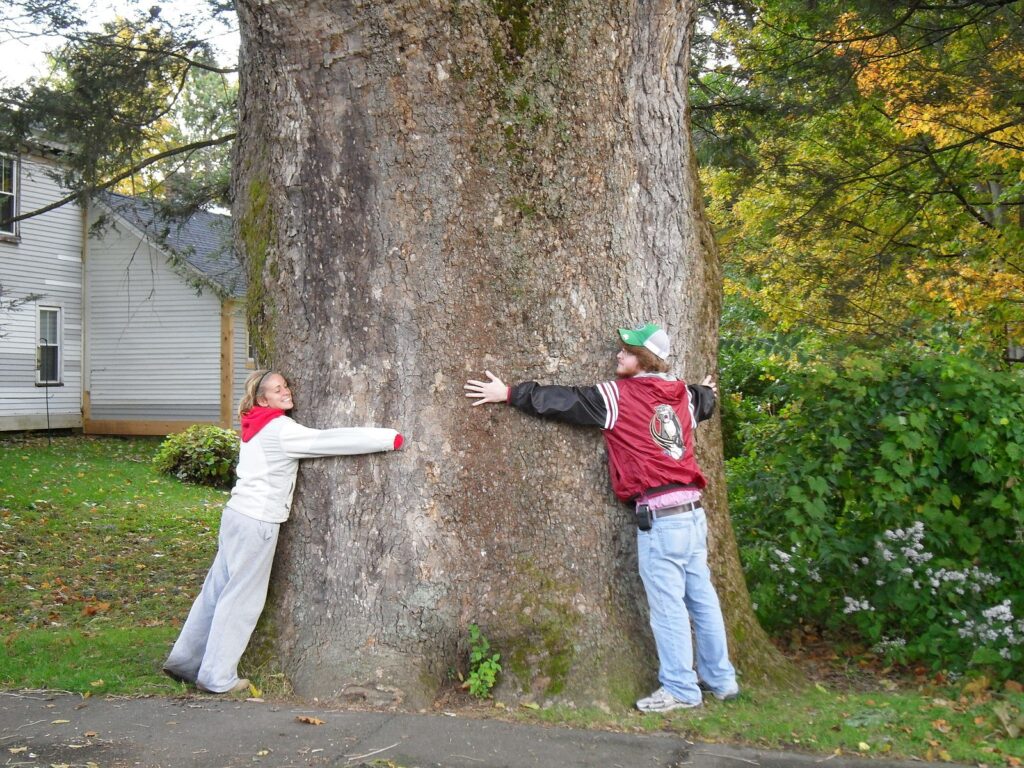
Locals have long claimed the Buttonball Tree is “the widest tree this side of the Mississippi” — a title that, while not strictly verified against every large tree on the East Coast, has stuck as part of the town’s identity regardless.
Why It’s Called the “Buttonball” Tree
The name comes from the tree’s small, round seed pods, which dangle from its branches like ornaments and were historically called “buttonballs” by early settlers. It’s a nickname shared by American sycamores generally, but in Sunderland, the name has become inseparable from this one specific tree, thanks to its size and fame.
Sycamores were also historically planted near the doorways of newlyweds’ homes in the 17th and 18th centuries, earning them the folk nickname “bride and groom trees” — a tradition tied to the species’ reputation for longevity, something the Buttonball Tree has proven many times over.
A Living Piece of Local Heritage
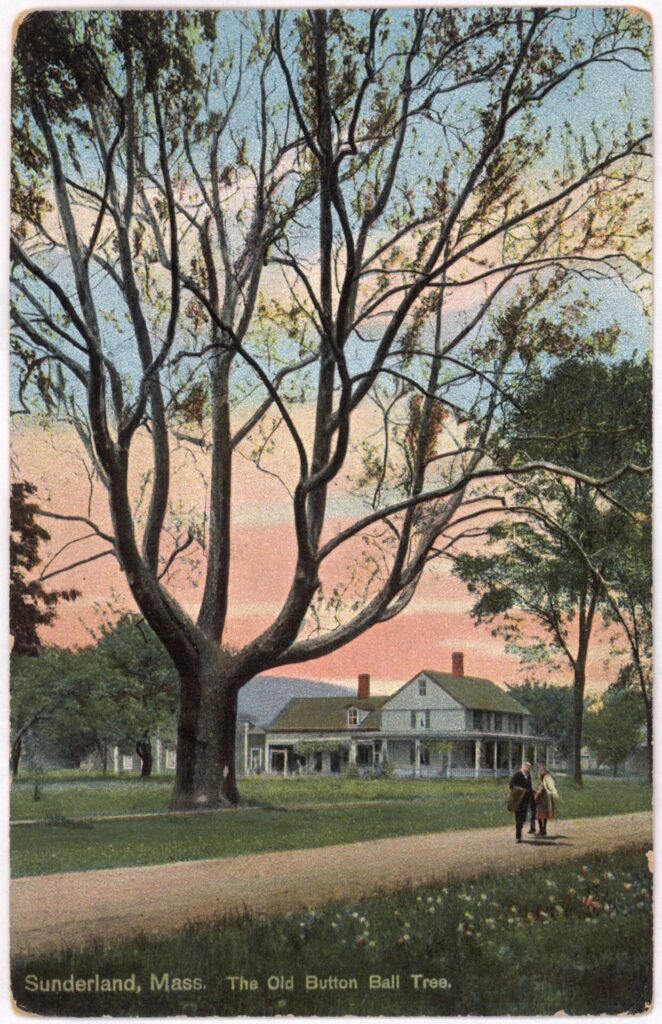
Today, the tree stands in what’s become a residential neighborhood, its roots and canopy having long outlasted the forest it once belonged to. It remains a popular stop for visitors exploring the Pioneer Valley, and continues to grow — its trunk still expanding year over year, according to arborists who’ve measured it over the past few decades.

Frequently Asked Questions
How old is the Buttonball Tree exactly? Its exact planting date is unknown, but arborists estimate it’s between 350 and 400 years old, based on trunk-diameter growth calculations.
Where is the Buttonball Tree located? On North Main Street in Sunderland, Massachusetts, in Franklin County.
Is it really the widest tree in the eastern United States? That’s a long-standing local claim rather than a formally verified record — other large trees on the East Coast have comparable or larger measurements — but it remains the largest sycamore in Massachusetts.
Why is it called the “Buttonball” Tree? American sycamores produce small, round seed pods nicknamed “buttonballs.” While the name applies to the species generally, it became permanently attached to this specific tree because of its fame and size.
Sources consulted: Wikipedia (Buttonball Tree), Atlas Obscura, Monumentaltrees.com, and Gathering Growth’s Trees of Significance registry.
Leave a Reply