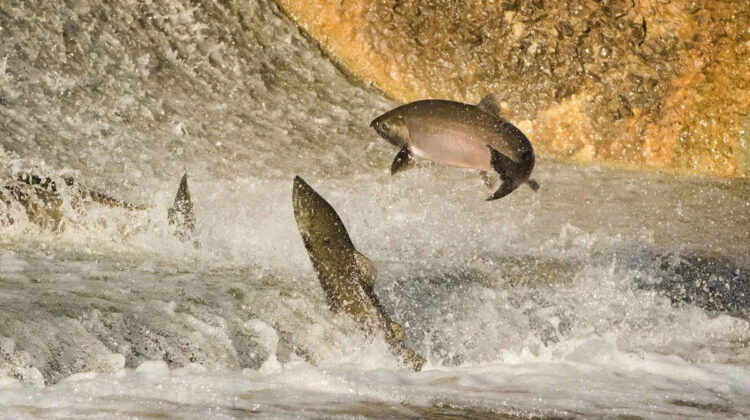
Two dams were torn down on Washington’s Elwha River to bring back salmon, and 15 years after demolition began, the results are a mix of triumph and unfinished business. The fish have returned, but most still don’t travel to the cold upper river where scientists hoped they would spawn. Now people are preparing to carry them there.
A 2024 study in Frontiers in Ecology and Evolution found that adult Chinook salmon returns to the Elwha averaged 2,827 a year before the dams came out and 4,734 a year from 2015 to 2020. Young wild Chinook heading to sea averaged about 43,800 a year before dam removal and about 324,000 a year afterward, peaking at almost 1 million in 2020. The authors wrote that it is too early to call the Chinook run recovered, and most of the fish still come from a hatchery.
Why Two Dams Blocked Salmon for a Century
According to the Seattle Times, neither dam had fish passage. Elwha Dam stood 108 feet tall just 5 miles from the river mouth, and the 210-foot Glines Canyon Dam followed 8 miles upriver in 1927. The dams also trapped the sediment and wood that build spawning beds, side channels and pools. Olympic National Park says that together they kept salmon out of more than 90% of the river for over 100 years.
The blocked water included every snowmelt-fed stretch of the basin, according to a January 2026 report from the Lower Elwha Klallam Tribe and the Washington Department of Fish and Wildlife. Those uppermost reaches run cold, and getting there means climbing nearly 4 miles of chutes and falls in the Grand Canyon of the Elwha. The river’s original Chinook could make that climb. They were the biggest in Puget Sound, and some weighed more than 100 pounds.
Demolition began in fall 2011. Elwha Dam was gone by spring 2012, and Glines Canyon Dam was out by August 26, 2014. Then a rockfall blocked the canyon, and it took blasting in 2015 and 2016 to open it again. When the Seattle Times reported on it in 2020, the $325 million project was the largest dam takedown in the world, and it sent enough trapped sediment downstream to fill nearly 2 million dump trucks. The 2024 study found that wild young Chinook stayed scarce until three years after adult passage reopened, which suggests the sediment’s effects downstream had eased by then.
Surprises, Celebrations and Setbacks
The biggest surprise was the summer steelhead. Surveys before dam removal counted none, the Seattle Times reported. In 2019, snorkel surveyors counted 318 adults above the former dam sites, and fewer than 1% of the summer steelhead counted from 2017 to 2020 were hatchery fish. Genetic analysis matched the new arrivals to wild rainbow trout from the upper watershed, which had been locked behind the dams. Steelhead are rainbow trout that go to sea. “This is as close to Lazarus as you can get,” John McMillan, then the steelhead science director for Trout Unlimited, told the Seattle Times in 2020.
Coho had made the strongest comeback by 2023. That October, the Lower Elwha Klallam Tribe held its first fishery on a free-flowing Elwha in more than a century, a limited coho catch for tribal and subsistence use. “It’s been a long time coming,” Russell Hepfer, then the tribe’s vice chairman, said at a ceremony attended by more than 100 people. Tribal fishers harvested 177 coho that month, according to Olympic National Park. Pink salmon are also up, with surveyors counting 11,607 in 2025, the most since the dams came out.
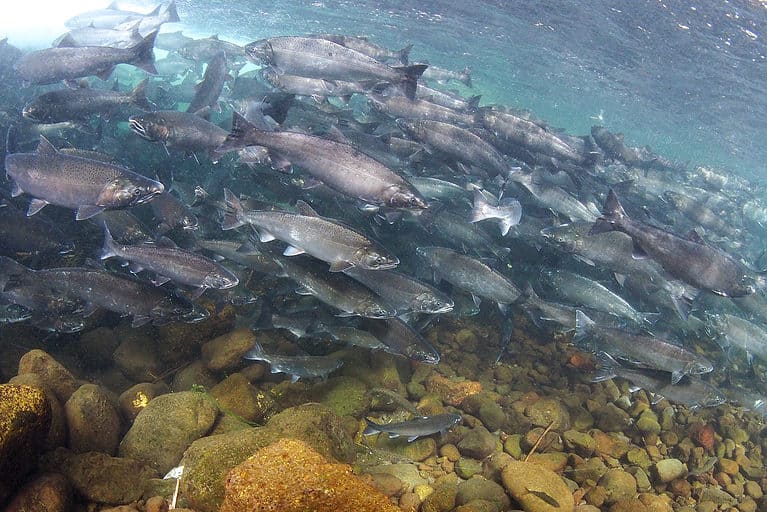
Chinook, however, are struggling to reach the top of the river. In 2025, only 8% of Chinook nests were in the upper river, the tribe and state report found. Eleven years after passage opened, Chinook use only 35% of their potential habitat, and a recently formed barrier in Rica Canyon stands in the way. Hatchery fish made up 94% to 97% of natural spawners from 2014 to 2019 and 82% to 85% from 2020 to 2024. Scientists suggested in 2020 that hatchery origin could be one reason the fish don’t travel farther upriver.
Frequently Asked Questions
Did removing the Elwha River dams bring salmon back? Yes, in part. Adult Chinook returns rose from an average of 2,827 a year to 4,734 a year from 2015 to 2020, and coho, pink salmon and summer steelhead have all returned. Researchers say it is too early to call the Chinook run recovered, since most of those fish still come from a hatchery.
Why are so few Chinook reaching the upper river? In 2025, only 8% of Chinook nests were in the upper river. A recently formed barrier in Rica Canyon blocks the way, and scientists have suggested hatchery origin may be another reason. People are now preparing to carry the fish upriver.
Which fish surprised scientists after the dams came down? Summer steelhead. None were counted before dam removal, but in 2019 surveyors counted 318 adults above the former dam sites. Genetic tests matched them to wild rainbow trout that had been trapped behind the dams.