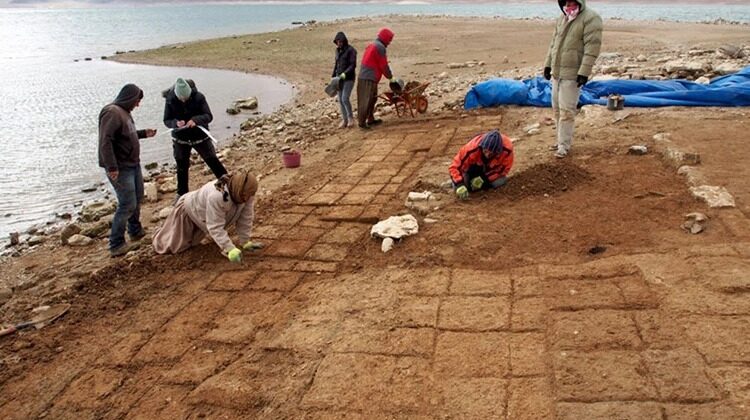
Some of the first civilizations were born thousands of years ago along the banks of the Tigris and Euphrates rivers. The rivers carved out the Fertile Crescent, a land of prosperous trade routes, abundant farmland, and great towns. These antiquated Mesopotamian remains may still be seen today in Iraq, Iran, and other Near Eastern countries. A severe drought is currently affecting these areas, especially as climate change causes local temperatures to rise. The Tigris River’s receding waters in Iraq have uncovered the past and unearthed a 3,400-year-old palace complex from the Mittani Empire.
A significant civilisation in northern Mesopotamia was the Mitanni Empire. From 1500 until around 1360 BCE, they ruled the area before succumbing to the Hittite Empire and eventually the Assyrians. Mitanni were strong competitors. They created huge palaces, spoke with Egyptian pharaohs, and wrote on cuneiform tablets. Zakhiku was the name of an ancient city on the banks of the Tigris.
This city may have reappeared. In order to build a reservoir and provide energy and emergency supplies to Iraqi communities located downstream, the Tigris was dammed in the 1980s. The old palace remains, which had been abandoned for a while, were submerged by the water of the Mosul Dam region. On sometimes, water use causes the reservoir to drop, revealing the ruins once more. Researchers were able to capture images of the majestic palace there in 2018 thanks to a brief exposure. Archaeologists realized they had to act quickly when a drought in January and February 2022 reduced the water level in the reservoir once again.
With emergency funding from the Fritz Thyssen Foundation and in collaboration with the Directorate of Antiquities and Heritage in Duhok, Kurdish archaeologist Dr. Hasan Ahmed Qasim, chairman of the Kurdistan Archaeology Organization, and German archaeologists Dr. Ivana Puljiz (University of Freiburg) and Dr. Peter Pfälzner (University of Tübingen) hurried to the site.
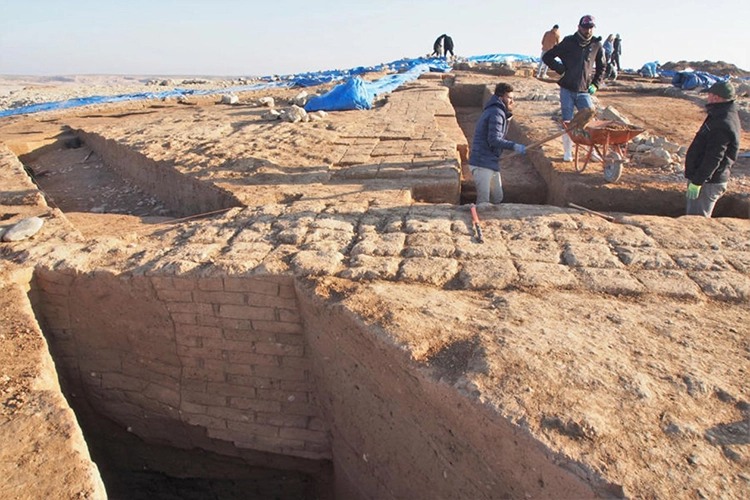
The Kemune location was rapidly mapped by the researchers. They uncovered an enormous industrial complex, a multi-story storage facility, and a fortress with walls and towers. According to Dr. Puljiz in a statement, “The massive magazine structure is of particular interest since enormous quantities of items must have been stored in it, perhaps imported from all over the region.” “The excavation results reveal that the location was an important hub in the Mittani Empire,” Dr. Qasim continued.
The researchers noticed that the ruins were extraordinarily well-preserved. They were able to last 40 years largely underwater because they were made of baked mud brick. Even unfired clay tablets with cuneiform writing have been found in clay containers. Some of them are still housed in the clay envelopes they would have been shipped in. Since the tablets are Middle Assyrian, they were created after the city had been substantially destroyed by an earthquake in 1350 BCE. They might provide further information on the regional power transition between succeeding empires.
As the reservoir is being refilled, the water level has already increased and the city is once again flooded. Thankfully, the excavation sites could be sealed up with gravel fill and tight plastic to safeguard the findings. The 3,400-year-old metropolis has played a significant role in both Iraqi and global history. Its recurrences might continue to further academic understanding of the location and the Mittani Empire.
The Tigris River’s receding waters in Iraq have unveiled the past, exposing a 3,400-year-old palace complex from the Mittani Empire.
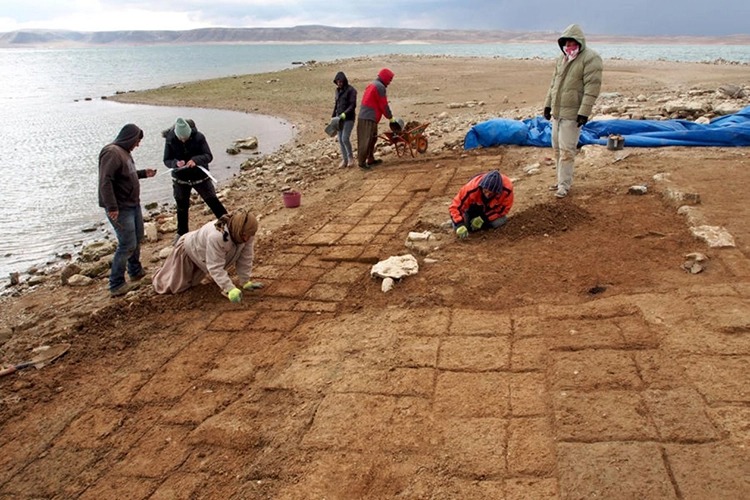
An important regional force in ancient Mesopotamia was the Mittani Empire.
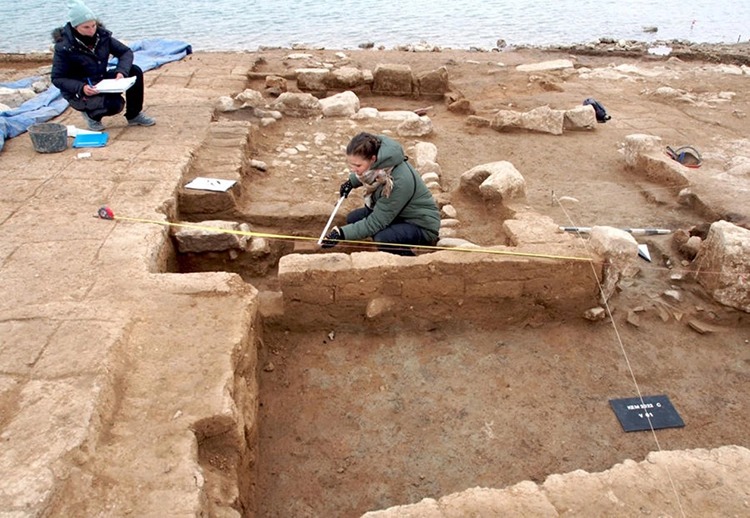
A palace, storage facilities, and even cuneiform writing were discovered by the crew.
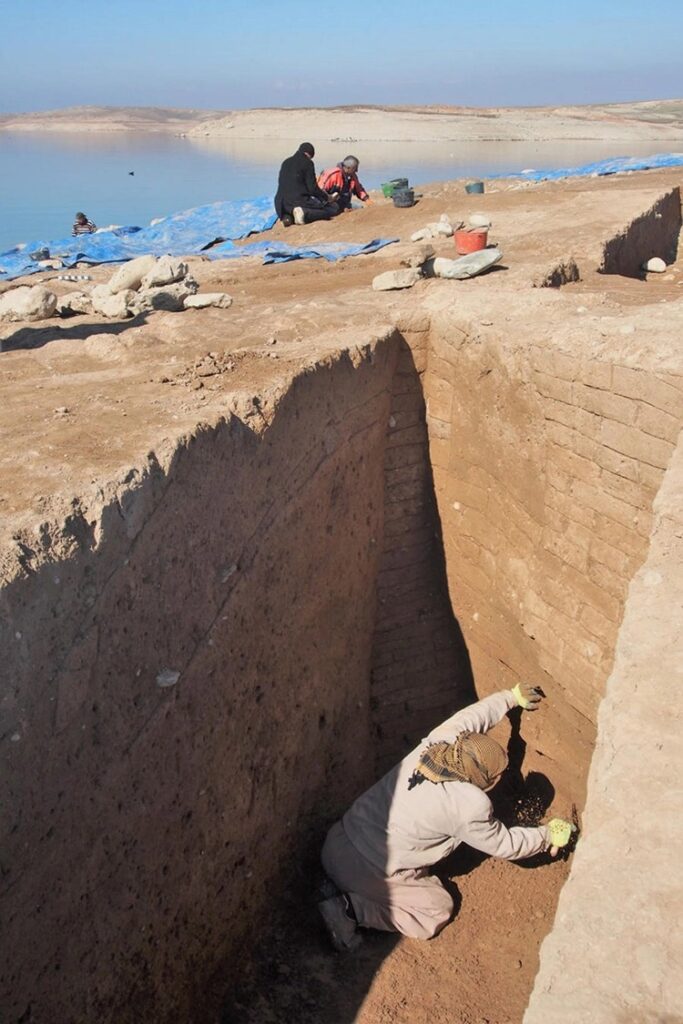
Despite the city being submerged once more, the researchers secured the sections they had dug out.
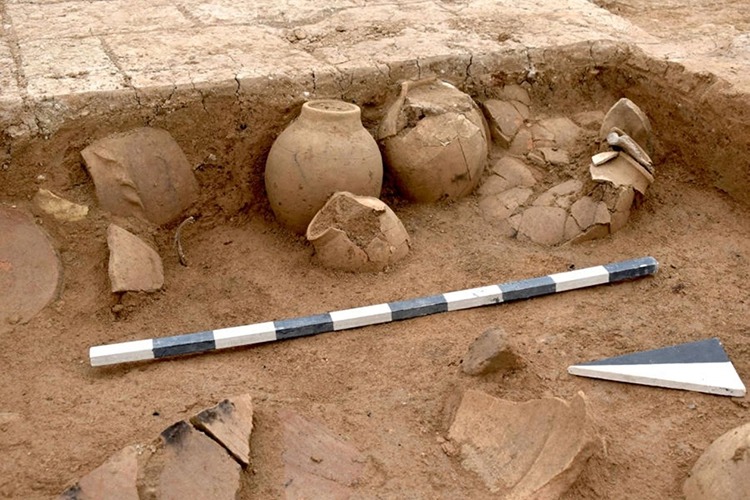
The researchers might be able to learn more from the found Assyrian letters.
h/t: [Science Alert, Interesting Engineering]
Leave a Reply