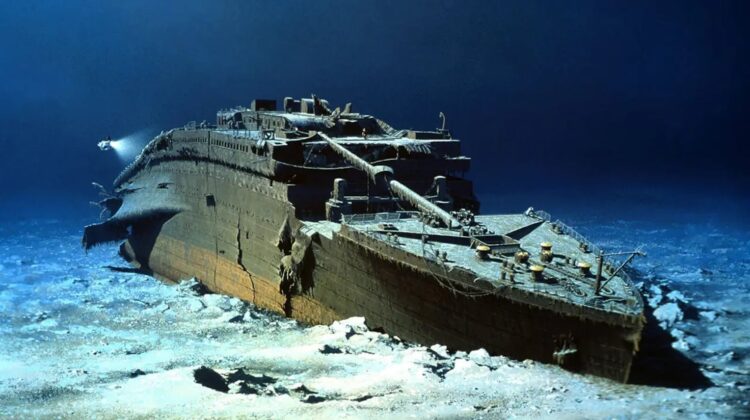
Bones have survived on shipwrecks far older than the Titanic — so why hasn’t a single skeleton been found inside the world’s most famous wreck?
More than 111 years after the RMS Titanic sank into the icy depths of the North Atlantic, the ship continues to captivate scientists, historians, and the public alike. From its dramatic discovery in 1985 to persistent myths about how it sank, the Titanic still reveals unsettling truths.
One of the most haunting mysteries remains this:
Despite decades of exploration, no human remains have ever been found inside the wreck.
What Explorers Have (and Haven’t) Seen
James Cameron — director of Titanic and one of the most experienced Titanic explorers — has personally visited the wreck 33 times, spending more time there than the ship’s original captain ever did at sea.
In a 2012 interview with The New York Times, Cameron stated plainly:
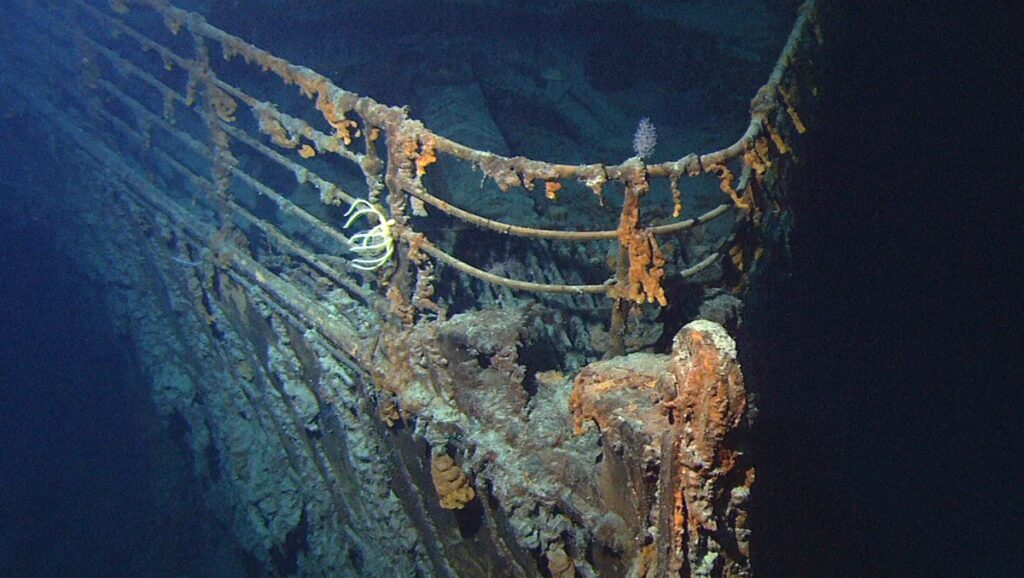
Image credit: NOAA/Institute for Exploration/University of Rhode Island
“I’ve seen zero human remains.”
What has been found, however, is equally chilling:
- Pieces of clothing
- Pairs of shoes resting side by side
“These strongly suggest there was a body there at one point,” Cameron explained. “But we’ve never seen any human remains.”
How Many People Died on the Titanic?
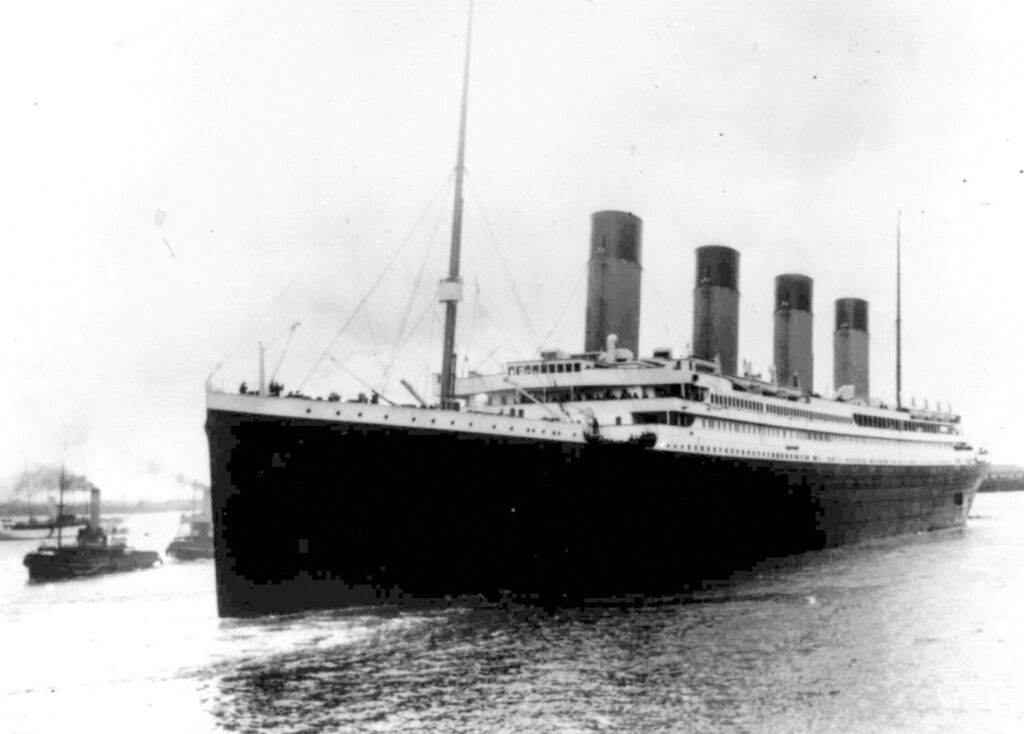
When the Titanic sank in 1912:
- Over 1,500 people died
- Roughly 68% of the ship’s 2,200 passengers and crew
Most victims are believed to have died from immersion hypothermia in the freezing Atlantic waters. While drowning did occur, many passengers wore lifejackets, which dramatically influenced what happened next.
Why the Bodies Were Never Found
At first glance, the absence of remains may seem suspicious — even fueling conspiracy theories. But science offers several compelling explanations.
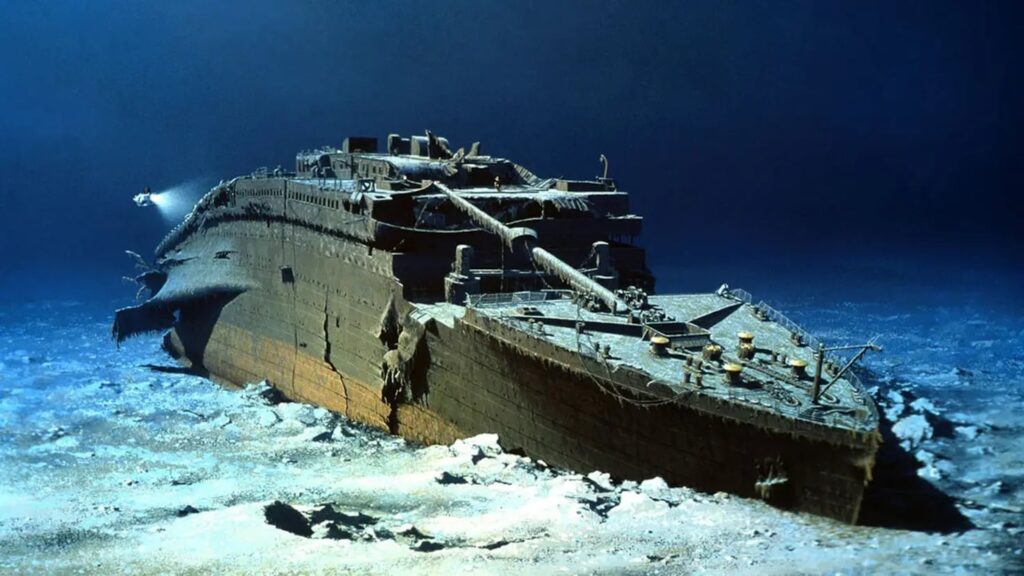
1. Lifejackets and Ocean Currents
Lifejackets failed to save lives, but they did keep bodies afloat after death. A storm shortly after the sinking likely dispersed bodies far from the wreck site. Over time, powerful Atlantic currents would have carried them even farther away.
2. Deep-Sea Scavengers
Any bodies that sank or became trapped inside the wreck were quickly consumed by deep-sea organisms — fish, bacteria, and scavengers adapted to extreme environments.
But this raises another question…
Why No Bones? The Depth Changes Everything
Bones have been discovered on much older shipwrecks — so why not here?
The answer lies in extreme ocean chemistry.
Deep-sea explorer Dr. Robert Ballard, who discovered the Titanic, explained that the wreck lies below what’s known as the Calcium Carbonate Compensation Depth (CCD) — around 3,000 feet (914 meters).
Below this depth:
- Seawater becomes undersaturated in calcium carbonate
- Calcium carbonate is the primary material in human bones
Once scavengers remove the flesh, bones don’t fossilize — they dissolve.
As Ballard explained to NPR:
“On the Titanic and other deep wrecks like the Bismarck, once the bones are exposed, they simply dissolve.”
The Titanic rests at about 12,500 feet (3,800 meters) — far beyond the threshold where bones can survive.
Could Any Bodies Still Exist Inside the Ship?
Some speculate that sealed compartments — such as parts of the engine room — might have remained isolated from oxygen-rich water and scavengers, potentially preserving remains.
However, after more than a century:
- Structural collapse
- Water circulation
- Corrosion and bacterial activity
…make the survival of recognizable human remains extremely unlikely.
Final Thoughts
The absence of human remains aboard the Titanic isn’t evidence of mystery or cover-up — it’s a stark reminder of how time, pressure, chemistry, and nature reclaim everything, even tragedy.
What remains today is not the dead, but the story — etched into rusting steel, scattered shoes, and the silence of the deep ocean.
Understanding how extreme ocean environments affect human remains offers rare insight into deep-sea science, underwater archaeology, and the fragile nature of memory itself. The Titanic is more than a shipwreck — it is a lesson in how nature ultimately erases all physical traces, leaving history to be remembered through knowledge, documentation, and respect.
Leave a Reply