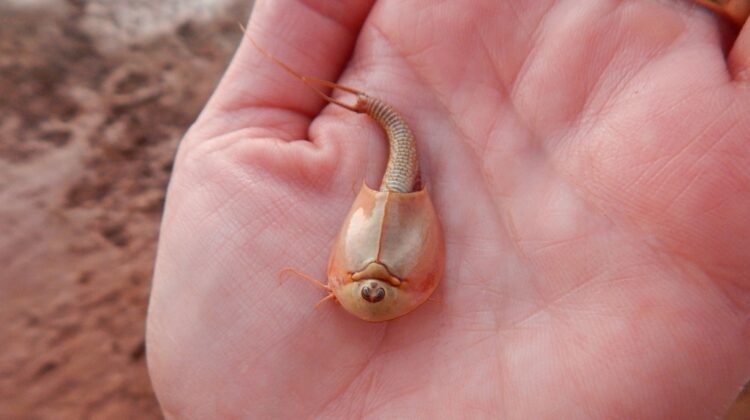
Their eggs can stay dormant for decades, waiting for water.
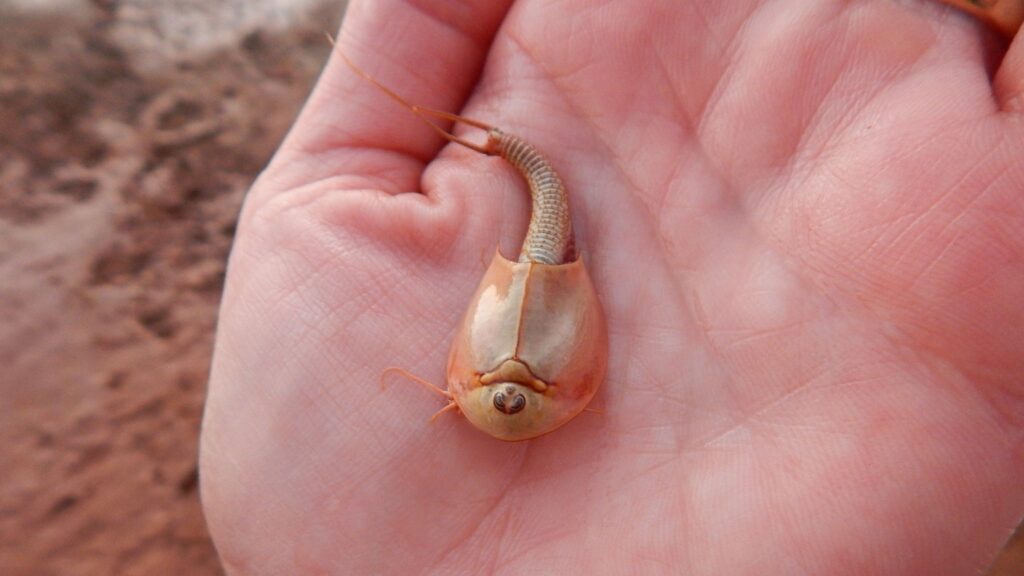
In a mesmerizing display of nature’s resilience, hundreds of peculiar and prehistoric-looking creatures known as Triops emerged from their dormant state after a torrential summer downpour in northern Arizona. These tadpole-sized critters, often referred to as “dinosaur shrimp,” possess a unique adaptation that allows their eggs to lie dormant for decades, waiting for the arrival of water.
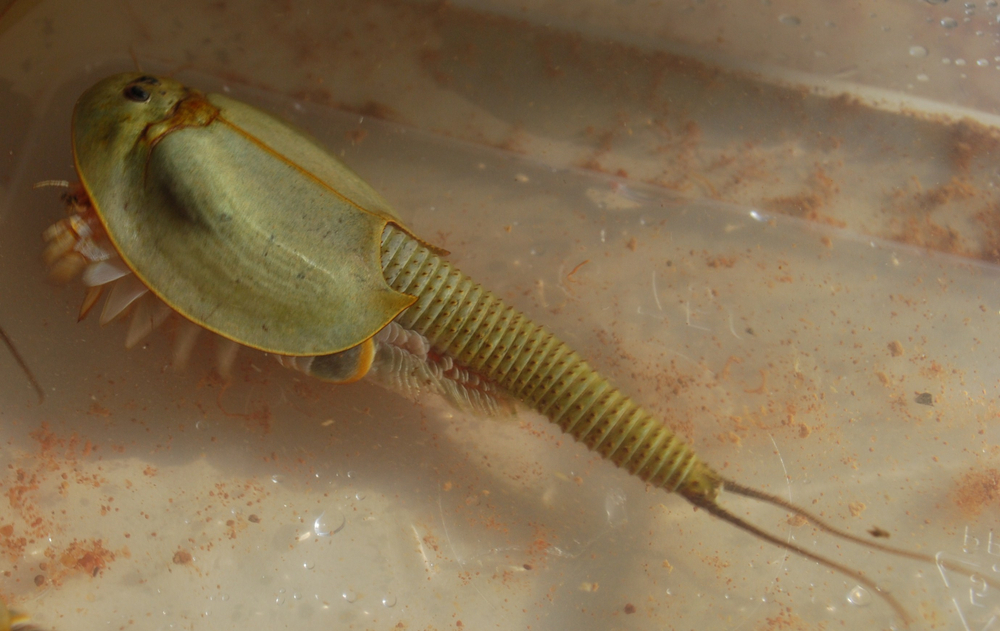
The rare sighting of these extraordinary creatures took place in a temporary lake formed on the desert landscape within Wupatki National Monument. Triops, resembling miniature horseshoe crabs with their distinctive three eyes, captivated observers with their ancient appearance and intriguing life cycle.
Lauren Carter, the lead interpretation ranger at Wupatki National Monument, described the Triops as having the ability to stay dormant in the desert until sufficient rainfall creates lakes, providing the necessary environment for their hatching and subsequent maturation.
The presence of these fascinating creatures is exceptionally uncommon, as reported sightings of Triops are rare due to their unique habitat requirements. When tourists reported seeing them in a rain-filled temporary lake within the monument’s ceremonial ball court, the monument staff initially had difficulty identifying the critters.
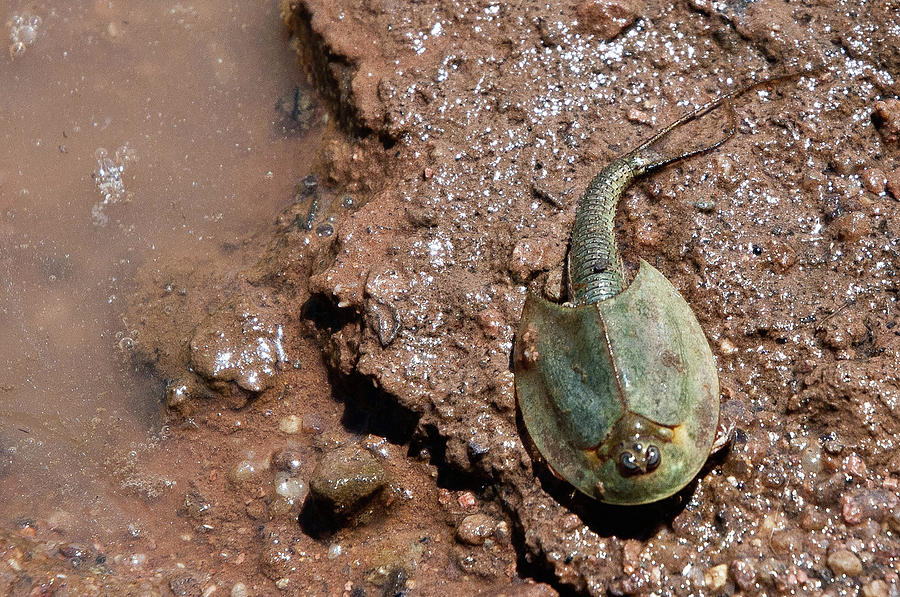
Curiosity piqued, Carter investigated the sightings, initially considering the possibility of toads emerging to lay eggs during the wet spell. However, she soon discovered that the creatures were, in fact, Triops. Her previous work at Petrified Forest National Park in northeastern Arizona had acquainted her with reports of these fascinating organisms.
Triops, derived from the Greek term meaning “three eyes,” possess a significant evolutionary history, dating back to the Devonian period. Although not classified as “living fossils,” their appearance has changed little over millions of years, retaining remarkable similarities to their ancestors from the distant past.
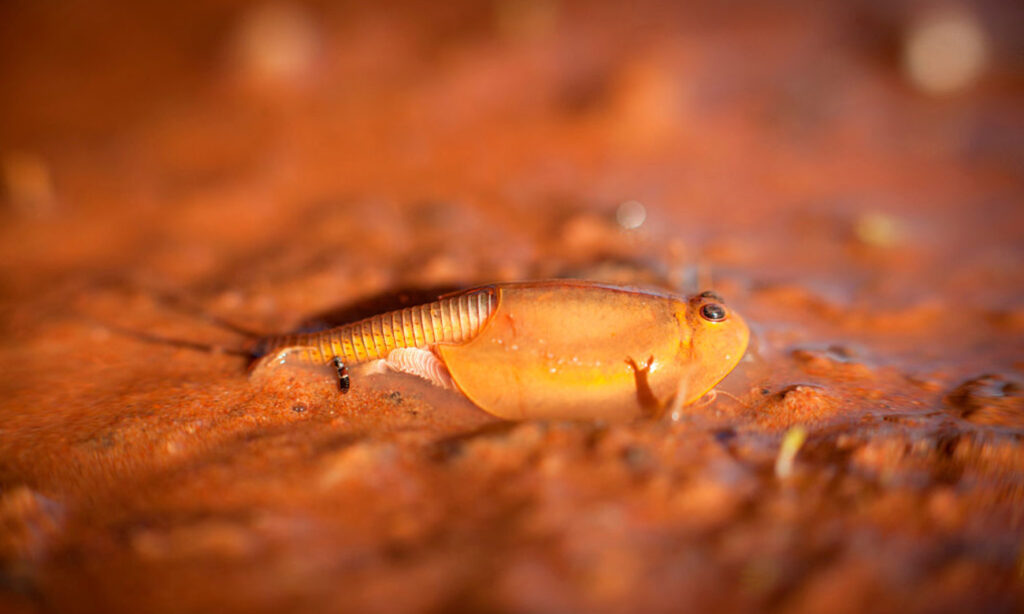
The family Triopsidae includes two genera, Triops and Lepidurus, comprising up to 12 species. The specific species found in the Wupatki ball court has not been conclusively determined but could potentially be Triops longicaudatus, commonly found in short-lived freshwater ponds known as vernal pools across the Americas.
After hatching, Triops can grow up to 1.5 inches long, exhibiting a distinctive shield-like carapace resembling a miniature helmet. The creature’s three eyes, comprising two compound eyes and a central ocellus, provide an intriguing and intimidating appearance.
The fortuitous combination of a brief but intense rainy spell allowed the Triops’ eggs to hatch, kickstarting their life cycle. The newly hatched critters quickly engaged in filter feeding, progressing through several molts before reaching maturity in just over a week.
Triops typically engage in sexual reproduction, with males and females pairing up to mate. However, in times of scarcity, they can resort to alternative methods. These fascinating crustaceans possess both male and female sex organs, making them hermaphroditic. Females can even produce offspring from unfertilized eggs through parthenogenesis.
While Triops can live up to 90 days, their existence in the pond at the ball court is temporary. Nonetheless, this extraordinary event serves as a captivating reminder of the resilience and adaptability of life in diverse environments.
The emergence of the Triops after the Arizona monsoon offers a glimpse into the intricate workings of nature’s extraordinary creations. It provides an opportunity for scientists and enthusiasts alike to witness a living relic from the past, sparking curiosity and appreciation for the complex and awe-inspiring world of prehistoric life.
Leave a Reply