
Some people swear by it, while others brush it off as an old wives’ tale, but the ability to smell rain before it arrives is a topic that continues to intrigue and divide individuals. Whether it’s the fresh scent of petrichor or the sweet tinge of ozone in the air, there is indeed scientific evidence that supports the phenomenon of smelling rain before it falls.
The concept of smelling rain has sparked countless debates, often played out on social media platforms. While some individuals confidently claim that their noses are finely tuned meteorological instruments, others remain skeptics, attributing the perceived scent to a mere coincidence. Yet, beyond personal anecdotes, there are scientific underpinnings that lend credence to the idea.

At the heart of this olfactory experience is a word that might not be familiar to everyone: petrichor. Coined by mineralogists Isabel Joy Bear and Richard Thomas in 1964, the term “petrichor” derives from the Greek words “petros,” meaning stone, and “ichor,” the fluid that coursed through the veins of ancient gods. It aptly refers to the earthy, pleasant aroma that wafts into the air after a heavy downpour, particularly following prolonged dry spells.
For many, the scent of petrichor is a delight, but understanding why it’s so appealing remained a mystery until relatively recently. In 2020, a group of scientists uncovered that this fragrance isn’t exclusively enticing to humans; it captivates other creatures as well.

The allure of petrichor is linked to a common soil bacterium called Streptomyces, which releases a compound known as geosmin. This is the very essence that draws us in. Remarkably, humans possess an acute ability to detect trace amounts of geosmin—surpassing even a shark’s famed capacity to sense blood in water. Streptomyces deploys geosmin to attract various critters, from insects to larger animals. These creatures inadvertently carry the bacterium’s spores over wider distances, perpetuating its life cycle.
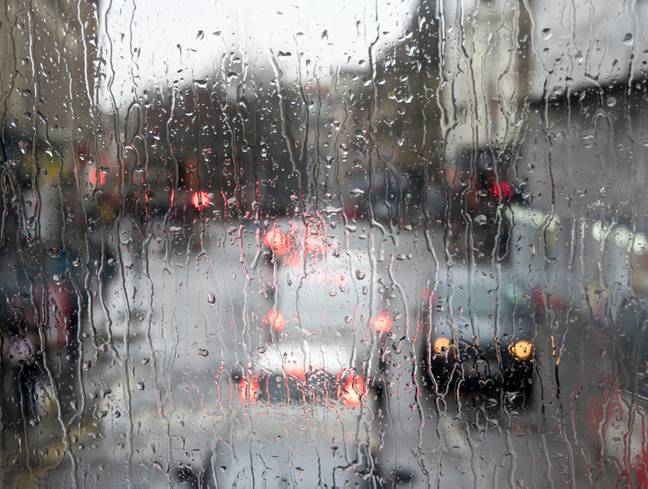
When raindrops make contact with the ground, research from 2015 explains that they create small pockets of air within the porous surface. As these pockets are released into the air, they transform into minuscule aerosols, carrying along traces of whatever was present on the ground, including geosmin. These aerosols can be lifted by the wind, transported significant distances—sometimes even miles ahead of the impending rainclouds. This explains why individuals might catch a whiff of rain well before it arrives, likely detecting these aerosol particles.
Interestingly, this process could also account for the presence of bacteria high up in the atmosphere. Microorganisms get swept up by the winds, journeying far from their origins on Earth’s surface.
Beyond petrichor, the scent of approaching rain can also be attributed to the presence of ozone in the air. Ozone, composed of three oxygen atoms, derives its name from the Greek word “ozein,” which means “to smell.” This naturally occurring gas can also be generated by human activities such as fertilizer use or industrial processes.

Ozone forms when electrical charges, whether from lightning or artificial sources, separate nitrogen from oxygen molecules in the atmosphere. These molecules can recombine to produce nitric oxide, which can then evolve into ozone upon interacting with other atmospheric chemicals. The presence of ozone in the air, with its slightly sweeter aroma compared to petrichor, can signal the approach of heavy rain. During thunderstorms, downdrafts transport ozone to ground level, allowing humans to detect its scent.
So, the next time you step outside and catch a hint of that unmistakable earthy aroma or a slightly sweet tang in the air, trust your nose—it might just be giving you an early heads-up about an impending rainfall. The science of petrichor and ozone serves as a reminder that our senses are often more finely attuned to nature’s rhythms than we realize.

As with all “explainer” articles, the information presented is verified by fact-checkers at the time of publishing. Please note that text, images, and links may be subject to updates to ensure the currency of information.
Leave a Reply