• Skip to main content
  • Skip to primary sidebar
  • Skip to footer
  • Home
  • About Us
  • Copyright Report
  • Submit Content
  • Terms
  • Privacy Policy
  • Legal Disclaimer

Hasan Jasim

Hasan Jasim is a place where you may get entertainment, viral videos, trending material, and breaking news. For a social generation, we are the largest community on the planet.

Turtles Aren’t Inside Their Shells – They Are Their Shells and Here’s How This Came To Be

by Hasan Jasim Editorial Team Leave a Comment

ShareTweet

When we think of turtles, one of the first things that come to mind is their iconic shells. Unlike some animals that can retreat into their shells, like snails, turtles have their shells permanently attached to their bodies. But this extraordinary adaptation wasn’t always a part of their existence. Let’s dive into the fascinating journey of how turtles became their shells.

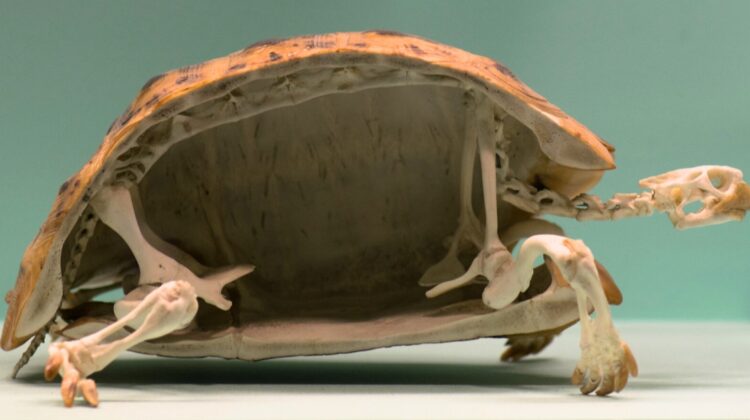
A turtle’s shell serves as more than just a protective covering; it’s a unique adaptation that safeguards vital organs from predators and environmental hazards while also playing a role in regulating the turtle’s body temperature. This remarkable structure consists of two main parts: the carapace (top) and the plastron (bottom), interconnected by a bridge.
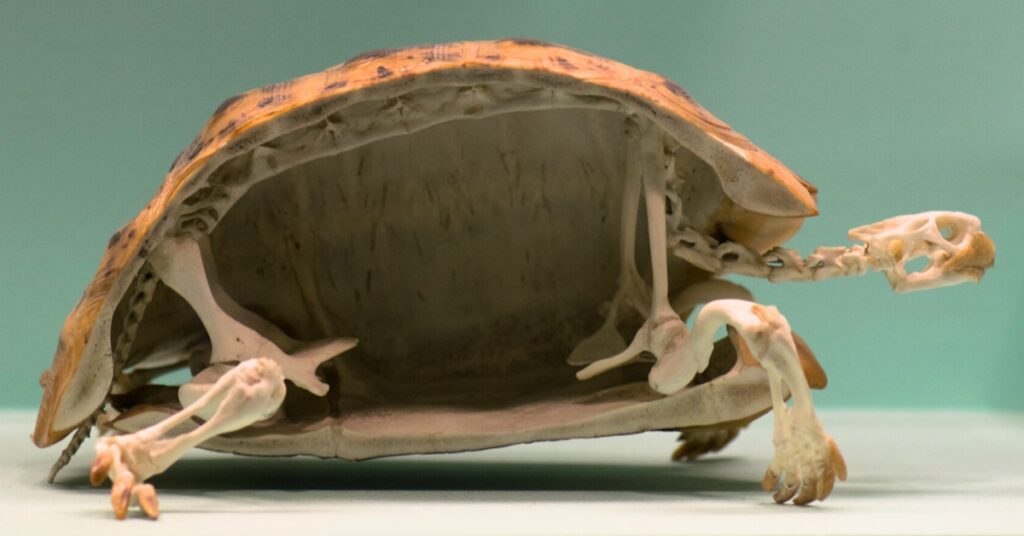
This cross-section of real turtle shows how the shell is actually part of the turtle’s body. Photo: Thomas Quine

Comprising approximately 50 bones, including ribs, shoulder bones, and vertebrae, the shell is covered by an outer layer of keratinous scutes, which provide additional protection and structure.

The evolution of the turtle shell has long intrigued scientists. How did the ancestors of turtles transform their flexible ribs and vertebrae into a rigid, protective shell? How did they manage to breathe and move with such a substantial structure? Recent studies have begun to shed light on these questions, drawing insights from fossil evidence and embryological development.
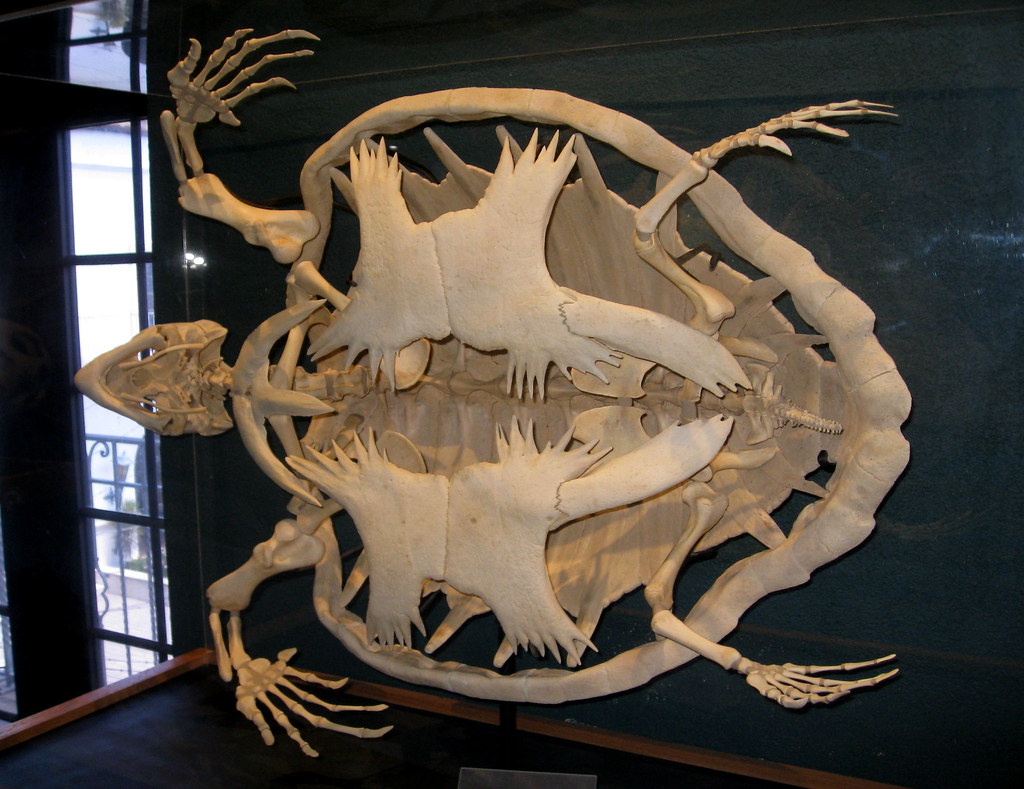
Sea turtle skeleton in the South Florida Museum. Photo: Jared

One of the earliest known turtle fossils, dating back roughly 260 million years, belongs to Eunotosaurus africanus. This reptile possessed a wide rib cage but lacked a shell. It also had a reduced number of vertebrae and ribs, suggesting adaptation for burrowing. Another ancient turtle ancestor, Odontochelys semitestacea, lived about 220 million years ago and had a fully developed plastron but only a partial carapace. Notably, it had teeth, a feature absent in modern turtles. These fossils reveal that the plastron evolved before the carapace, and initially, the shell served purposes beyond defense, such as digging.

The development of the carapace involved several morphological changes and shifts in gene expression within the ribs and vertebrae. While most vertebrates have rib-to-vertebrae joints that allow for chest cavity expansion during breathing, turtles have fused ribs and vertebrae, which form the carapace. This unique adaptation means that turtles rely on abdominal muscles to move their viscera for respiration.
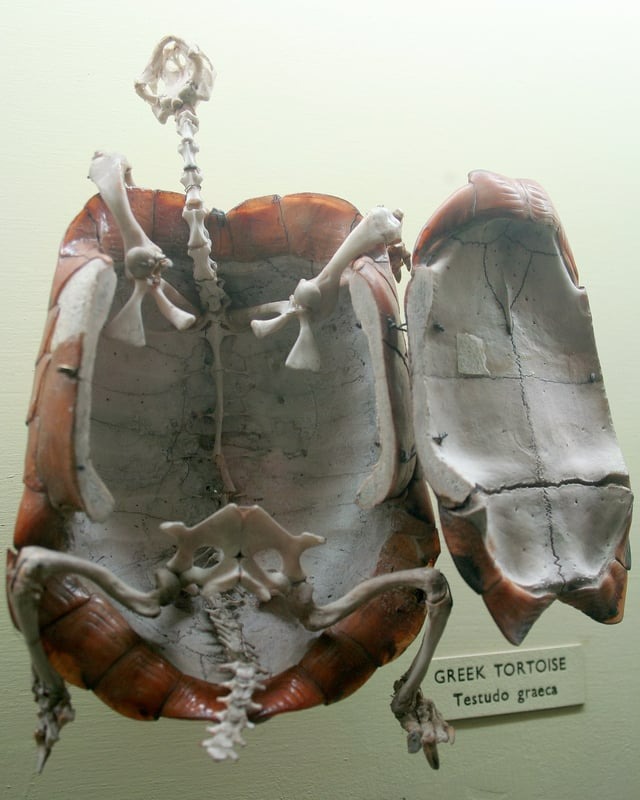
A preserved turtle showing how the skeleton fits inside its carapace, at the Horniman Museum. Photo: Cmglee

The genes responsible for shaping the ribs and vertebrae in turtles differ from those in other vertebrates. For instance, the gene Tbx5, usually associated with forelimbs, is expressed in turtle ribs, contributing to their enlargement and flattening. Another gene, Fgfr2, typically involved in bone growth, is suppressed in turtle ribs, preventing excessive elongation.

The turtle shell stands as a remarkable testament to the power of natural selection in shaping complex structures from simpler ones. This extraordinary adaptation has enabled turtles to thrive across diverse habitats, from arid deserts to expansive oceans. As some of the oldest living reptiles, turtles owe much of their evolutionary success to their remarkable shells.

Filed Under: Trends Worldwide Tagged With: aren’t, came, here’s, inside, shells, their, they, this, trends, turtles, worldwide

Reader Interactions

Leave a Reply Cancel reply

Your email address will not be published. Required fields are marked *

Primary Sidebar

More to See

Eerie Facts About the Vertical Cemetery in the Philippines

By Hasan Jasim Editorial Team

Chubby Rat Stuck in Sewer Cover Didn’t Expect Anyone To Help Him

By Hasan Jasim Editorial Team

When The Light Poles in a Small Argentine Town Were Replaced, They Saved the Woodpeckers’ Home

By Hasan Jasim Editorial Team

On her Way Home from School, a ‘Angel’ was Seen Saving a Stray Dog

By Hasan Jasim Editorial Team

A Video Captures A Little Boy Sneaking Out Of Bed To Sleep With His Dog

By Hasan Jasim Editorial Team

Ten Lions Found Dead in Tanzania’s Ngorongoro Conservation Area, Poisoning Suspected

By Hasan Jasim Editorial Team

Discovery of New Gecko Species in Thailand: Golden-Eyed and Jade-Eyed Marvels

By Hasan Jasim Editorial Team

Footer

ABOUT HASANJASIM.ONLINE

Hasanjasim.online is a digital platform dedicated to publishing well-researched articles about the animal kingdom, nature, and the environment. Our editorial team works to source stories from credible outlets, scientific research, and verified reports, aiming to inform as much as we entertain. From wildlife conservation and animal behavior to natural wonders and environmental science, we cover the topics that help readers better understand and appreciate the natural world. Whether you're a lifelong nature lover or simply curious about the planet we share, Hasanjasim.online aims to be a trustworthy destination for stories worth reading — and worth citing.

Recent

  • Scientists Found Ancient Americans Living Where No Humans Should Have Been
  • This African Bird Wears Sunflowers Around Its Eyes — Meet the White-Crested Helmetshrike
  • 25 Animals You’ve Probably Never Heard Of — From a Cuban Land Snail to a Marsupial That Mates Itself to Death
  • Woman finds cow’s tooth in takeout taco. The chain says it can happen
  • Healthy Senior Dog Spared After Family Asked Veterinarians to Euthanize Her, Georgia Rescue Says
  • How People Around the World Write Laughter Online
  • The Disturbing Story Behind This Award-Winning Photojournalism Image

Search