• Skip to main content
  • Skip to primary sidebar
  • Skip to footer
  • Home
  • About Us
  • Copyright Report
  • Submit Content
  • Terms
  • Privacy Policy
  • Legal Disclaimer

Hasan Jasim

Hasan Jasim is a place where you may get entertainment, viral videos, trending material, and breaking news. For a social generation, we are the largest community on the planet.

Ad example

This Is the Brightest Plant in the World – Its Fruits Have the Most Intense Natural Color

by Stephen King Leave a Comment

FacebookTweetPinLinkedIn

Have you ever seen a plant that shines like a mirror? If not, you might want to check this out.
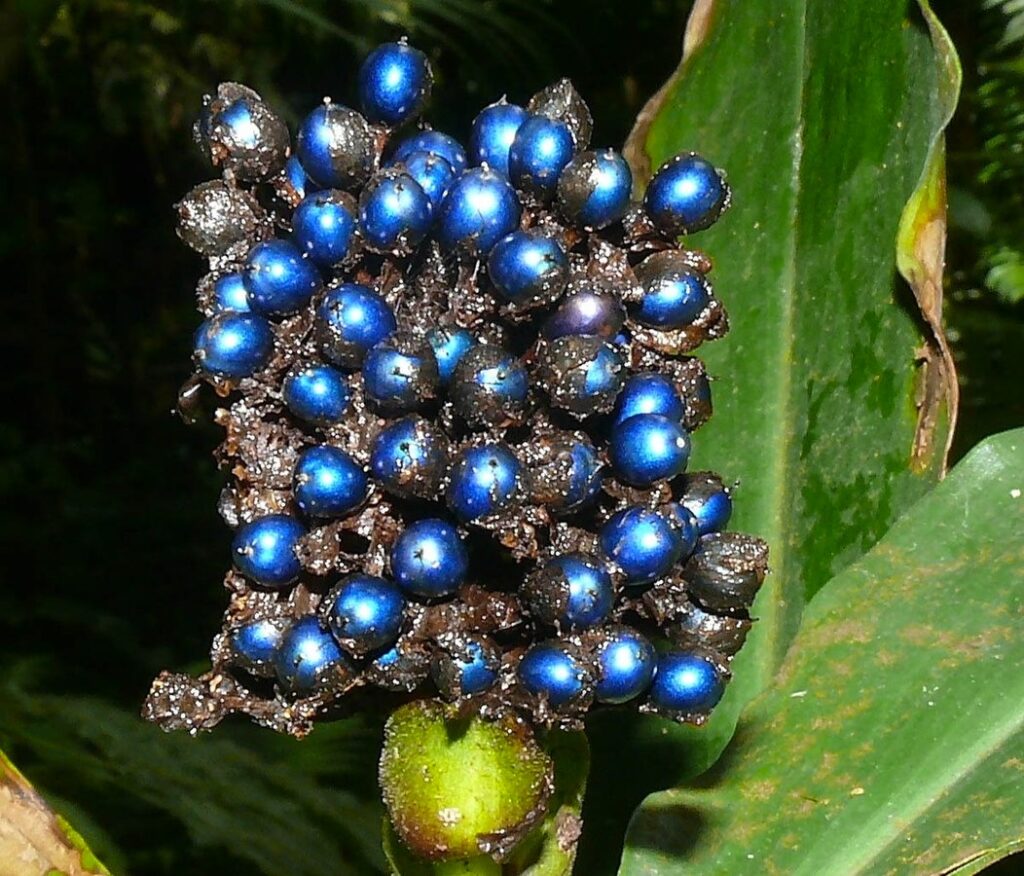
Pollia condensata, also known as the marble berry, is an African plant produces the most intense color ever studied in biological tissue, thanks to its unique structure and optical properties. It grows in the forests of Ethiopia, Mozambique, Tanzania and other African countries and has large, smooth, narrow leaves, with pale pink or whitish flowers on a stem about 60 cm high. The fruit capsule is about 5 mm in diameter and has a hard, dry texture.
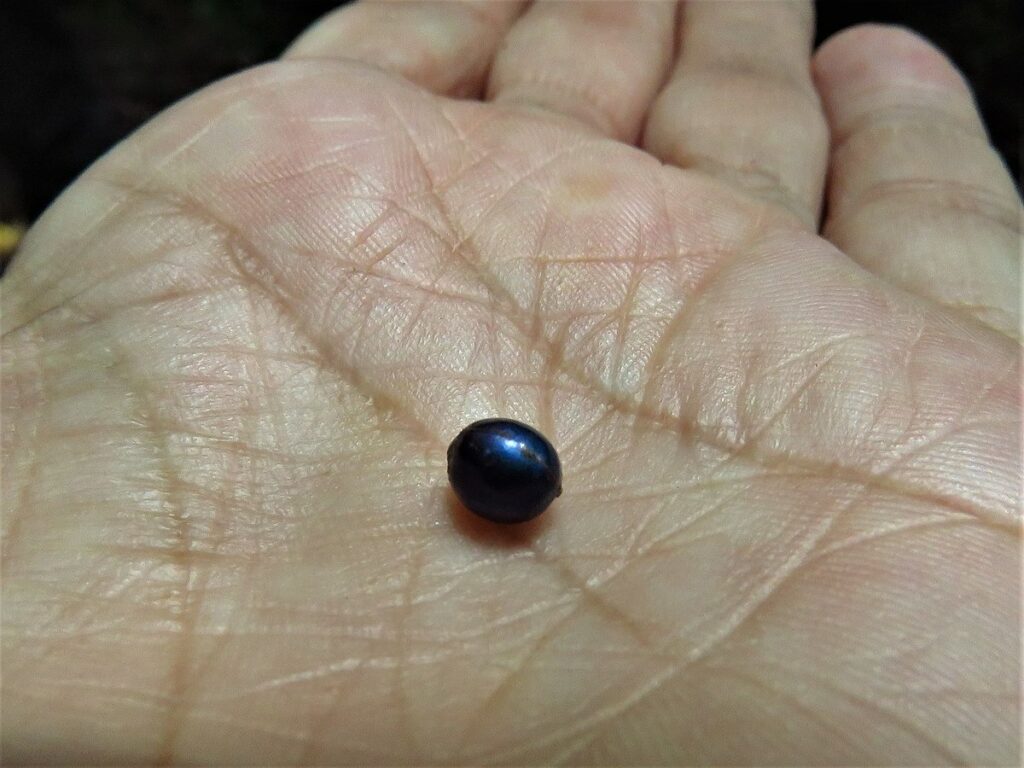
Marble Berry from Mpanga Forest, Mpigi, Uganda. Image credit: annikaml

The most remarkable feature of this plant is its fruit color. The fruit has a metallic blue hue that reflects light like a mirror. The color is so bright and pure that it can be seen from a distance, even in the shade. The color does not fade over time, even after the fruit is picked. In fact, some specimens at the Kew Botanical Gardens in London that were gathered in Ghana in 1974 still retain their iridescent hue, as you can see below.
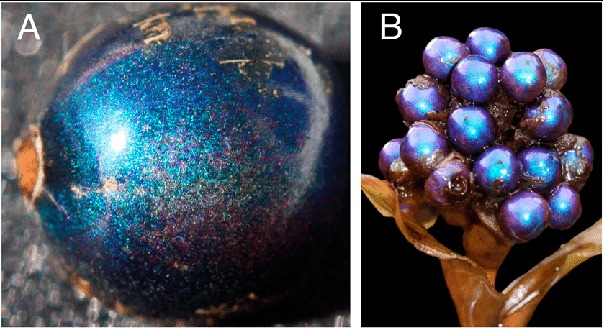
(A) Single Pollia condensata fruit from dried herbarium specimen collected in Ghana (Kew Herbarium: Faden and Lock 74/ 37, 1974). The blue color of the fruit is not uniform but has a brilliant pixelated iridescent appearance with green and purple/red speckles. (B) Infructescence (cluster of fruits) from alcohol-preserved specimen collected in Ethiopia (Kew Herbarium: Moult 24, 1974).

Unlike most plants, Pollia condensata does not rely on pigments to produce its color. Pigments are compounds that absorb certain wavelengths of light and reflect others. For example, chlorophyll is a pigment that absorbs most wavelengths of light except green, which is why most plants are green.

Pollia condensata uses a different mechanism called structural coloration. This means that the color is created by the way light interacts with the structure of the material, rather than by chemical substances. Structural coloration is common in animals, such as butterflies, peacocks and beetles, but rare in plants.
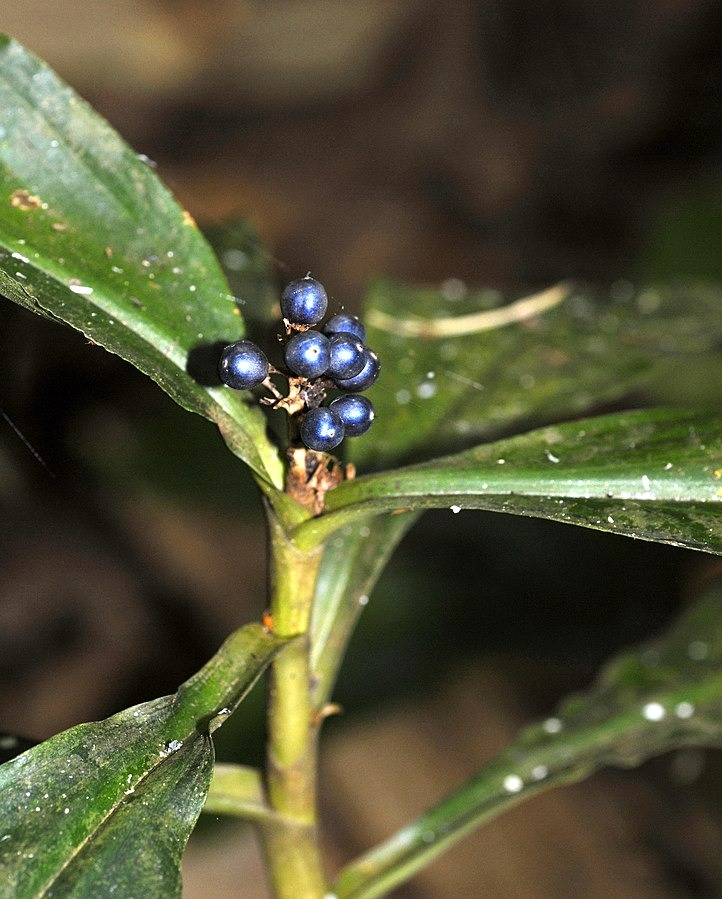
Marble berry plant on Mount Mabu, Mozambique. Image credit: timharris

The surface of the Pollia fruit has a very smooth and transparent cuticle, which reflects light as a mirror does. Beneath this glossy surface lies a special layer of cells that have an elaborate but unpigmented microstructure. The cells have walls made of spirally stacked cellulose microfibrils, which are tiny strands of plant fiber. The height of the stack varies from cell to cell, which determines the wavelength of light that is reflected. The stack also acts as a filter that amplifies the light at that specific wavelength, creating a very intense and pure color.

The total reflectivity of the Pollia fruit is about 30% of that of a silvered glass mirror, and is the highest of any known biological material. The color also varies depending on the angle of view, creating an iridescent effect.

The reason why Pollia condensata evolved such a color is not fully understood. One possible explanation is that it attracts birds that help disperse its seeds. The fruit has no nutritional value for the birds, but they may use it to decorate their nests or to attract mates. The bright color may also serve as a warning signal to deter predators or parasites.
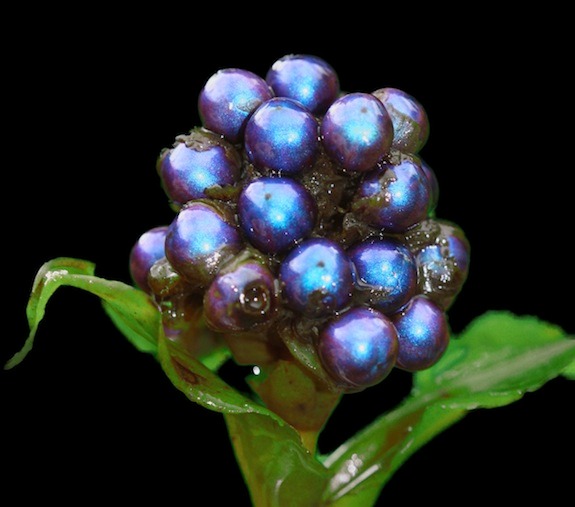
Pollia condensata uses nanoscale-sized structures to produce the most intense color ever observed in nature. Image credit: PNAS

Pollia condensata uses nanoscale-sized structures to produce the most intense color ever observed in nature. Image credit: PNAS

Another possible explanation is that the color is simply a by-product of the plant’s adaptation to its environment. The hard and dry texture of the fruit may help it survive in harsh conditions, such as drought or fire. The cellulose microfibrils may provide strength and stability to the cell walls. The color may have no adaptive function at all, but simply emerged as a result of natural variation and selection.

Whatever the reason, Pollia condensata is a fascinating example of how nature can create stunning beauty from simple materials.

Facebook Comments Box
FacebookTweetPinLinkedIn

Filed Under: Trends Worldwide Tagged With: brightest, color, fruits, have, intense, most, natural, plant, this, trends, world, worldwide

Reader Interactions

Leave a Reply Cancel reply

Your email address will not be published. Required fields are marked *

Primary Sidebar

More to See

Mount Etna Sends Amazing Volcanic Smoke Rings Billowing Into the Sky to the Astonishment of Tourists

By Stephen King

Man approaches world’s most dangerous bird – his 911 call is bone-chilling

By Stephen King

Millions of lobsters are leaving U.S. waters and moving north for colder waters in Canada

By Stephen King

A Zoo Spokesperson has finally identified a mysterious creature in Tampa

By Stephen King

Rescuers forced to hardest decision ever after finding abandoned dog in cage

By Stephen King

Texas Woman Seeks Public’s Assistance to Identify Mysterious Animal Caught on Camera Near Her Home

By Stephen King

The 25,000-Year-Old “Pyramid” In Indonesia Was Likely Not Made By Humans

By Stephen King

Footer

Home and Garden: Timeless Beauty and Smart Investment

Your home and garden reflect your personality and values, offering both emotional and financial worth. A well-maintained space enhances your life and withstands market changes.

Hasan Jasim emphasizes the lasting value of homes and gardens, from beautiful gardens that boost curb appeal to interiors that create sanctuary. These spaces are more than assets—they are legacies.

Incorporating health-boosting elements like dates, known for their energy, heart health, and gut benefits, supports your well-being. Whether for diabetes, weight loss, or skin health, dates are a smart, natural choice.

By prioritizing quality materials and timeless design, your home and garden remain valuable investments for years to come.

Recent

  • Lion Husband Stays By His Sick Wife’s Side Until The Very End
  • What Is It and Why Is It Called “Nature’s Most Terrifying Things”?
  • The Plant You See in the Picture Is One of the Most Miraculous Plants in the World
  • Army dog was separated from his owner – 3 years later, the best friends finally meet again
  • He thinks it’s just a rock, but when he approaches he discovers a frostbit animal
  • Lost dog found 2,000 miles away after five years
  • A couple took this mirror portrait 100 years ago in Japan

Search

Contact us

Hasan Jasim LLC is proudly based in the United States, delivering professional and reliable services. You can reach us by phone at +1 (914) 575-5957 or visit our office at 1234 Block Blvd., San Francisco, CA 94120. We are always here to assist you with any inquiries and provide the support you need promptly and efficiently.

Copyright © 2025 · Magazine Pro on Genesis Framework · WordPress · Log in