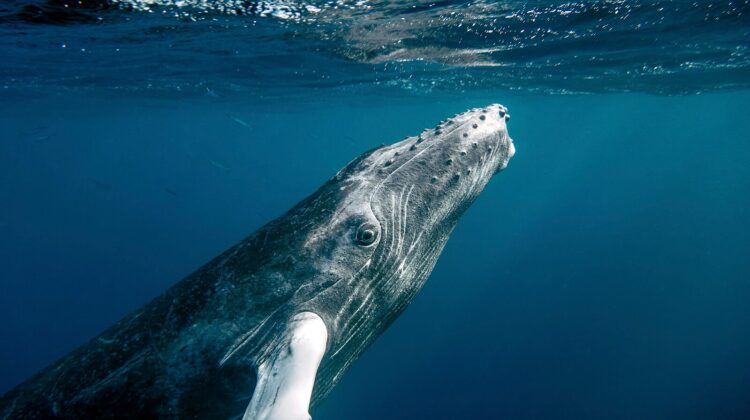
Scientists have achieved a milestone by establishing communication with whales for the first time, marking a significant leap forward in interspecies interaction.
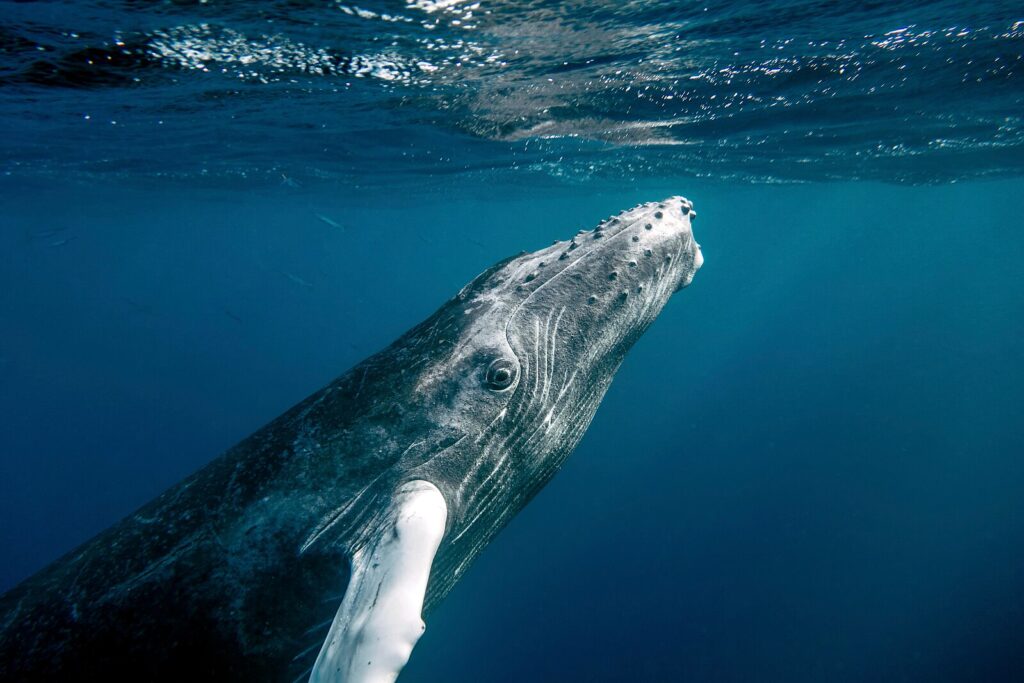
Whales are among the most intelligent and social animals on the planet, but their communication has long been a mystery to us. How do they use their clicks, whistles, and songs to convey information, emotions, and intentions? Do they have a language that we can understand and even respond to? These are some of the questions that a team of researchers from the SETI Institute, UC Davis, and the Alaska Whale Foundation are trying to answer with their project Whale-SETI.
Whale-SETI is an ambitious and innovative attempt to communicate with humpback whales, one of the most intelligent and vocal animals on Earth. Humpback whales produce complex songs and social calls that vary across regions and seasons, suggesting that they have a rich and dynamic culture. But what do these sounds mean? And can we learn to understand them?
The scientists have been researching the communication systems of humpback whales with the aim of creating intelligence filters for the search for extraterrestrial intelligence (SETI). They believe that by learning how to communicate with another intelligent species on our planet, we can better prepare for the possibility of encountering one beyond it.
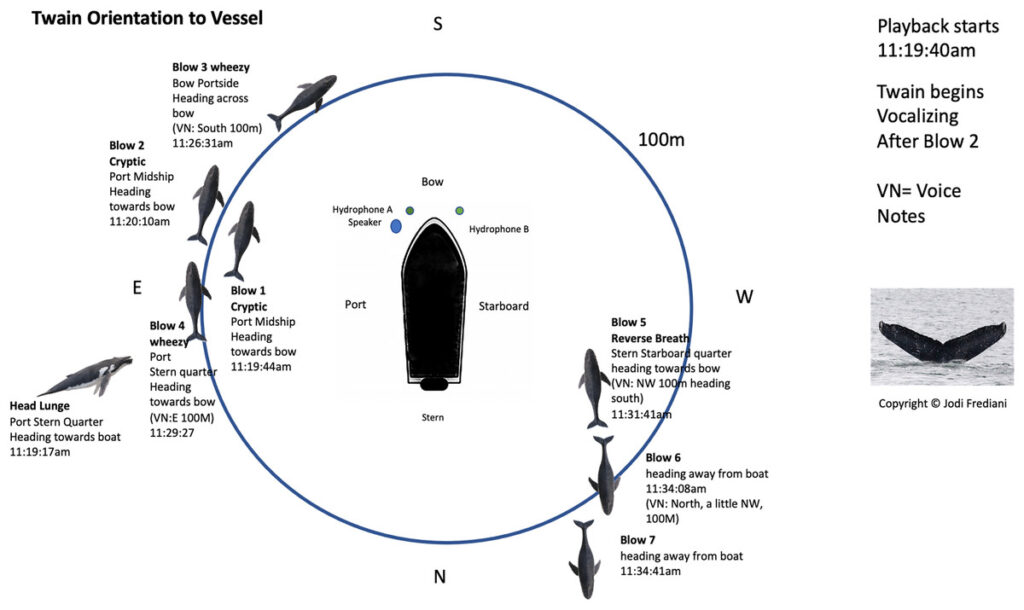
In a recent paper published in the science journal PeerJ, the researchers describe a remarkable encounter with a humpback whale named Twain, who responded to a recorded humpback ‘contact’ call played into the sea via an underwater speaker.
Twain encircled the team’s boat, adopting a conversational tone in response to the whale ‘greeting signal.’ Throughout the 20-minute interaction, the whale acknowledged every playback call, demonstrating his attentiveness by aligning with the interval variations between each signal, thus indicating his active effort to communicate.
The researchers believe that this is the first such communicative exchange between humans and humpback whales in the humpback ‘language’. They hope that this will open up new avenues for exploring nonhuman intelligence and interspecies communication.
“Humpback whales are extremely intelligent, have complex social systems, make tools – nets out of bubbles to catch fish –, and communicate extensively with both songs and social calls,” said coauthor Dr. Fred Sharpe of the Alaska Whale Foundation.
“Because of current limitations on technology, an important assumption of the search for extraterrestrial intelligence is that extraterrestrials will be interested in making contact and so target human receivers. This important assumption is certainly supported by the behavior of humpback whales,” said Dr. Laurance Doyle of the SETI Institute, another coauthor of the paper.
The researchers plan to continue their Whale-SETI project by developing more interactive playback experiments and using information theory to quantify the complexity and structure of humpback whale communication. They also hope to collaborate with other scientists who are working on decoding the languages of other cetaceans, such as sperm whales and dolphins.
By talking to whales, we may not only learn more about these amazing animals, but also about ourselves and our place in the cosmos.
Leave a Reply