• Skip to main content
  • Skip to primary sidebar
  • Skip to footer
  • Home
  • About Us
  • Copyright Report
  • Submit Content
  • Terms
  • Privacy Policy
  • Legal Disclaimer

Hasan Jasim

Hasan Jasim is a place where you may get entertainment, viral videos, trending material, and breaking news. For a social generation, we are the largest community on the planet.

Colombia to kill dozens of “cocaine hippos” linked to Pablo Escobar

by Hasan Jasim Editorial Team Leave a Comment

ShareTweet

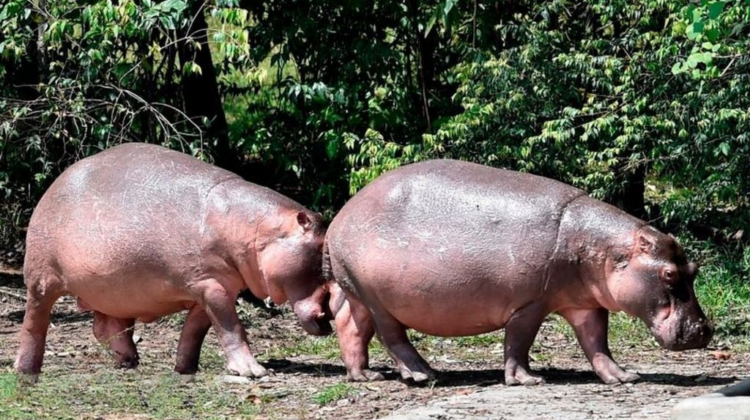
Authorities in Colombia have approved a controversial plan to reduce the growing population of wild hippos descended from animals once owned by drug lord Pablo Escobar.

The animals, often referred to as “cocaine hippos”, now roam freely across parts of the country, raising concerns among officials and environmental experts.

A growing ecological problem

The hippos are believed to be descendants of four animals imported by Escobar in the 1980s to his private estate, Hacienda Nápoles.

Since then, their numbers have grown significantly, with estimates suggesting around 170 individuals in recent years.

Without natural predators in South America, the population has expanded rapidly, spreading beyond the original ranch into rivers and nearby communities.

Why authorities are taking action

Environment officials say the animals pose risks to both people and ecosystems.

Hippos are highly territorial and can be dangerous when encountered by humans. They have also been linked to environmental damage, including:
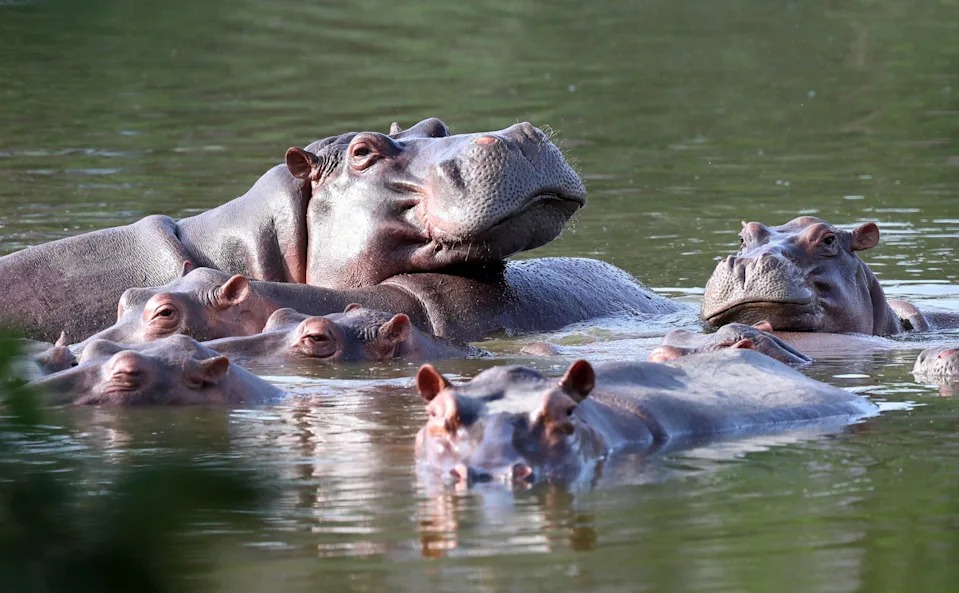
In this file photo from Feb. 4, 2021, hippos float in the lake at Hacienda Napoles Park, once the private estate of drug kingpin Pablo Escobar who imported three female hippos and one male decades ago, in Puerto Triunfo, Colombia. / Credit: Fernando Vergara / AP
  • Disrupting local wildlife
  • Competing with native species for food
  • Polluting waterways with large amounts of waste

Officials argue that previous efforts — including sterilisation and relocation — have proven costly and insufficient to control the population.

Up to 80 hippos could be culled under the new plan, although a timeline has not been confirmed.

A deeply divisive decision

The move has sparked strong reactions across the country.

Animal rights advocates have condemned the plan, arguing that the hippos are not at fault and should not be killed. Some have called for expanded non-lethal solutions, such as international relocation or more aggressive sterilisation programmes.

Colombian Environment Minister Irene Velez speaks during a press conference about the measures the Colombian government will take to curb the reproduction of hippos in the country, in Bogota, Colombia, April 13, 2026. / Credit: Luisa Gonzalez / REUTERS

Others, however, support the decision, saying urgent action is needed to prevent long-term ecological damage.

A unique and complex case

Colombia remains the only country outside Africa with a wild hippo population — a situation that experts describe as both unusual and challenging.

The animals have even become a local attraction, drawing tourists to the region. Yet their presence highlights a broader issue: how human actions can create lasting and unintended consequences for ecosystems.

As Colombia confronts this complex environmental dilemma, the debate reflects a wider global challenge — balancing wildlife protection with ecosystem stability. Decisions like this carry long-term consequences, not only for biodiversity but also for how future generations manage invasive species in an increasingly interconnected world.

Filed Under: Trends Worldwide Tagged With: Animal Rights, colombia, Conservation, ecosystem, Environment, hippos, invasive species, Pablo Escobar, wildlife

Reader Interactions

Leave a Reply Cancel reply

Your email address will not be published. Required fields are marked *

Primary Sidebar

More to See

To Make a Good Point, London Zoo Places a Handbag in The Crocodile Exhibit.

By Hasan Jasim Editorial Team

Switzerland’s Glaciers Lost 2.2 Trillion Liters of Water in Just Three Months

By Hasan Jasim Editorial Team

Fire Hydrant Drinking Fountains Are a Simple But Cool Way To Make Cities More Liveable

By Hasan Jasim Editorial Team

Caught on camera: moment bear emerges from den to maul eco-activist

By Hasan Jasim Editorial Team

Man Discovers A Nest Of Baby Bunnies While Mowing — And Builds Them The Cutest Tiny Shelter

By Hasan Jasim Editorial Team

Ukrainian Tourists Face Backlash — And Possible Legal Action — After Riding A Nesting Sea Turtle In Oman

By Hasan Jasim Editorial Team

Japanese Village Hosts “Water Hose Festival” To Test Its Impressive Fire Extinguishing System

By Hasan Jasim Editorial Team

Footer

ABOUT HASANJASIM.ONLINE

Hasanjasim.online is a digital platform dedicated to publishing well-researched articles about the animal kingdom, nature, and the environment. Our editorial team works to source stories from credible outlets, scientific research, and verified reports, aiming to inform as much as we entertain. From wildlife conservation and animal behavior to natural wonders and environmental science, we cover the topics that help readers better understand and appreciate the natural world. Whether you're a lifelong nature lover or simply curious about the planet we share, Hasanjasim.online aims to be a trustworthy destination for stories worth reading — and worth citing.

Recent

  • Scientists Found Ancient Americans Living Where No Humans Should Have Been
  • This African Bird Wears Sunflowers Around Its Eyes — Meet the White-Crested Helmetshrike
  • 25 Animals You’ve Probably Never Heard Of — From a Cuban Land Snail to a Marsupial That Mates Itself to Death
  • Woman finds cow’s tooth in takeout taco. The chain says it can happen
  • Healthy Senior Dog Spared After Family Asked Veterinarians to Euthanize Her, Georgia Rescue Says
  • How People Around the World Write Laughter Online
  • The Disturbing Story Behind This Award-Winning Photojournalism Image

Search