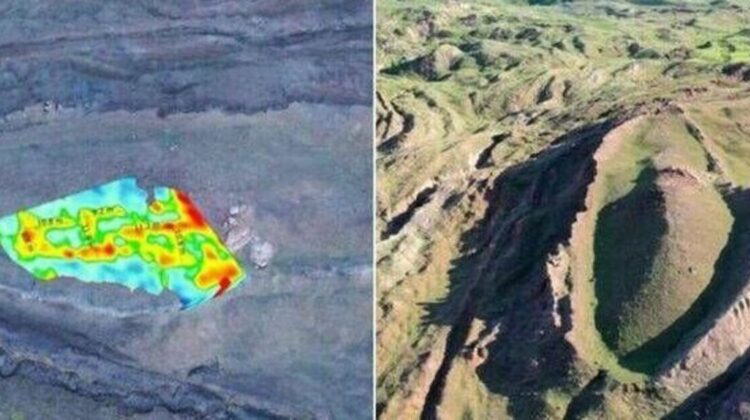
New underground scans from a controversial site in eastern Turkey have reignited debate over one of history’s most enduring mysteries: the possible location of Noah’s Ark.
Researchers working near Mount Ararat say newly analyzed data reveals structures beneath the surface that could point to a manmade origin—though many scientists remain unconvinced.
Tunnels beneath the surface
According to researcher Andrew Jones, the latest scans have identified what appear to be tunnel-like formations within the landform.
He claims these passages lie roughly four meters below ground and run through the center of the structure, with dimensions suggesting internal corridors rather than random geological features.
“Our findings show possible tunnels, walls, and support-like elements,” Jones said, arguing that the layout resembles something constructed rather than naturally formed.
A long-debated formation
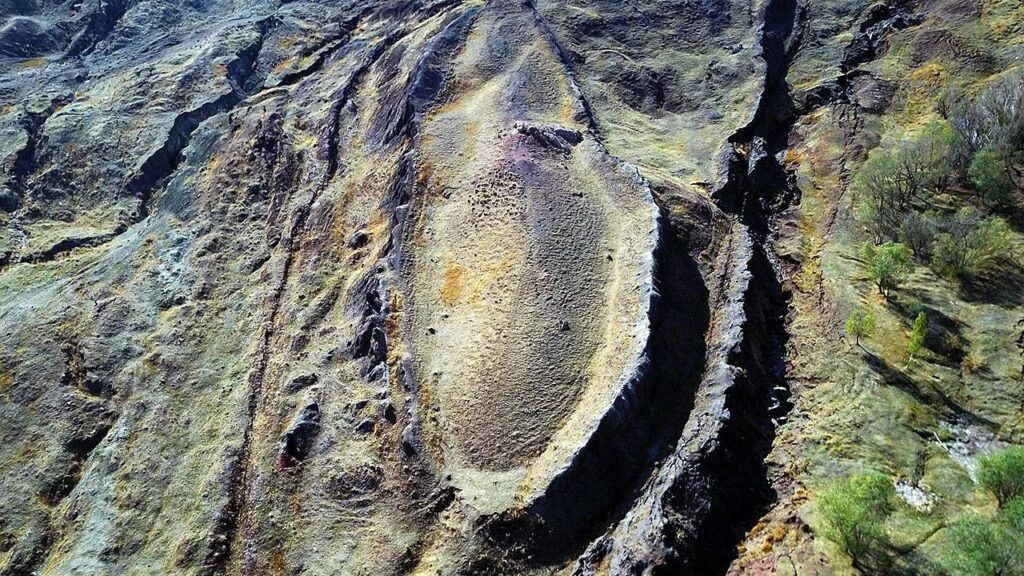
The site—often referred to as the Durupinar formation—has been the subject of speculation for decades. Its elongated, boat-like shape has drawn comparisons to biblical descriptions of the Ark.
Supporters of the theory point to three main factors:
- The shape, which resembles a large vessel
- Its location near Mount Ararat, traditionally associated with the Ark narrative
- Soil analysis suggesting higher levels of organic material inside the formation compared to surrounding areas
Jones and his team argue that these clues, taken together, strengthen the case for a buried, ancient structure.
Skepticism from the scientific community
Many geologists strongly dispute these claims, maintaining that the formation is simply a natural geological feature—likely the result of erosion and sediment patterns over time.
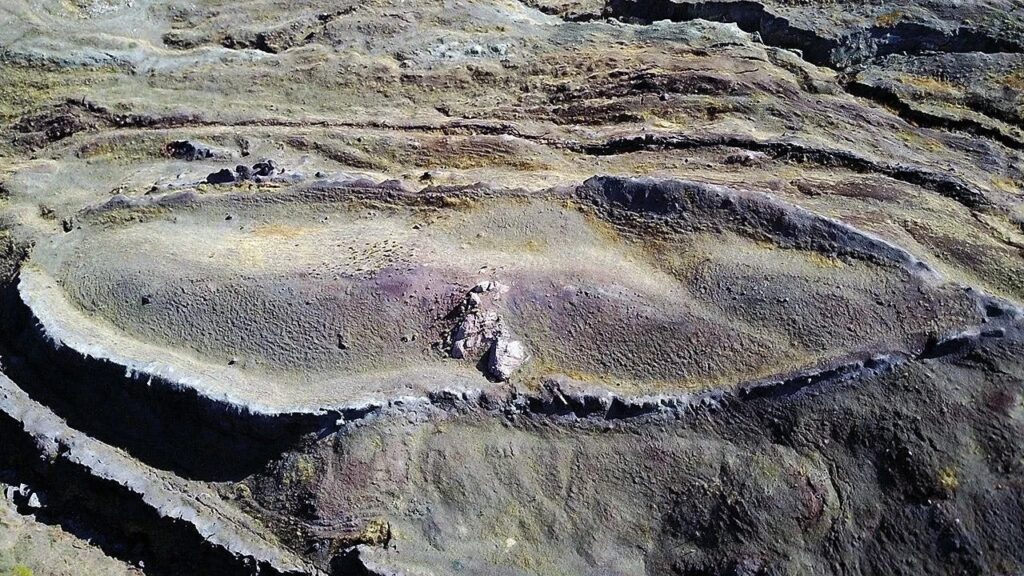
They caution that shapes resembling human-made objects can emerge naturally, and that differences in soil composition do not necessarily indicate artificial construction.
Critics also emphasize the lack of definitive physical evidence, such as artifacts or structural materials that could confirm human involvement.
A cautious path forward
Despite the controversy, researchers say they are proceeding carefully. Rather than beginning full excavation, the next phase involves sending robotic equipment into the suspected tunnels to gather visual data and samples.
This approach reflects a key principle in archaeology: once a site is disturbed, it cannot be restored to its original state.
Further analysis will be needed before any firm conclusions can be drawn.
The search for Noah’s Ark sits at the intersection of faith, science, and human curiosity—a space where evidence is scrutinized and belief is tested. While these new findings add another layer to the mystery, they stop short of definitive proof. For now, the formation remains what it has always been: a symbol of how deeply the past continues to challenge our understanding, and how the line between discovery and interpretation is often far thinner than we think.
Leave a Reply