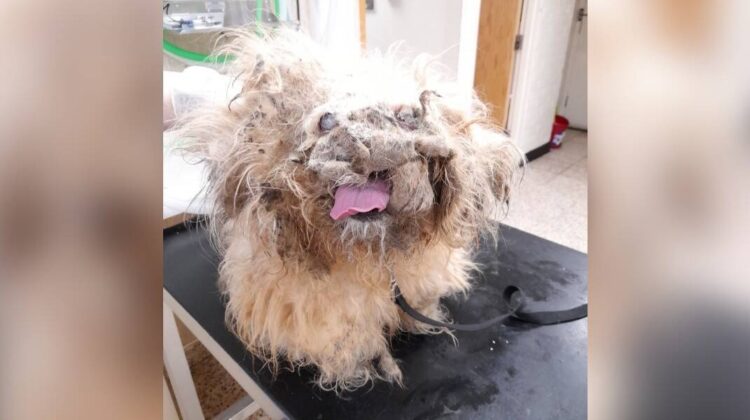
A walker strolling along the Ashton Canal in Greater Manchester nearly passed by what looked like a heap of discarded fabric near a bench. Then it breathed.
Mistaken for Trash
The walker, startled, moved closer and realized the “pile of rags” was in fact a dog, motionless and severely matted, lying beside the canal at Portland Basin in Ashton-under-Lyne. He initially assumed the animal was dead.
“When the man who found Morris first came across him he was laying next to a bench near the canal,” RSPCA animal rescue inspector Ryan King told The Dodo. “As he wasn’t moving, he thought the poor pet was already dead. On closer inspection, he realised he was breathing but his fur was so heavy and matted he appeared unable to move and he was obviously terrified.”
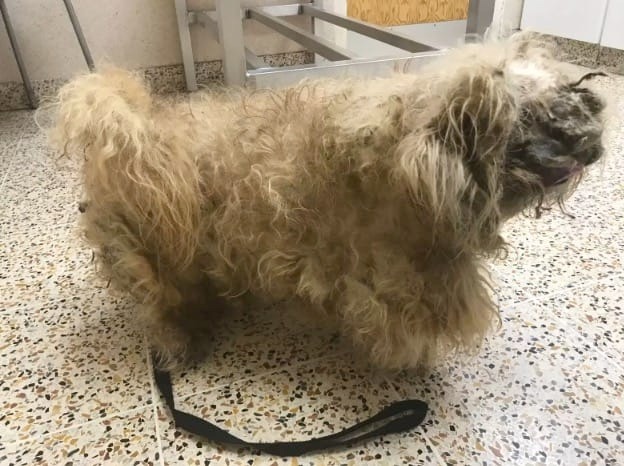
The man carried the dog home, then brought him to a nearby vet, who alerted the RSPCA. King rushed the dog, soon named Morris, to the RSPCA’s Greater Manchester Animal Hospital for emergency treatment.
What Was Hiding Beneath the Fur
Once staff began working through Morris’s coat, the scale of his condition became clear. They shaved off 1.3 kilograms of matted fur, roughly 10 percent of his total body weight, fur so dense it had been physically immobilizing him.
With his face finally visible, staff discovered Morris was blind in one eye and had severe cataracts in the other. Vets attempted surgery but were unable to save his remaining sight. It likely explained why he never tried to move from his spot by the canal: unable to see, and terrified, he simply waited.
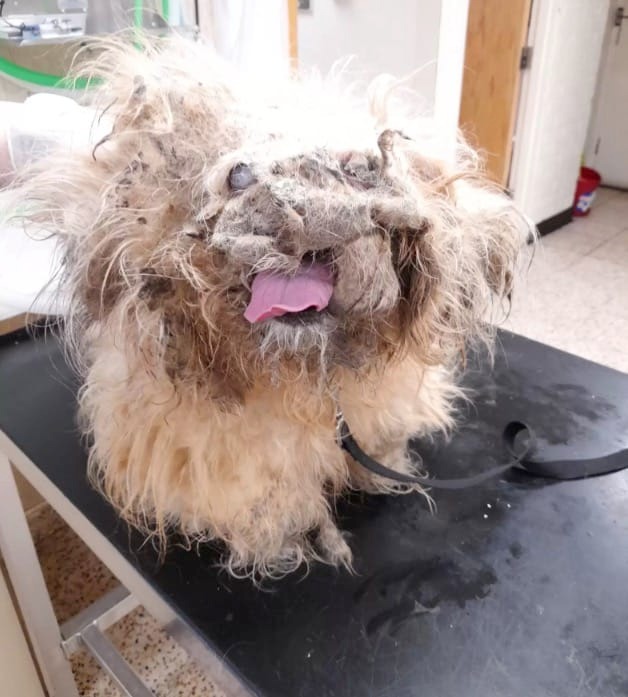
“Then he began to feel more comfortable and soon went on to make an amazing transformation,” King said.
Five Months to Heal
Morris spent the following months in rehabilitation at the RSPCA’s Lancashire East branch. Away from the fear and pain that had defined his life by the canal, his personality gradually re-emerged, and staff began looking for an adopter equipped to handle his blindness.
A Home Built for Him
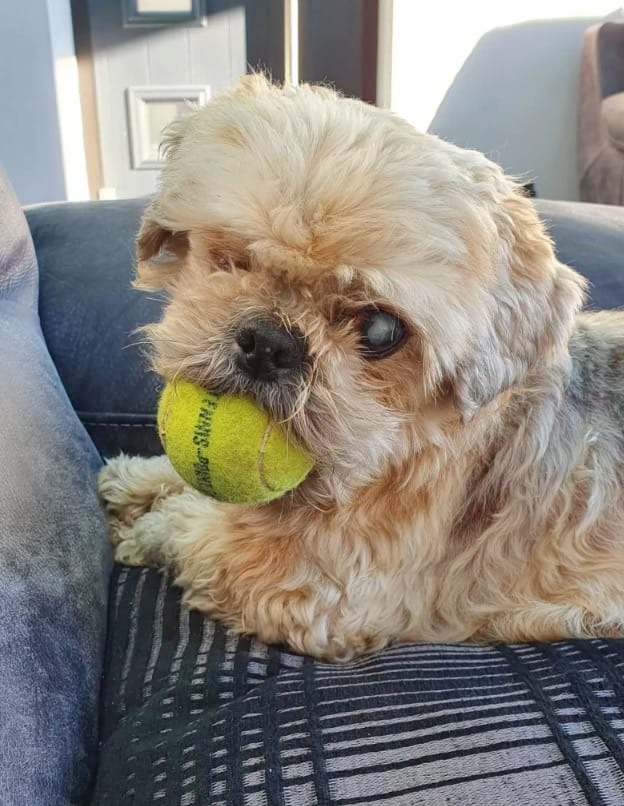
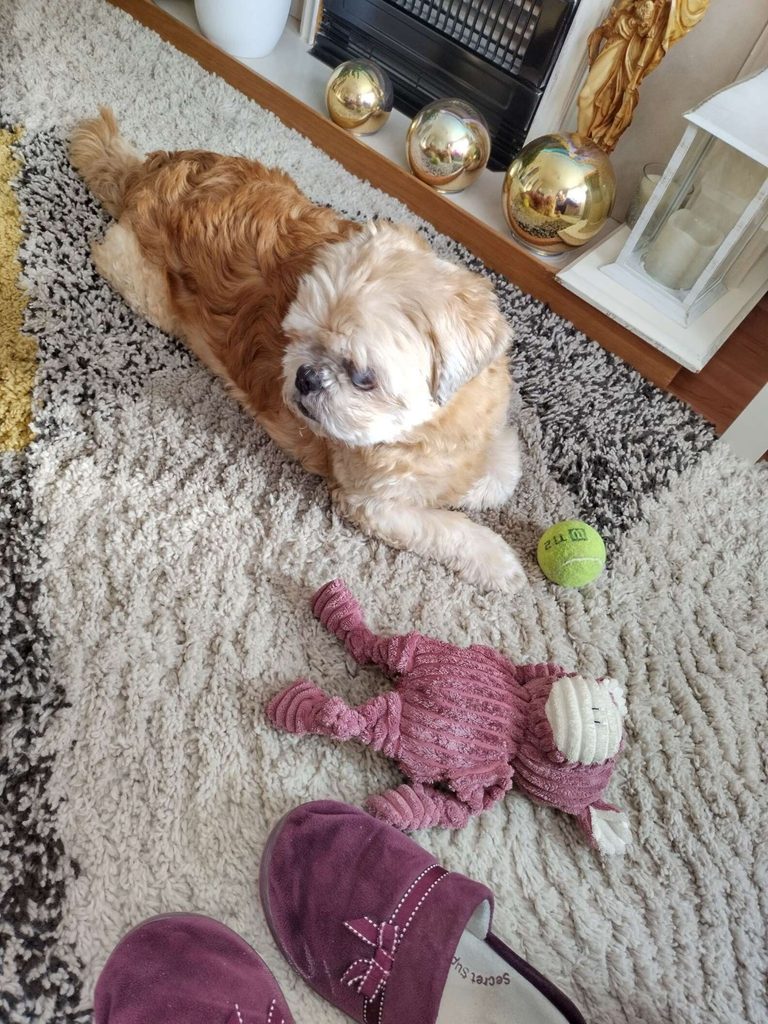
That adopter turned out to be Josephine Newhall, an 82-year-old pensioner from Wythenshawe. Her single-story bungalow, with easy access to the garden, was ideal for a dog navigating without sight.
“We knew he was blind when we took him in, but I have the perfect home for him and he can get in and out of the garden very easily, so it is no problem for him,” Newhall told The Dodo. “I have also found out he is deaf too — but he doesn’t let these disabilities hold him back at all.”
Morris settled in quickly, even gaining a companion in Ruby, a Lhasa Apso belonging to Newhall’s daughter, Karen Brookes.
“He is great company, and when you think where he has come from, it is a miracle he is still here,” Newhall said.
Frequently Asked Questions
How does a dog’s fur get matted to this degree?
Severe matting typically develops through prolonged neglect, when regular brushing and grooming stop entirely, often compounded by an animal’s inability to groom itself due to age, illness, or disability.
Can a dog function normally if both blind and deaf?
Many dogs adapt well using their other senses, particularly smell and touch, and thrive in stable, familiar environments with owners who accommodate their needs, as Morris has shown.
What should you do if you find a severely neglected animal?
Move the animal to safety if possible, seek veterinary attention, and report the case to a local animal welfare organization such as the RSPCA, which can investigate and provide specialized care.
How can people support organizations like the RSPCA?
Donations, fostering, adoption, and volunteering all directly support rescue and rehabilitation work for animals in situations like Morris’s.
Sources: Manchester Evening News (via Coventry Telegraph), Tameside Reporter, and Salford News, all citing RSPCA inspector Ryan King and adopter Josephine Newhall.
Leave a Reply