• Skip to main content
  • Skip to primary sidebar
  • Skip to footer
  • Home
  • About Us
  • Copyright Report
  • Submit Content
  • Terms
  • Privacy Policy
  • Legal Disclaimer

Hasan Jasim

Hasan Jasim is a place where you may get entertainment, viral videos, trending material, and breaking news. For a social generation, we are the largest community on the planet.

A Stalagmite Could Have Revealed What Caused Mesopotamia’s Fall

by Hasan Jasim Editorial Team Leave a Comment

ShareTweet

Mesopotamia’s first empire, the Akkadian, crumbled around 4,200 years ago, coinciding with similar transformations in Egypt and the Indus Valley, the two other prominent civilizations of the time. A study of stalagmites in Iran reveals that all three were caused by a widespread climate event.

Civilizations emerge and fall for a variety of reasons, and the roots of the Akkadian Empire’s destruction are still debated. Because of the coincidence of timing with distant events, several historians have proposed a climatic cause. However, the nature, and even presence, of this event has remained unknown, as it occurred in the middle of the Holocene era of generally stable temperatures, with no known increase in volcanic activity or change in solar output.

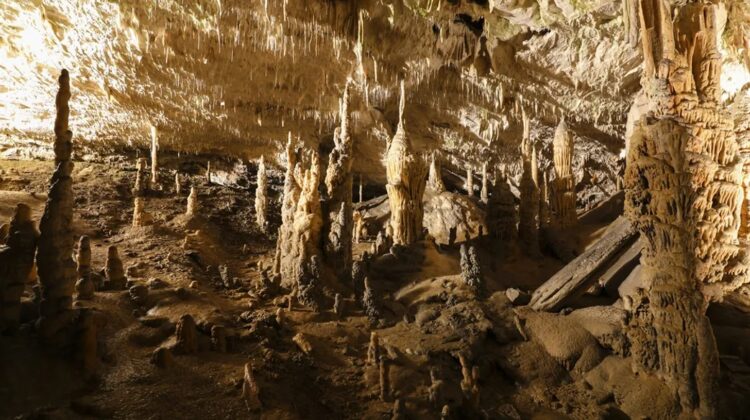
However, when a team led by Dr Stacy Carolin of The University of Oxford analyzed a stalagmite from Gol-e-Zard Cave in Iran’s Alborz Mountains created between 5,200 and 3,700 years ago, they discovered that something did happen around the relevant time. According to the findings published in the Proceedings of the National Academy of Sciences, there were large increases in the amount of magnesium relative to calcium between 4,510 and 4,260 years ago, correlating with slower growth and changes in the stone’s oxygen isotopes. These alterations lasted 110 and 290 years before the stalagmite composition recovered to pre-change levels.

Ancient civilizations’ manufacturing and mining sometimes left their mark on the planet, but we know of no method by which the Akkadians could have had an impact on such distant caves. As a result, it is more likely that whatever was causing the chemical change led the Akkadians down, rather than their collapse changing the chemistry of remote caverns.
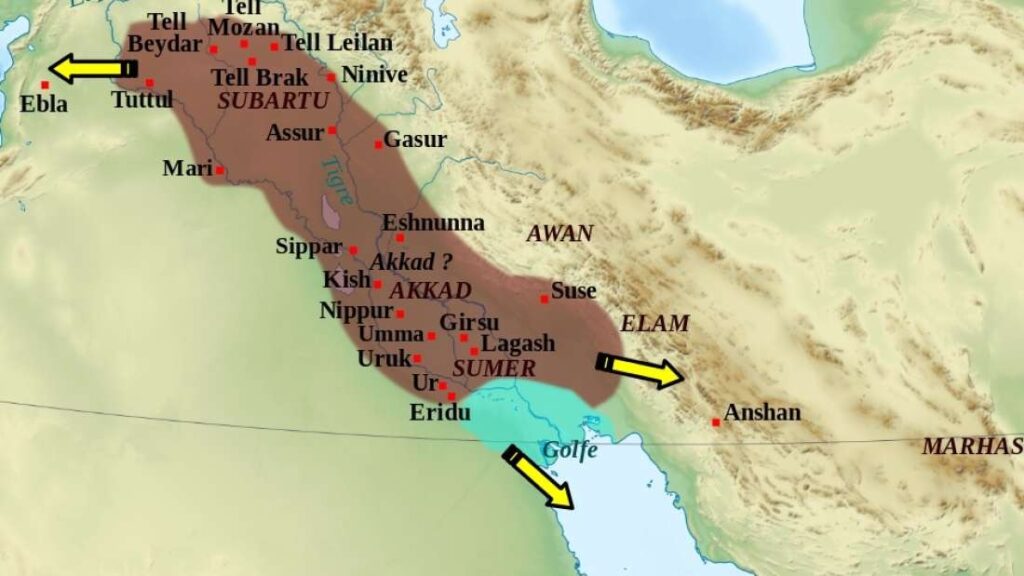
The Akkadian Empire was the first great empire of Mesopotamia, preceding the better known Babylonians and Sumerians. The explanation for its fall has come from mountains on the shores of the distant Caspian Sea. Zunkir via Wikimedia Commons CC-by-SA 3.0

The composition of the stalagmite appears to have changed as a result of more dust dropping in the mountains, which looks to be a result of drier circumstances to the west. Dry years in Syria and Iraq are now related with increasing dust deposition in Tehran, which is only 50 kilometers (30 miles) from Gol-e-Zard. The stalagmite’s delayed growth could also indicate locally drier circumstances.

Sediments from the Red Sea and the Gulf of Oman, among other paleoclimatic proxies, had previously been used to suggest that western Asia underwent at least one major dry period around this time, but the date was too inaccurate to reliably link them to the Akkadian collapse. The stalagmites, on the other hand, had a 31-year mistake.

Historians are divided on how much climate change has contributed to civilization collapse, and the discussion has heated up as it has become more relevant to us. We don’t know why Mesopotamia dried up at this time period, but it appears to have destroyed one civilization and badly harmed two others.

Filed Under: Trends Worldwide Tagged With: caused, could, fall, have, mesopotamia’s, revealed, stalagmite, trends, what, worldwide

Reader Interactions

Leave a Reply Cancel reply

Your email address will not be published. Required fields are marked *

Primary Sidebar

More to See

Woman notices two black eyes in the bush and rushes to assist.

By Hasan Jasim Editorial Team

Photographs of Extremely Rare Yellow and White Penguins in Antarctica

By Hasan Jasim Editorial Team

Animal lover finds squirrel with giant tooth, brings him home and gives him a new opportunity – thank you

By Hasan Jasim Editorial Team

Darwin, The Giant ‘Much-Loved’ Tortoise At Blackpool Zoo, Has Died At The Age Of 105

By Hasan Jasim Editorial Team

Ford F-250 Buyer Legally Can’t Take His Truck Home Because Of A Robin

By Hasan Jasim Editorial Team

Outrage erupts after distressed tourist-carrying camel in China is forced to its feet

By Hasan Jasim Editorial Team

The Booted Bantam Chicken Breed: A Colorful and Friendly Addition to Your Backyard Flock

By Hasan Jasim Editorial Team

Footer

ABOUT HASANJASIM.ONLINE

Hasanjasim.online is a digital platform dedicated to publishing well-researched articles about the animal kingdom, nature, and the environment. Our editorial team works to source stories from credible outlets, scientific research, and verified reports, aiming to inform as much as we entertain. From wildlife conservation and animal behavior to natural wonders and environmental science, we cover the topics that help readers better understand and appreciate the natural world. Whether you're a lifelong nature lover or simply curious about the planet we share, Hasanjasim.online aims to be a trustworthy destination for stories worth reading — and worth citing.

Recent

  • Euphorbia Hirta (“Asthma-Plant”): What Traditional Use and Real Research Actually Show
  • A Mystery Animal Has Been Randomly Attacking People in New Hampshire — Here’s What We Know
  • A Woman Was Filmed Sharing Her Ice Cream With Her Dog — Here’s What Vets Actually Say About It
  • Dolphin Calf Incident in Ceuta Sparks Outrage After Disturbing Beach Footage Emerges
  • Lactuca Serriola Root: Traditional Uses of Prickly Lettuce (Wild Lettuce) Root
  • The Puppy a Firefighter Couldn’t Leave Behind — and the Story Didn’t End There
  • A Mother Dog Dove Into Floodwater Again and Again — Until All 7 of Her Puppies Were Safe

Search