• Skip to main content
  • Skip to primary sidebar
  • Skip to footer
  • Home
  • About Us
  • Copyright Report
  • Submit Content
  • Terms
  • Privacy Policy
  • Legal Disclaimer

Hasan Jasim

Hasan Jasim is a place where you may get entertainment, viral videos, trending material, and breaking news. For a social generation, we are the largest community on the planet.

An International Team Confirms the Source of Waxy Substances Found on Beaches

by Hasan Jasim Editorial Team 1 Comment

ShareTweet

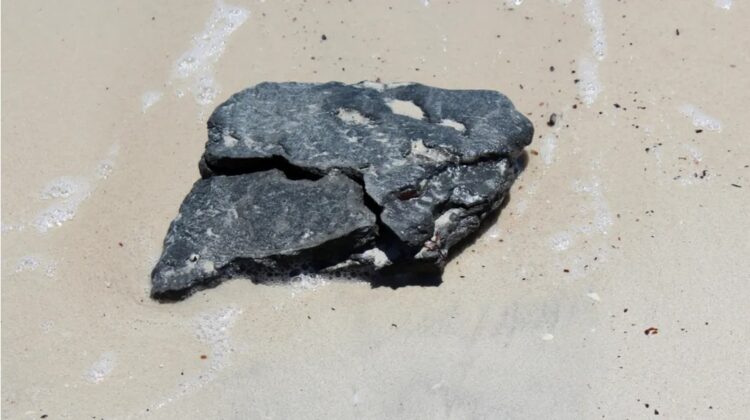
Rare rock-like clumps have long washed up on beaches around the world. The waxy substance known as ambergris is prized for its use in the perfume industry and sought after on black markets for its alleged medicinal properties. An international team of scientists has now confirmed the icky origins of these intriguing lumps through DNA analysis.

This one might require you to put down your lunch: it’s a blob formed in the digestive tract of sperm whales.

Ambergris, also known as jetsam, is a natural product of sperm whales and is found on beaches all over the world. However, it has only been linked indirectly through similar, but unanalyzed, samples found in their guts. The masses are primarily made up of ambrein, an alcohol that originates in the sperm whale’s digestive tract and possibly builds up into a dense, solid mass within the whale colon. Its varied composition – some grains are grainy, while others are denser – makes it especially capable of surviving extreme oceanic environments, with some samples estimated to be thousands, if not millions, of years old.

“Jetsam ambergris has long been an enigma, subject to debate and analysis in scientific journals since the eighteenth century,” the researchers write in Biology Letters.

Researchers extracted and analyzed DNA sequences from three samples collected in the North Sea, Indian, and Pacific Oceans to determine the origin of jetsam ambergris. A fourth sample was taken from a sperm whale beached in the Netherlands in 2012, providing the researchers with “fresh” ambergris from a known source to compare. Phylogenetic analyses “unambiguously supported” the fact that all four samples came from sperm whales (Physeter macrocephalus).
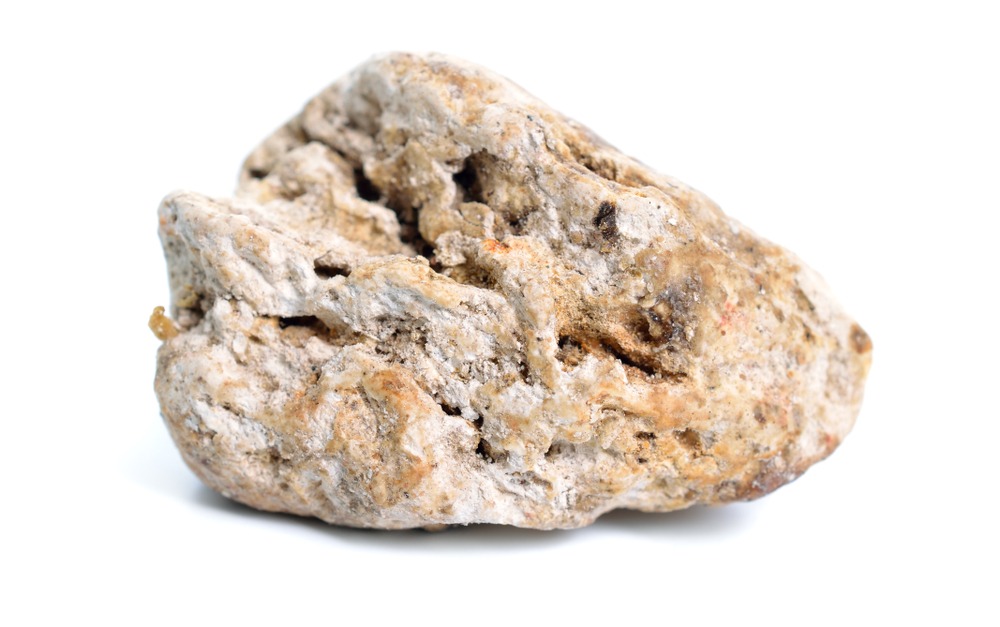
Ambergris has been found in a variety of colors and textures, from a deep shade of black to a light white color. spline_x/Shutterstock

“While confirmation of a sperm whale origin for jetsam ambergris is not a surprising result,” the study authors write, “the current study is the first in providing a significant proof-of-concept in retrieving endogenous DNA from ambergris and successfully using it for organism identification.” They add that other closely related deep-diving whale species may also produce ambergris but have not yet been recorded doing so.

It’s possible that squid beaks found in ambergris irritate the whale to the point of vomiting, resulting in a highly valuable gastrointestinal byproduct. It’s also possible that it’s condensed feces. The findings are the first to use DNA analysis to confirm the biological origin of jetsam ambergris.

“These findings have important implications for understanding the origins of jetsam ambergris as a prized natural product, as well as sperm whale metabolism and diet, and the ecological mechanisms underlying these coproliths,” the researchers write.

Ambergris may also play a role in understanding the long-term life history of sperm whales. The oldest known sample dates back to the Pleistocene era, up to 2.5 million years ago, though DNA preservation is unlikely to have lasted that long.
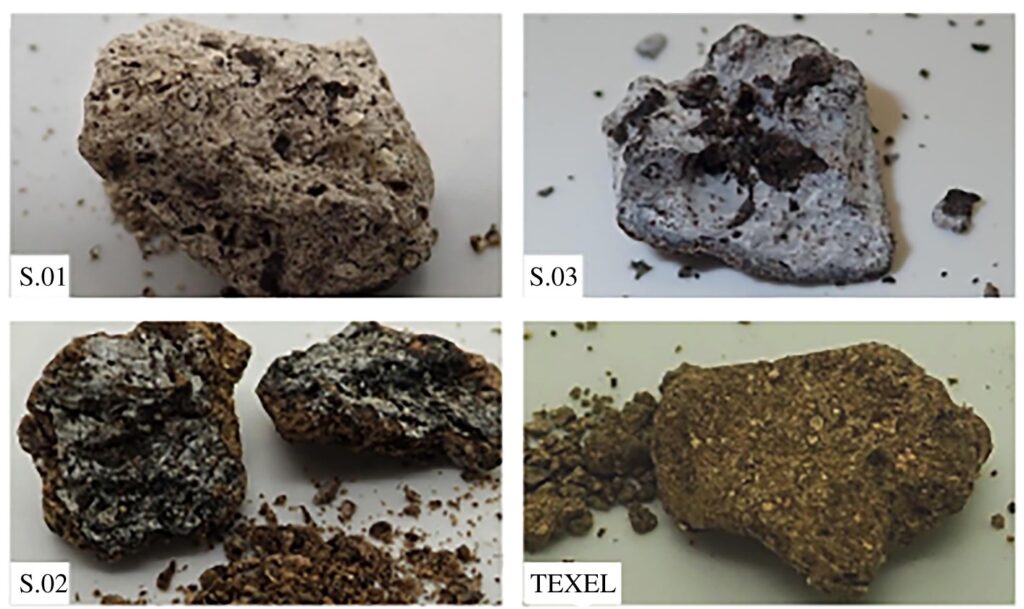
Researchers analyzed the DNA sequences from four ambergris specimens from the Pacific and Indian Oceans as well as the North Sea. Biology Letters

Filed Under: Trends Worldwide Tagged With: beaches, confirms, found,, international, source, substances, team, trends, waxy, worldwide

Reader Interactions

Comments

  1. sherri dougan says

    July 13, 2022 at 3:29 am

    This is nothing new they have known this for years

    Reply

Leave a Reply Cancel reply

Your email address will not be published. Required fields are marked *

Primary Sidebar

More to See

For Hundreds Of Years The Vatican Has Classed Capybara As A Fish

By Hasan Jasim Editorial Team

Africa Unveiled: Beyond the Mercator Projection

By Hasan Jasim Editorial Team

Incredible Footage Shows ‘World’s Most Battered’ Great White Shark

By Hasan Jasim Editorial Team

Mysterious golden orb discovered on the ocean floor near Alaska is identified over 2 years later

By Hasan Jasim Editorial Team

It’s surprising that the connection between chicken color and quality is still unclear to some

By Hasan Jasim Editorial Team

Are .gov websites reliable?

By Hasan Jasim Editorial Team

Circus lion was locked up for 20 long years, now watch his reaction when he’s released

By Hasan Jasim Editorial Team

Footer

ABOUT HASANJASIM.ONLINE

Hasanjasim.online is a digital platform dedicated to publishing well-researched articles about the animal kingdom, nature, and the environment. Our editorial team works to source stories from credible outlets, scientific research, and verified reports, aiming to inform as much as we entertain. From wildlife conservation and animal behavior to natural wonders and environmental science, we cover the topics that help readers better understand and appreciate the natural world. Whether you're a lifelong nature lover or simply curious about the planet we share, Hasanjasim.online aims to be a trustworthy destination for stories worth reading — and worth citing.

Recent

  • Euphorbia Hirta (“Asthma-Plant”): What Traditional Use and Real Research Actually Show
  • A Mystery Animal Has Been Randomly Attacking People in New Hampshire — Here’s What We Know
  • A Woman Was Filmed Sharing Her Ice Cream With Her Dog — Here’s What Vets Actually Say About It
  • Dolphin Calf Incident in Ceuta Sparks Outrage After Disturbing Beach Footage Emerges
  • Lactuca Serriola Root: Traditional Uses of Prickly Lettuce (Wild Lettuce) Root
  • The Puppy a Firefighter Couldn’t Leave Behind — and the Story Didn’t End There
  • A Mother Dog Dove Into Floodwater Again and Again — Until All 7 of Her Puppies Were Safe

Search