Whether for defence or to lure prey, the bioluminescence of these Australian animals is one of nature’s most beautiful scenes.
LIFE IN AUSTRALIA HAS adapted to our harsh climate in remarkable ways, but it’s those that use bioluminescence to lure prey, communicate and ward off predators, that have captured our attention.
Australia and New Zealand are the only places in the world where you can see glow worms in situ. Places like Glow Worm Glen in Bundanoon, NSW and the Melba Gully in the Great Otway National Park, VIC are popular not just with tourists, but local revellers too.
While we know why these glow worms become bioluminescent, some of Australia’s other glowing creatures are more mysterious, like the glowing scorpions of the Aussie outback, which continue to puzzle scientists.
Here, we look at some of Australia’s most spectacular sparkling species.
1. Sea snails
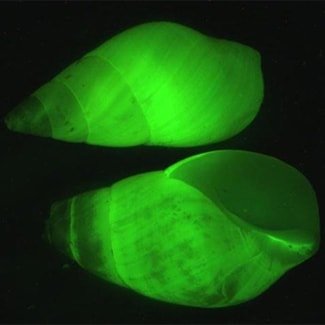
The yellow-coated clusterwink (Hinea brasiliana) is able to use its shell like a lampshade, filtering the light given off from naturally glowing cells to ward off predators.
Flashes of green light, or bioluminescence, produced by the clusterwink, have long puzzled marine biologists.
When gathered in large groups, their collective glow can be seen from the shore in Sydney and other eastern coastal spots.
2. Scorpions
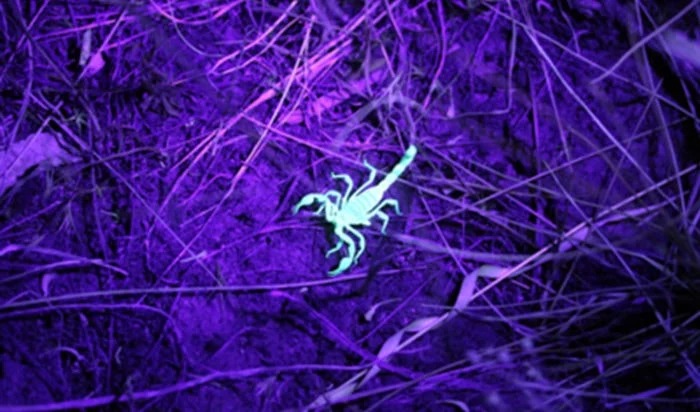
Scorpions glow when exposed to ultraviolet (UV) rays, producing a bright blue-green light that emanates from a layer within their exoskeleton, bewildering scientists.
Some have argued it helps improve their ability to hunt or may help protect them from being hunted, while others say the glow could be a part of an elaborate mating strategy.
The most convincing theory is that a scorpion’s entire body acts as an ‘eye’ to sense UV.
3. Worms
Australia is home to eight recognised glow worm species, known for their spectacular bioluminescence or ‘living light’.
They’re not actually worms, but the larvae of a primitive fly – the fungus gnat – and they form a large component of the insects’ boom-and-bust life cycle. They can be found in dense rainforests of Gondwanan origin and caves or rocky structures, thriving in permanently wet habitats.
During the day they are inconspicuous, but in the darkness these luminescent larvae sparkle, dotting caves, tunnels and walkways with blue-green light.
4. Coral
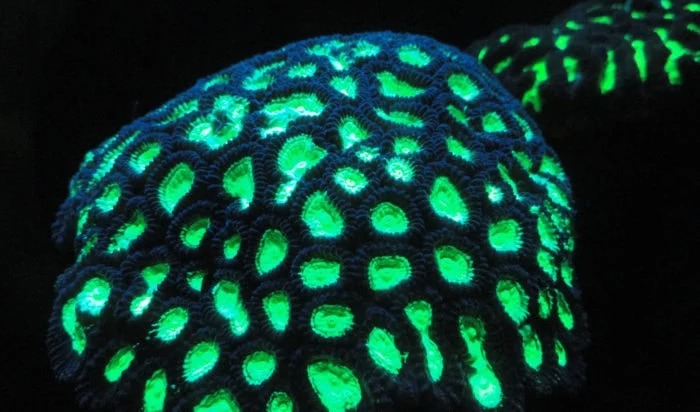
Deep-sea corals use fluorescent proteins to absorb light in order to assist symbiotic algae and bacteria that satisfy the coral’s energy needs.
The symbiotic algae can obtain the light needed to continue to photosynthesize under low-light conditions, through the presence of these special fluorescent proteins.
Coral and its symbiotic algae work together. The algae is provided with shelter and nutrients, while in turn it supplies 90 per cent of the coral’s energy needs.
5. Fungi
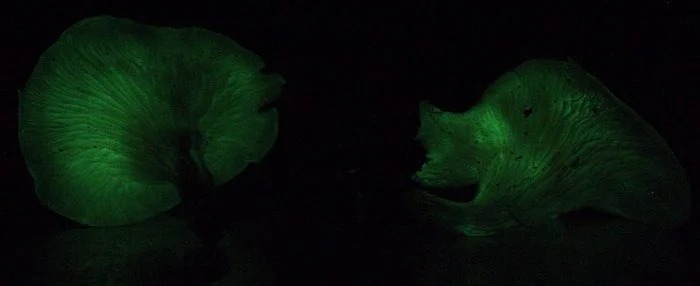
Despite looking pretty tasty, ghost fungi (Omphalotus nidiformis), found mostly in Tasmania and South Australia, is toxic.
In low-light conditions the fungi exhibits a bright green glow. According to one Australian mycologist, the light it emits is “bright enough to read a watch face with”.
Records suggest that Aboriginal Australians were particularly cautious around ghost fungi because of its association with bad spirits.
6. Algae
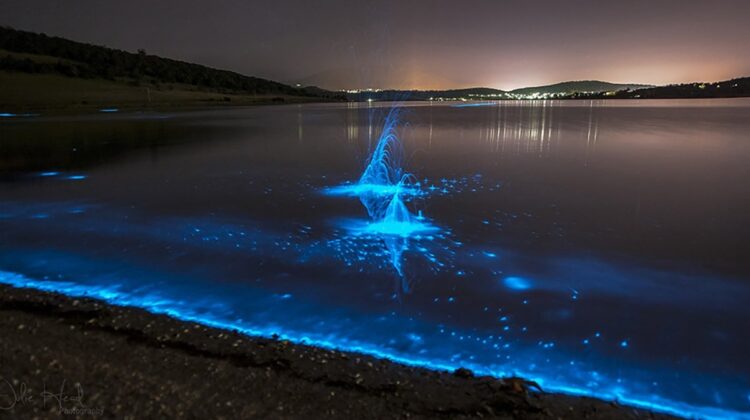
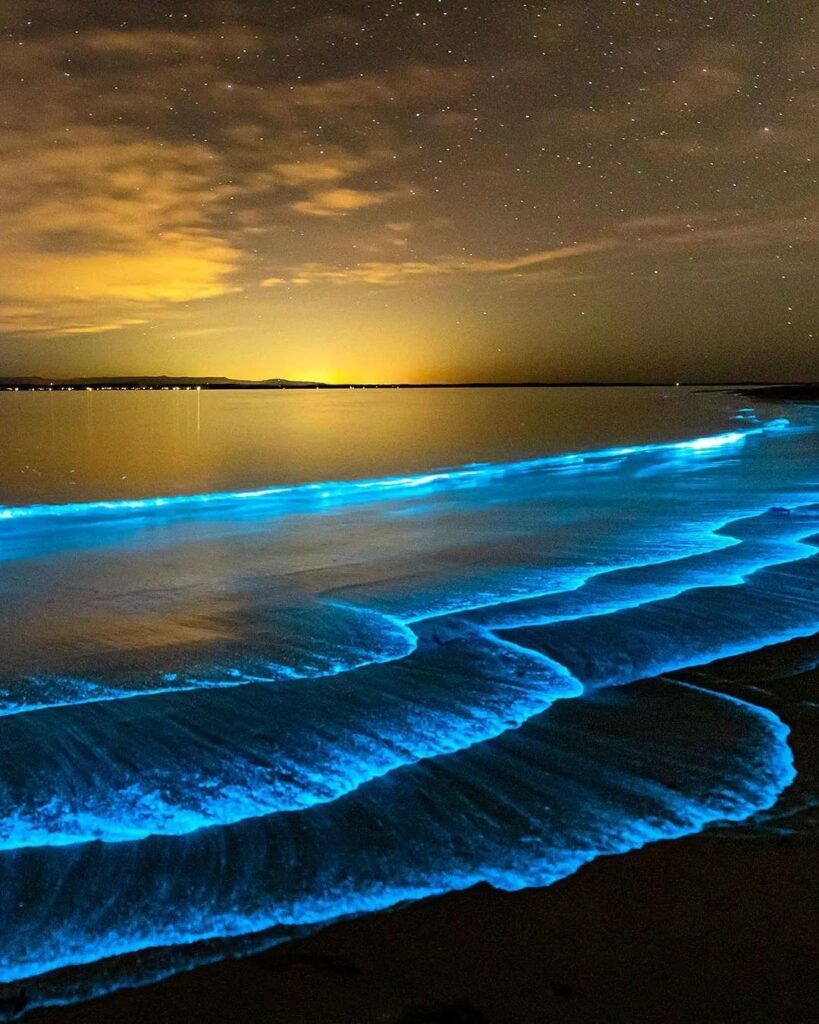
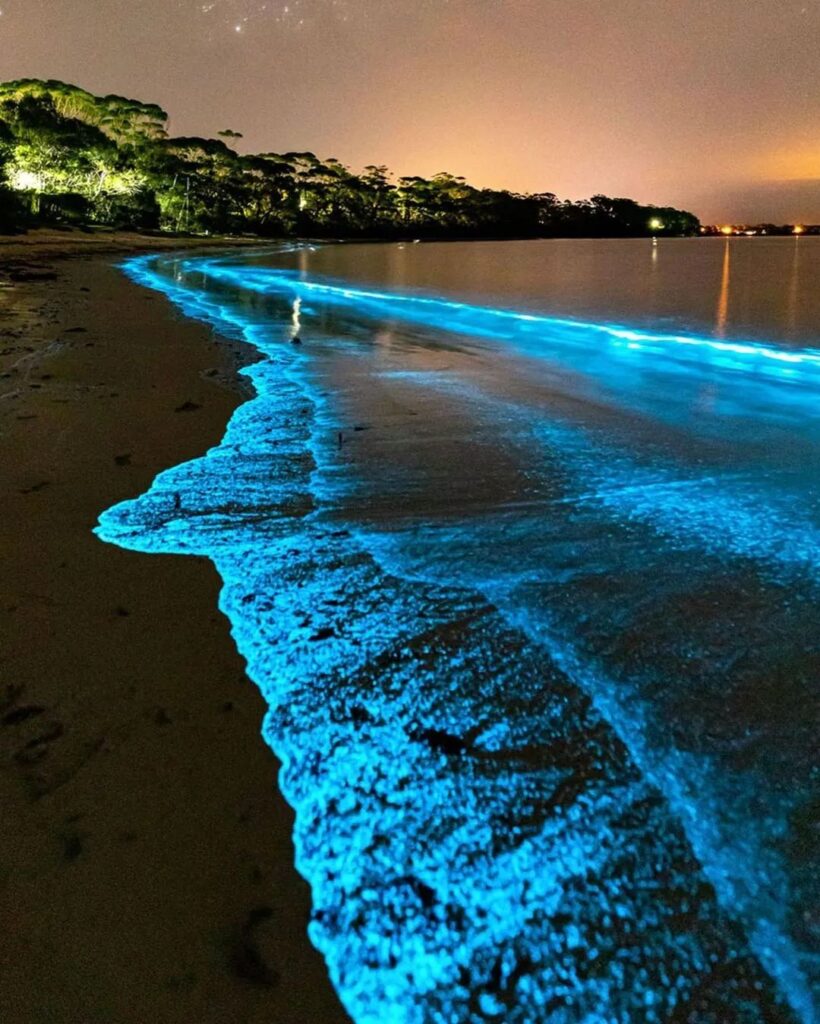
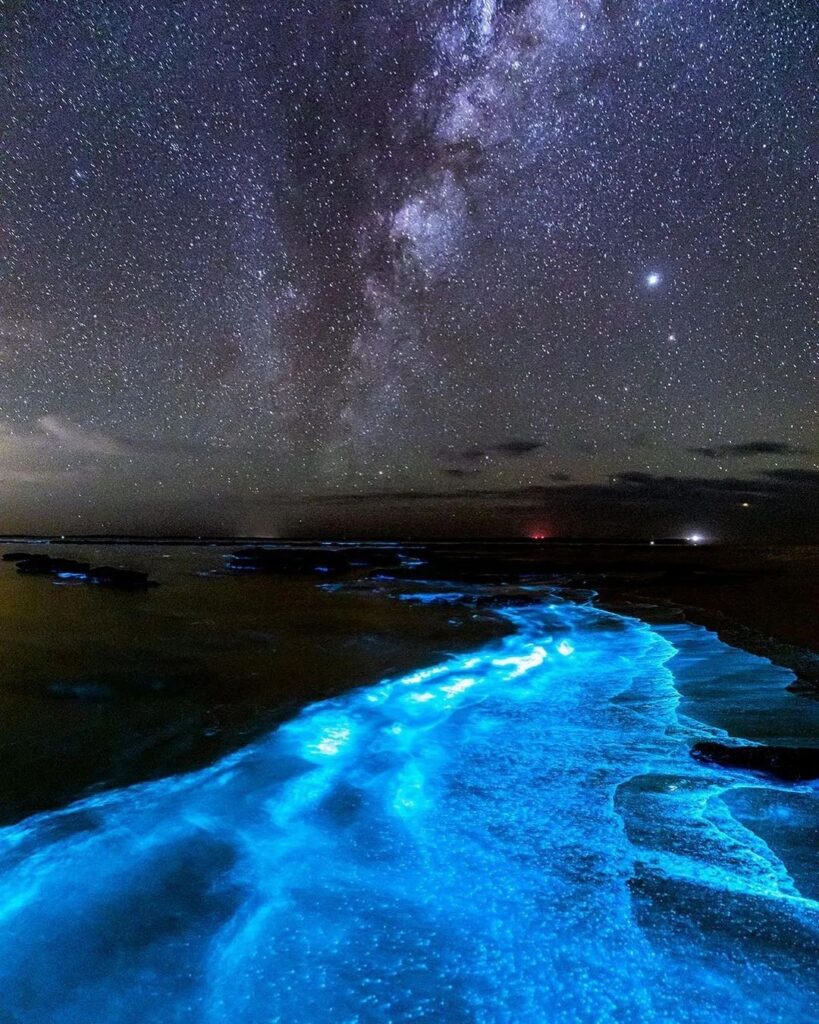
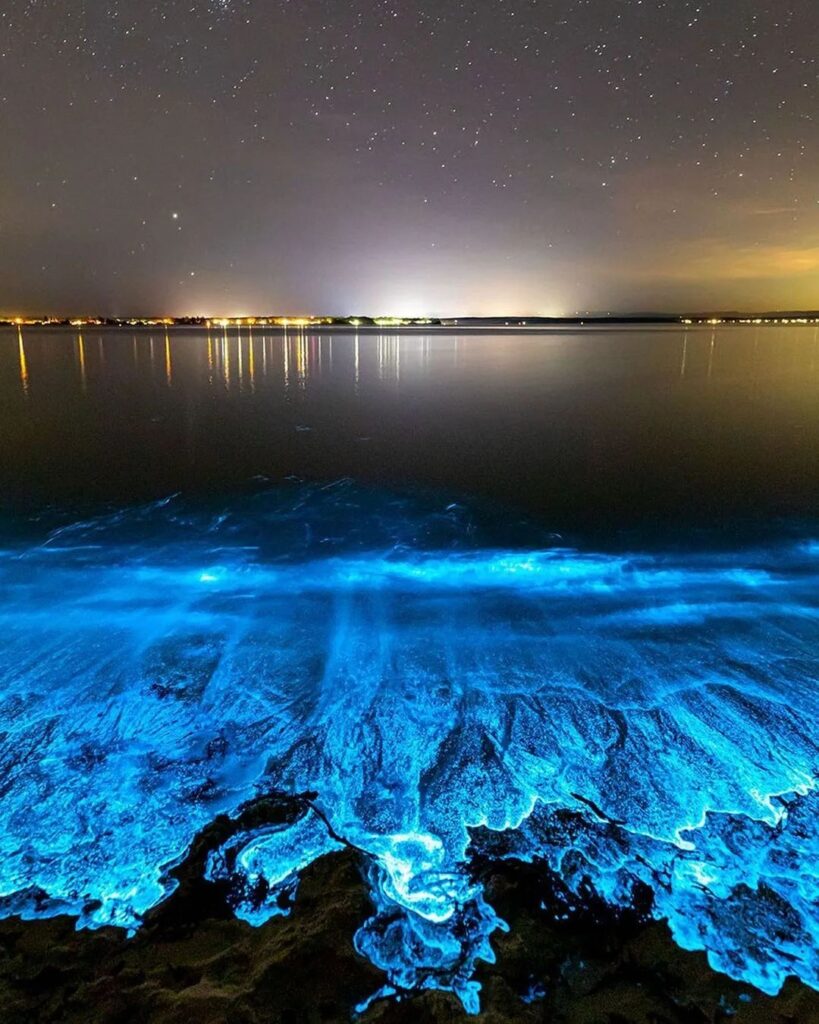
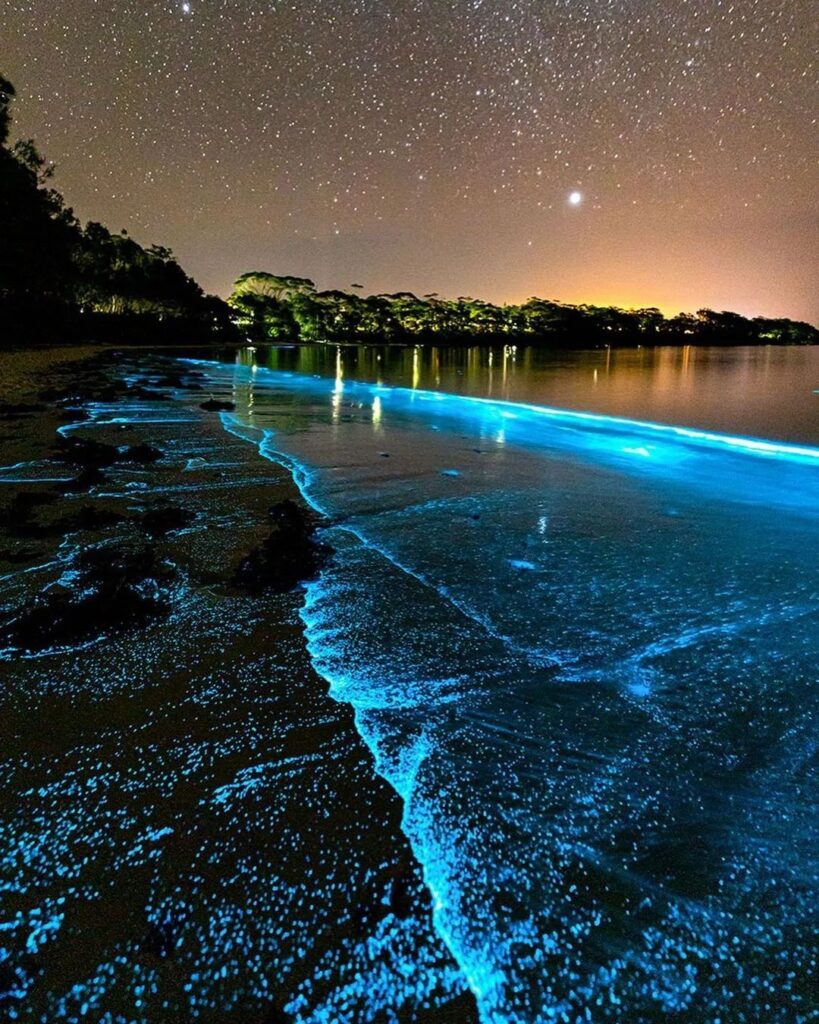
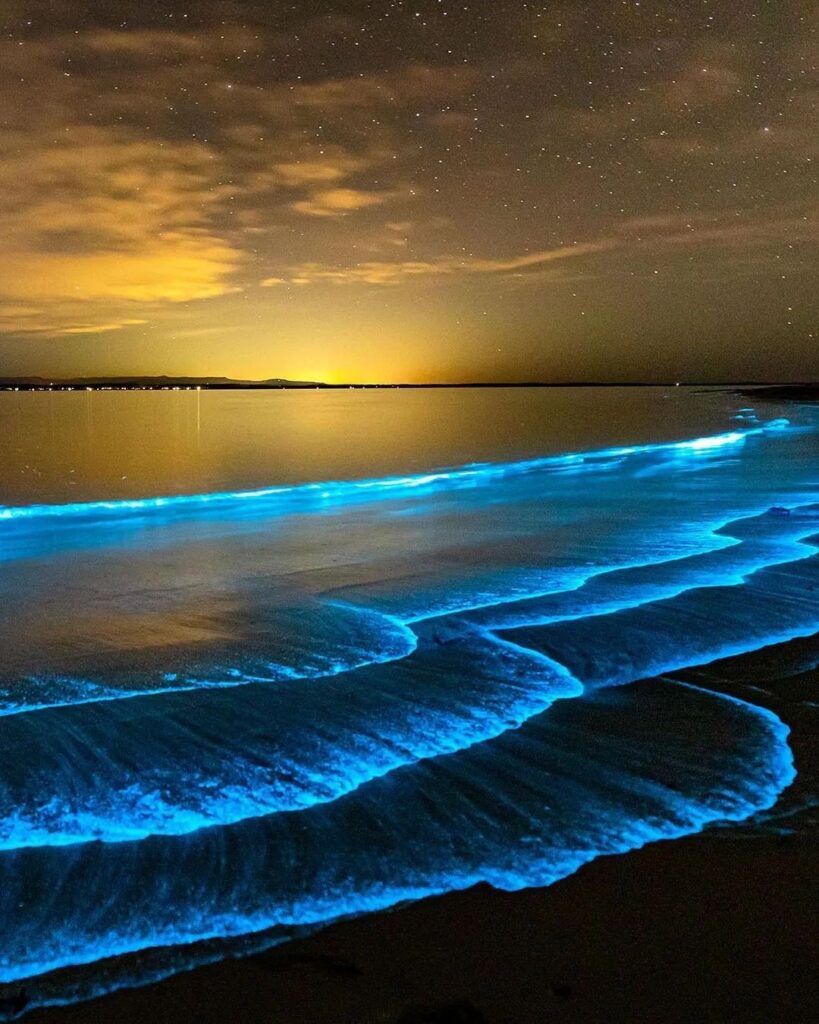
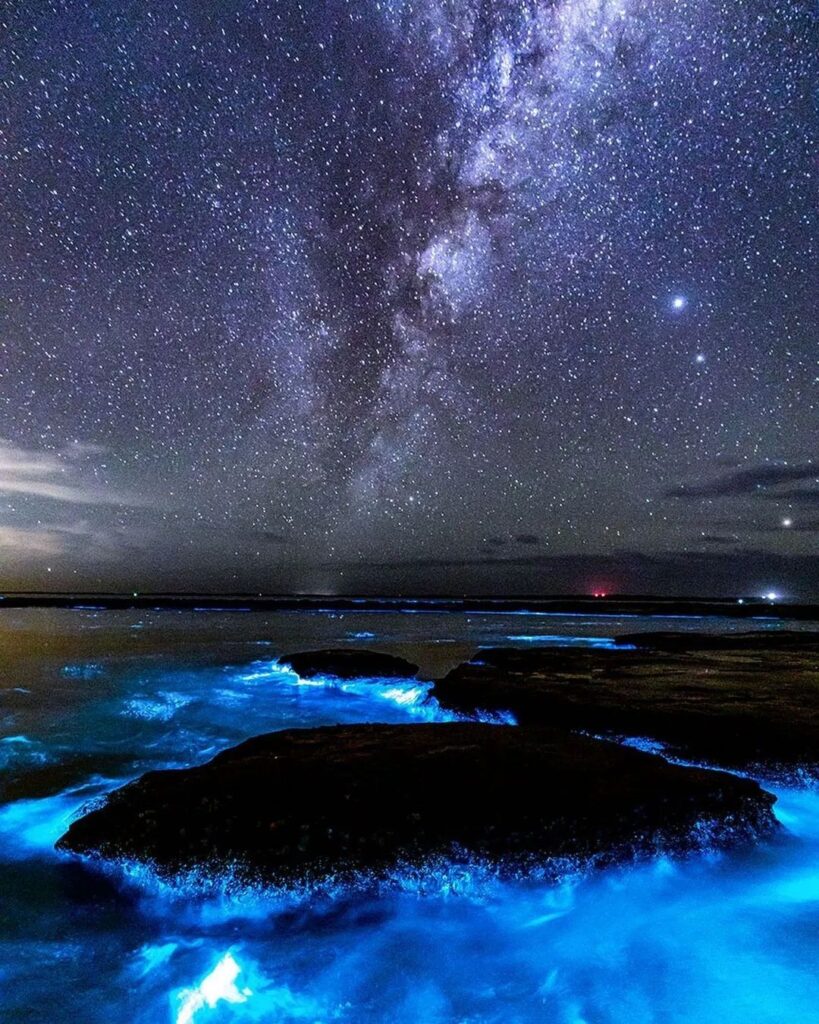
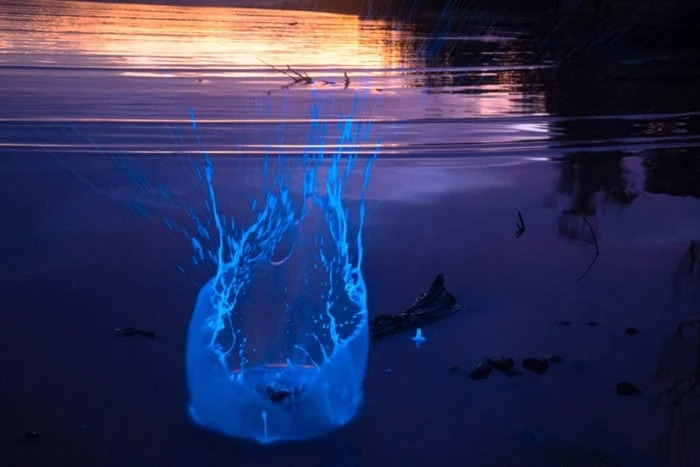
Known as a ‘red tide’ by day, the microalgae Noctiluca scintillans or ‘sea sparkle’ emits a bioluminescent blue glow when disturbed at night.
Blooms of the sea sparkle can be deadly to fish if it accumulates and gives off ammonia as the microalgae die.
Leave a Reply