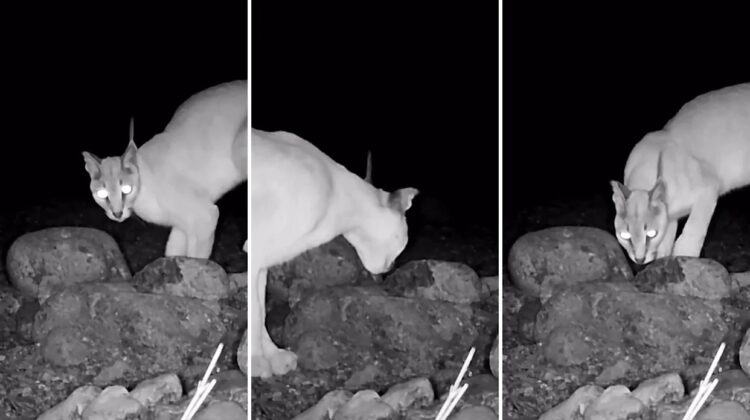
In an era when cat videos dominate the internet, one recent sighting carried far more weight than viral entertainment. Deep within the rugged terrain of the United Arab Emirates, motion-activated trail cameras captured first-of-its-kind footage of one of the region’s rarest predators: the Arabian caracal.
The video was shared by Emirates Nature-WWF — a collaboration between Emirates Nature and the World Wide Fund for Nature (WWF). In an October 7 press release, the organization described the sighting as a conservation milestone, confirming the rediscovery of the elusive feline inside Wadi Wurayah National Park.
Caracals are known for their striking black ear tufts, lean muscular bodies, and stealthy nocturnal behavior. But the Arabian subspecies is especially elusive. Documented sightings in the UAE have been rare in recent decades, with confirmed records noted only in 2019 and 2023 before this latest footage. Conservationists estimate that likely fewer than 250 mature individuals remain in the wild within the country, leading to its classification as Critically Endangered on the UAE National Red List.
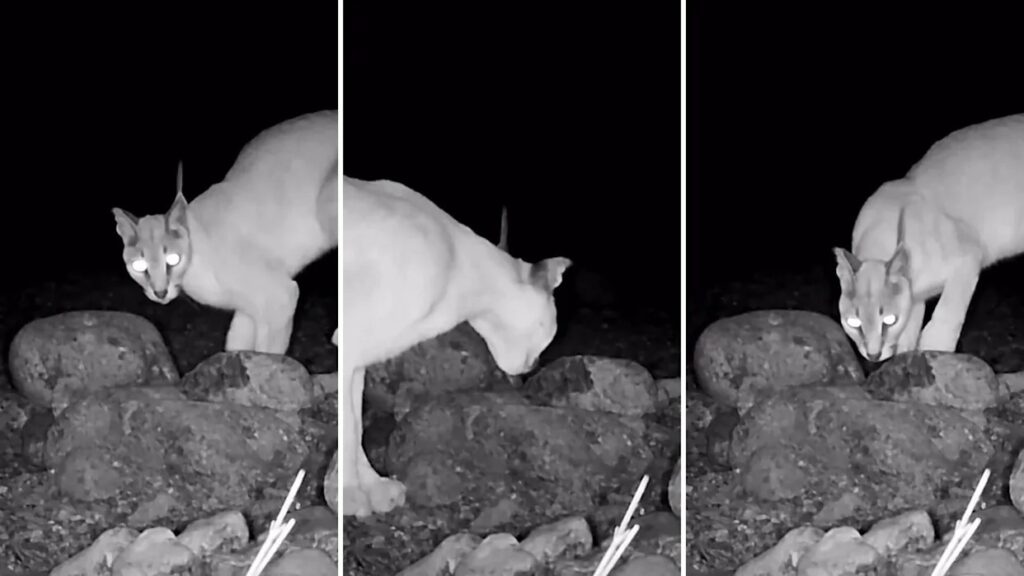
What makes this rediscovery remarkable is not just the animal itself — but how it was found.
The footage came from a network of motion-sensitive trail cameras monitored in part by volunteers participating in the Notice Nature mapping initiative. These citizen scientists review thousands of hours of recordings, scanning for movement that could signal rare or threatened wildlife. In remote desert and mountain environments where human presence is limited, this collaborative model dramatically increases the chances of detecting species that would otherwise remain unseen.
Trail cameras have quietly revolutionized wildlife conservation. Modern systems now use solar-powered batteries and self-recharging units, allowing continuous monitoring in isolated habitats without constant maintenance. Expanded data storage and real-time cloud transmission mean researchers can track biodiversity trends faster and more accurately than ever before.
For species like the Arabian caracal — solitary, primarily nocturnal, and wary of human contact — such technology is not just helpful; it is essential. Each confirmed sighting helps scientists understand territory range, breeding presence, and long-term population viability. That data informs habitat protection policies, anti-poaching enforcement, and broader ecosystem management.
Protected areas such as Wadi Wurayah National Park play a critical role in sustaining these fragile populations. Mountain wadis and rocky valleys provide cover, prey, and relative safety from expanding development. Without strict conservation measures, rare predators like the Arabian caracal risk disappearing quietly from the landscape.
The new footage does not guarantee recovery. But it offers something equally powerful: evidence of survival.
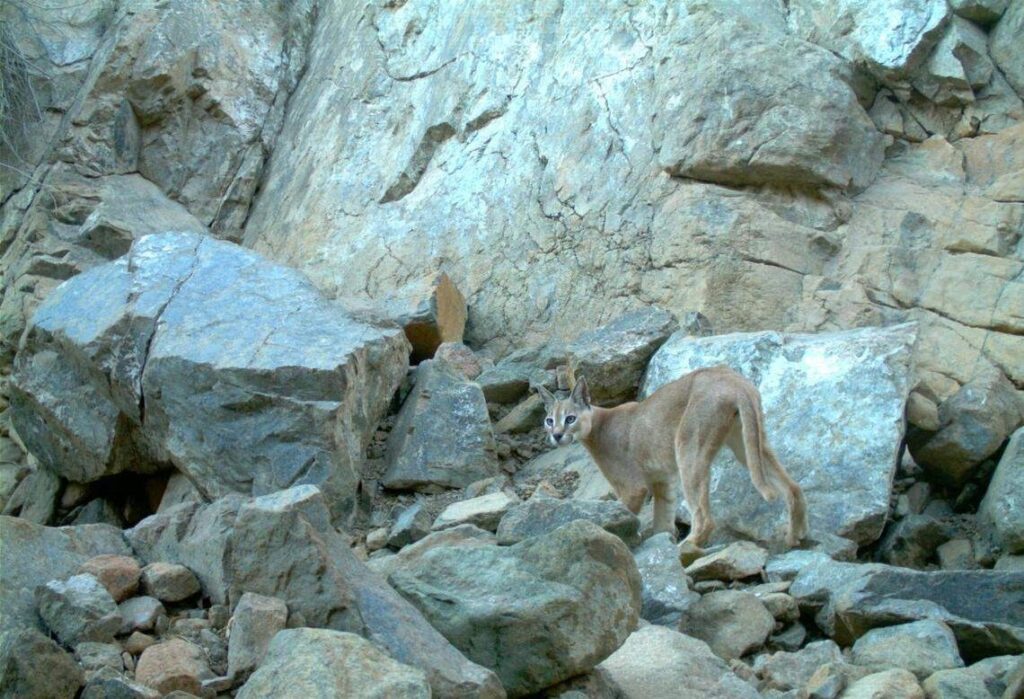
And sometimes, in conservation, proof that a species still walks the night is the first step toward ensuring it continues to do so.
The rediscovery of the Arabian caracal highlights the growing role of advanced trail camera technology in endangered species monitoring. Organizations like Emirates Nature-WWF and the World Wide Fund for Nature use solar-powered camera traps, AI-assisted wildlife recognition software, and cloud-based data systems to improve biodiversity tracking. Investment in protected areas such as Wadi Wurayah National Park is critical for maintaining predator-prey balance, preventing habitat fragmentation, and strengthening long-term ecosystem resilience across the UAE.
Leave a Reply