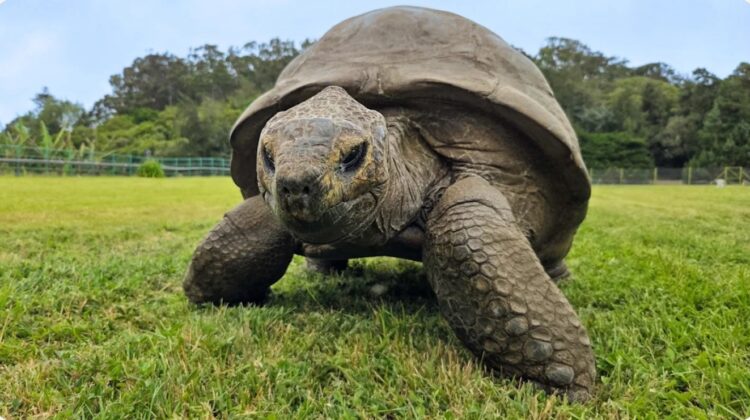
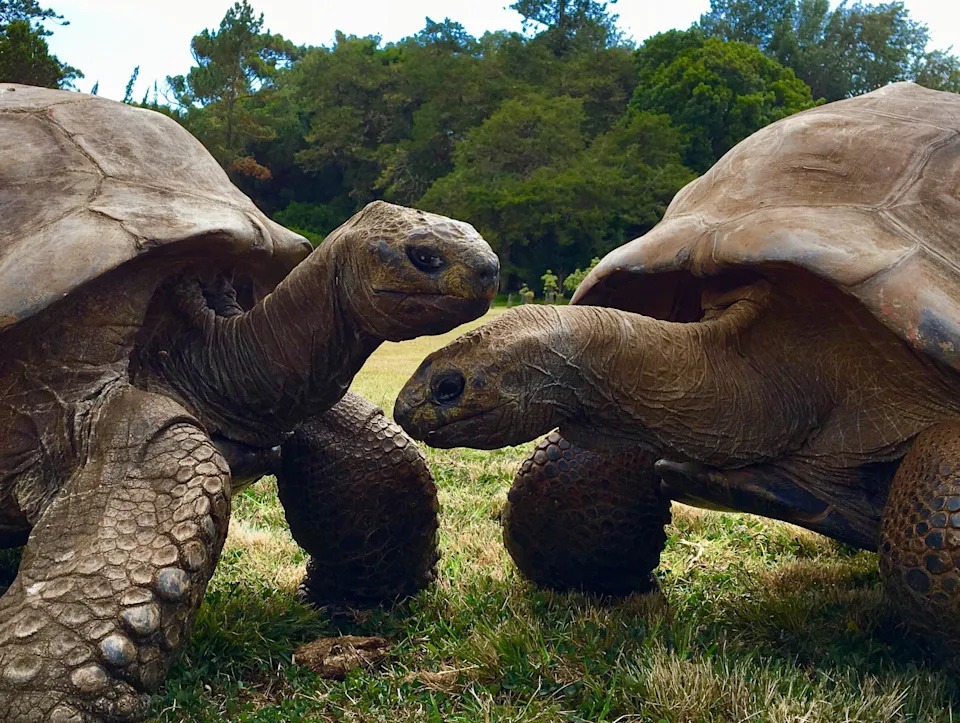
He was hatched around 1832, before Queen Victoria took the throne and decades before Thomas Edison patented the lightbulb. Jonathan, an Aldabra giant tortoise, is the world’s oldest known land animal. Scientists have now read his genes to find out how he made it so far.
Meet Jonathan
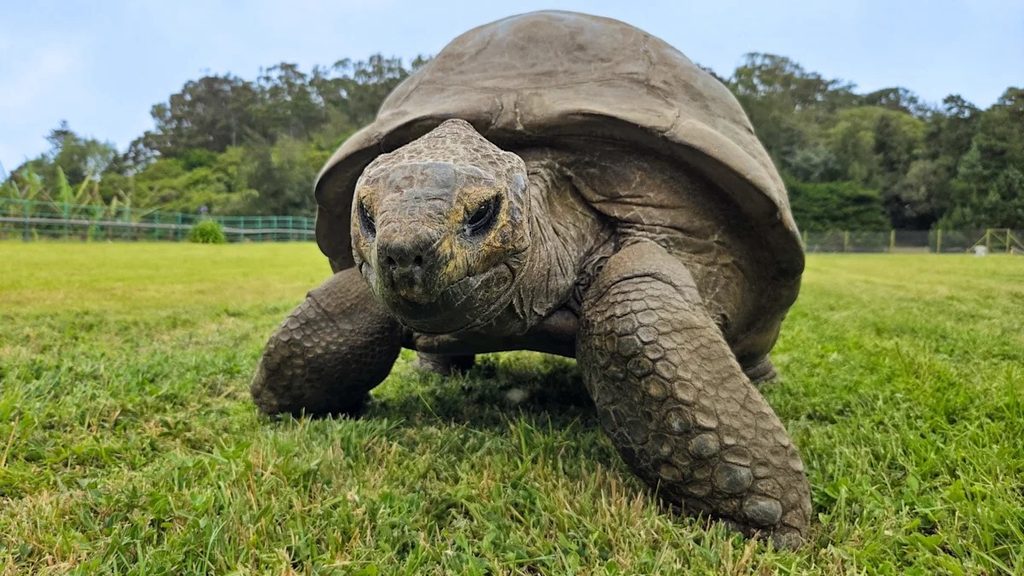
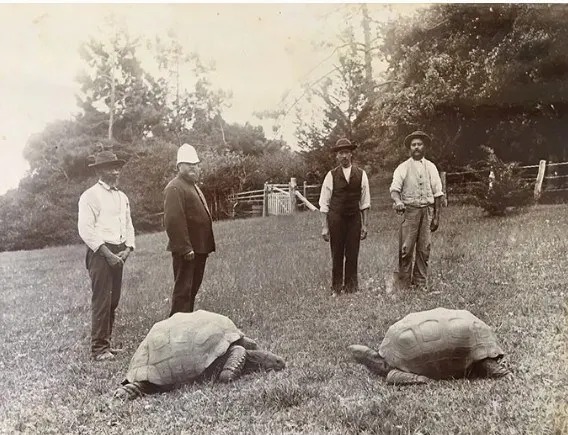
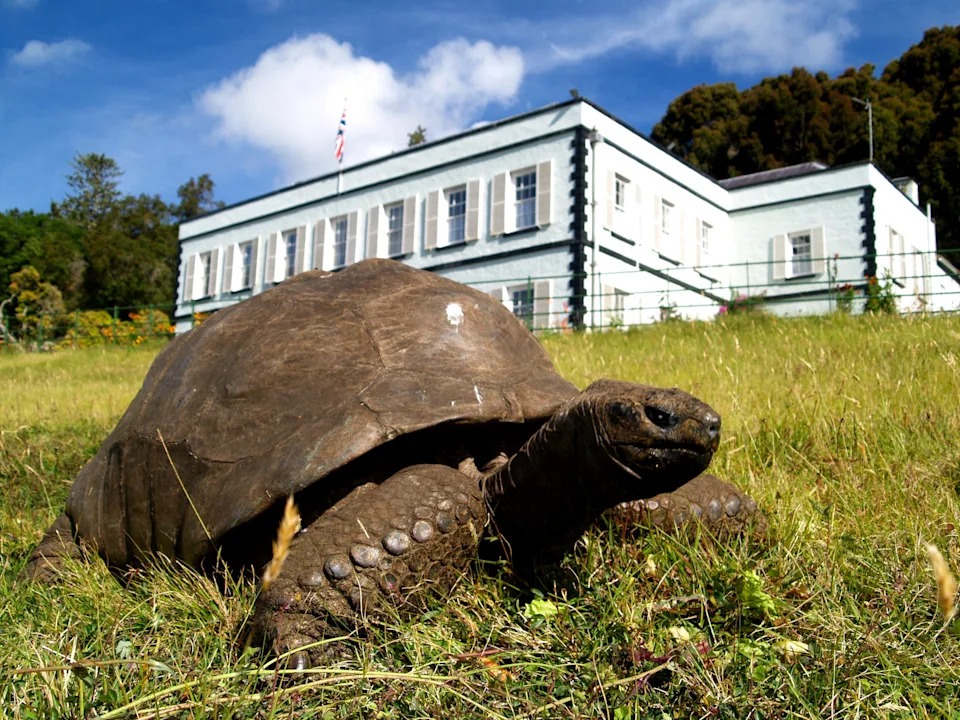
Jonathan has spent most of his life on St. Helena, a British island in the South Atlantic, on the grounds of Plantation House, the governor’s residence. He arrived from the Seychelles in 1882 as a gift to the governor, already fully grown, and was around 50 years old at the time, which puts him at an estimated 194 today. He weighs about 450 pounds and shares his lawn with another tortoise, David.
What the Genes Show
Researchers from the University of Cambridge and the longevity nonprofit Kallel Foundation published the findings on October 7 in Science Advances. They sequenced Jonathan’s genome from cheek and saliva samples and found 287 genes with variants unique to him, compared with other tortoises. Many are linked to DNA repair, inflammation, insulin regulation and cancer suppression. He also has extra copies of a gene that encodes a protein that hunts down aging and cancerous cells, according to Reuters.
The team also made the first study of a giant tortoise’s epigenome, the chemical switches that tell genes when to turn on and off. In most animals, these switches drift with age. In Jonathan, those controlling energy production and DNA repair looked remarkably similar to the ones in younger tortoises. “We found that the gene regulators involved in energy production and DNA repair have remained incredibly stable,” said Justin Gerlach, a study co-author at the University of Cambridge.
What the Study Can’t Say
The study has limits. Jonathan is a single animal, and the team compared him with only four other Aldabra tortoises. His DNA also came from cheek swabs, which produce shorter and more contaminated fragments than blood. Island officials did not allow a blood draw, so gaps in his genome had to be filled in using a younger tortoise’s DNA. Stephen Clark, the study’s senior author, called the result “roughly 95 percent Jonathan” and acknowledged that unique variants hiding in the borrowed stretches could have been missed.
Clark also said researchers cannot yet tell whether Jonathan’s tidy genes keep him alive or are a by-product of something else. Benjamin Vaisvil, a co-lead author, said Jonathan has “the most documentary evidence supporting his age” of any claimed long-lived Aldabra.
What It Means for People
The team hopes lessons from Jonathan’s cells could eventually help inform treatments for age-related disease. “Nature has already solved the puzzle of aging in remarkable ways,” Clark said. But the work is early, and nothing in it shows that these tortoise traits can be turned into therapies for people.
Planning for a Long Life
You don’t have to be a tortoise to plan for many decades ahead. Here are some topics people explore:
- Retirement planning. Compare retirement accounts, annuities and financial planning services to make savings last.
- Insurance. Life insurance, health insurance and long-term care insurance can protect you and your family as you age.
- Preventive health. Health screenings and regular check-ups help catch problems early.
- Genetic and fitness tools. DNA testing kits and fitness trackers are popular for tracking health, though they don’t replace medical advice.
- Pet tortoise care. If you keep a tortoise, a proper enclosure, UVB lighting and reptile vet care matter, since these animals can outlive their owners.
Frequently Asked Questions
How old is Jonathan? He is estimated at 194 years old, and was already about 50 when he arrived on St. Helena in 1882.
What did the study find? It found 287 unique gene variants linked to DNA repair, inflammation, insulin and cancer suppression, plus an epigenome that stayed unusually stable.
Does this mean humans can live to 194? No. The study is on a single tortoise and shows nothing that can be applied to people yet.
Where does Jonathan live? On St. Helena, in the grounds of Plantation House, where he lives with another tortoise, David.
Sources: Science Advances, Reuters, Scientific American, Popular Science, and the University of Cambridge, all covering the October 2026 study of Jonathan, the 194-year-old Aldabra giant tortoise, and the genetic traits linked to his longevity.
Leave a Reply