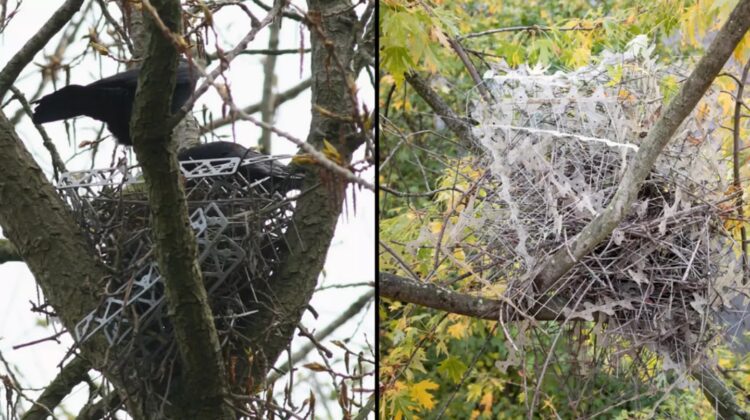
In various cities worldwide, anti-bird spikes have been installed to safeguard statues and balconies from undesired avian visitors. However, it seems that now the birds are finding a way to retaliate.
Have you ever noticed those sharp metal pins that people install on buildings to deter birds from nesting? They are called anti-bird spikes, and they are supposed to make the surfaces uncomfortable or dangerous for birds to land on. But some birds, mostly Corvidae such as crows and magpies, have found a clever way to turn these spikes into their advantage. They use them to build their nests!
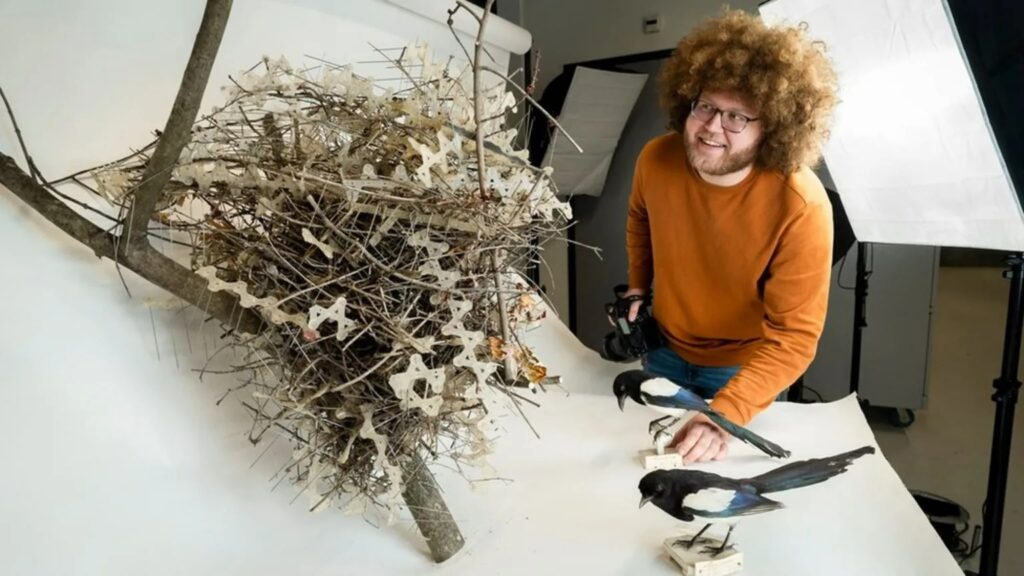
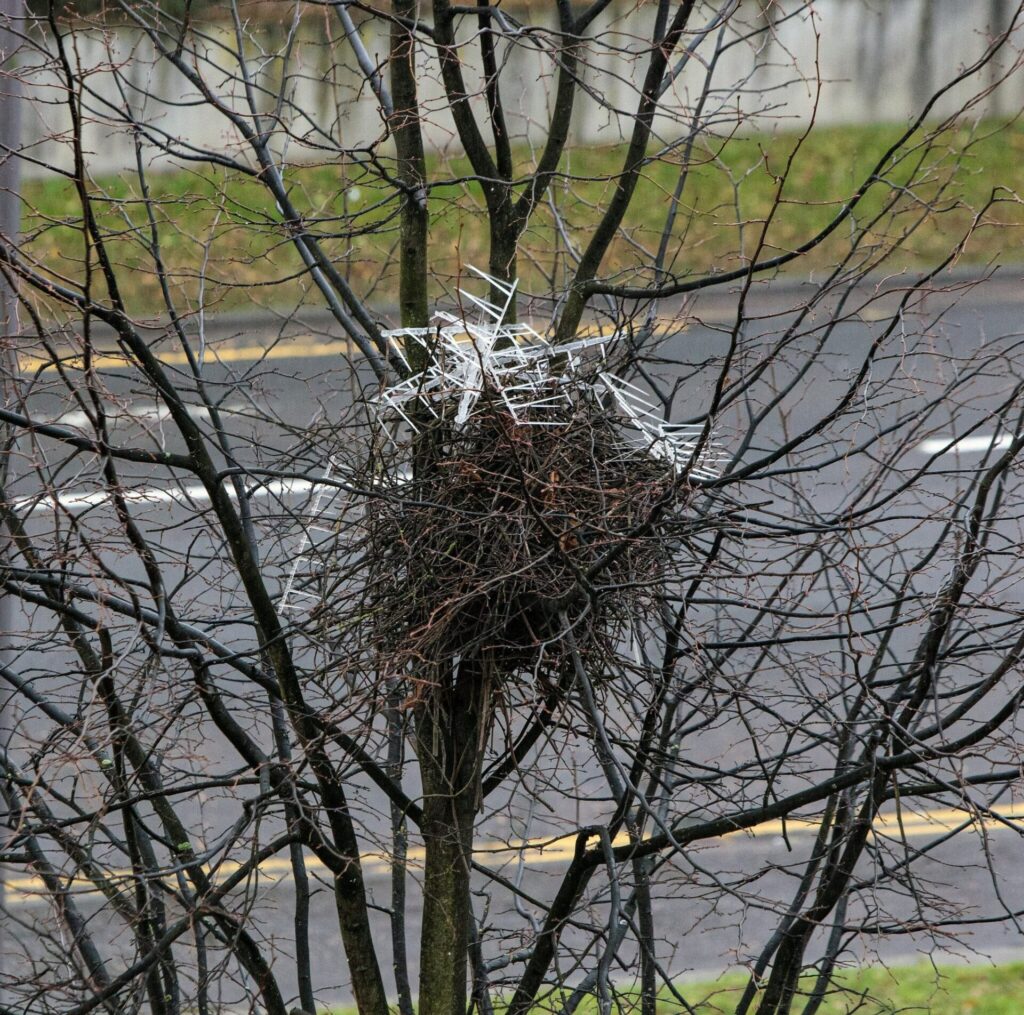
Researchers from the Netherlands have documented several cases of birds using anti-bird spikes to fortify their nests in urban areas across Europe. They found that the birds strip the spikes from the buildings and bring them to their nests, where they position them outwards, creating a thorny barrier around their eggs and chicks. The researchers call this an ultimate adaptation to life in the city.
“Just the fact they’re using these anti-bird spikes to protect their nests … is like the perfect comeback,” Auke-Florian Hiemstra, lead author of a study on the peculiar nests said in an interview. “These rebellious birds [are] outsmarting us.”
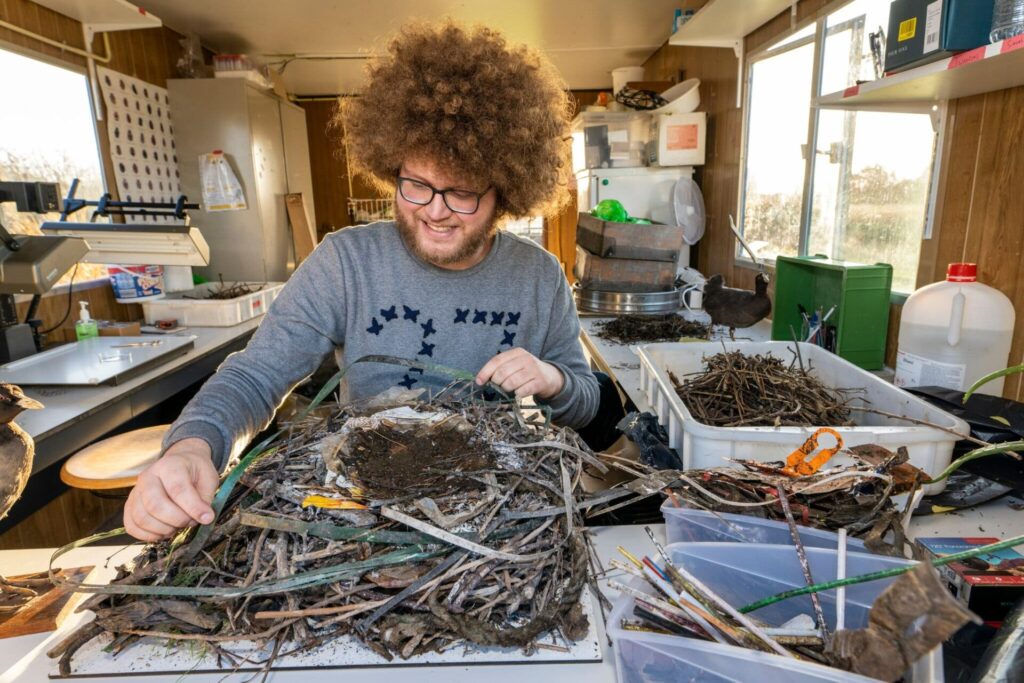
The researchers observed the behavior in “hostile” architecture in Scotland, Holland, and Belgium, and found that these birds rip off the spikes from the buildings and incorporate them into their nest architecture, pointing them outwards to create a defensive barrier against predators and competitors.
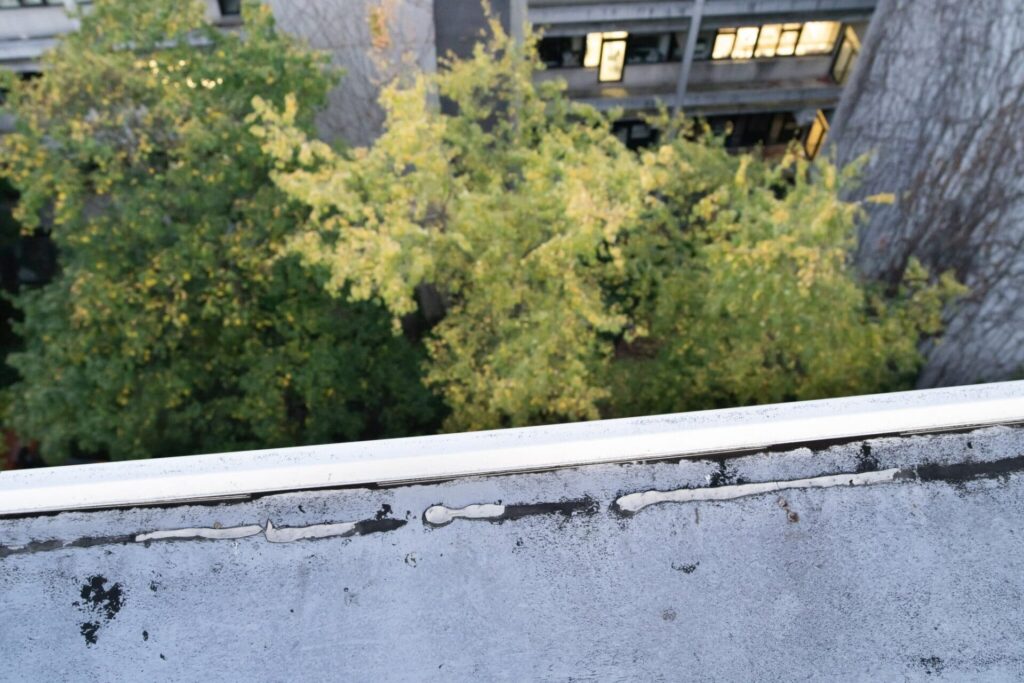
One of the most impressive examples of this behavior was observed in a hospital courtyard in Antwerp, Belgium, where a magpie nest contained about 1,500 spikes, covering an area of 50 meters. The researchers described it as “an impregnable fortress” and “a bunker for birds”. The magpies had removed the spikes from the hospital roof, leaving behind only the glue traces.
Magpies are known to build roofs over their nests to prevent other birds from stealing their eggs and young. Usually, they use thorny plants or spiky branches for this purpose. But in urban areas, where natural materials are scarce, they resort to human-made objects, such as anti-bird spikes, barbed wire, or knitting needles.
Crows also use anti-bird spikes for their nests, but in a different way. They place the spikes on the roof of their nests, pointing them inward to create a lattice structure that supports the nest. This way, they avoid harming themselves or their offspring with the sharp pins.
The behavior may help the birds cope with habitat loss and fragmentation, climate change, and pollution. It may also increase their reproductive success and survival rates. However, there may also be some risks associated with using anti-bird spikes, such as injuries, infections, or entanglement.
The researchers say that this behavior shows remarkable adaptability and intelligence of these birds, which are able to use human-made materials for their own benefit. They also see it as a form of “beautiful revenge”, as the birds are using the material that humans made to keep them away, to make more birds.
Leave a Reply