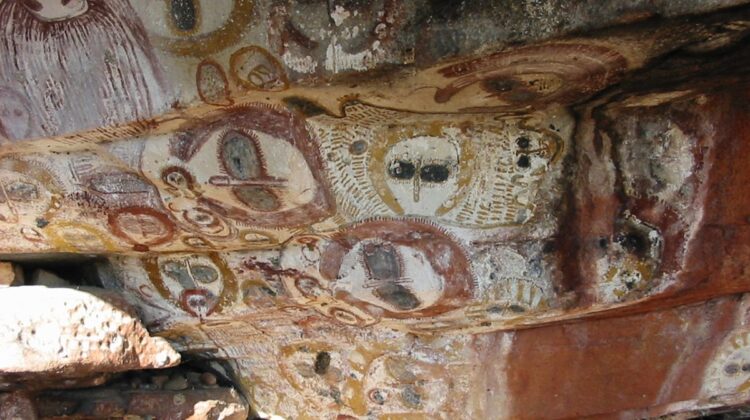
Delving into the mystique of ancient cultures often unveils intriguing tales etched on the canvas of time. Among the enigmatic wonders, the Wandjinas, supreme spirit beings in Australian Aboriginal mythology, emerge as captivating protagonists. These ethereal entities, believed to be creators of land and people, are immortalized in some of Australia’s oldest rock art paintings, notably in the Kimberley region of Western Australia.
The Wandjinas, also known as Gulingi by the Wunambal people in the Mitchell Plateau area, are revered as cloud and rain spirits. According to Aboriginal lore, they descended from the Milky Way during Dreamtime, the genesis of the Aboriginal narrative, shaping Earth and its inhabitants. These celestial beings bestowed upon the Aboriginal people their laws, customs, and the wisdom to coexist harmoniously with nature. Linked with water, fertility, and life force, the Wandjinas are said to wield the power to unleash floods, lightning, and cyclones upon those who transgress their sacred laws.
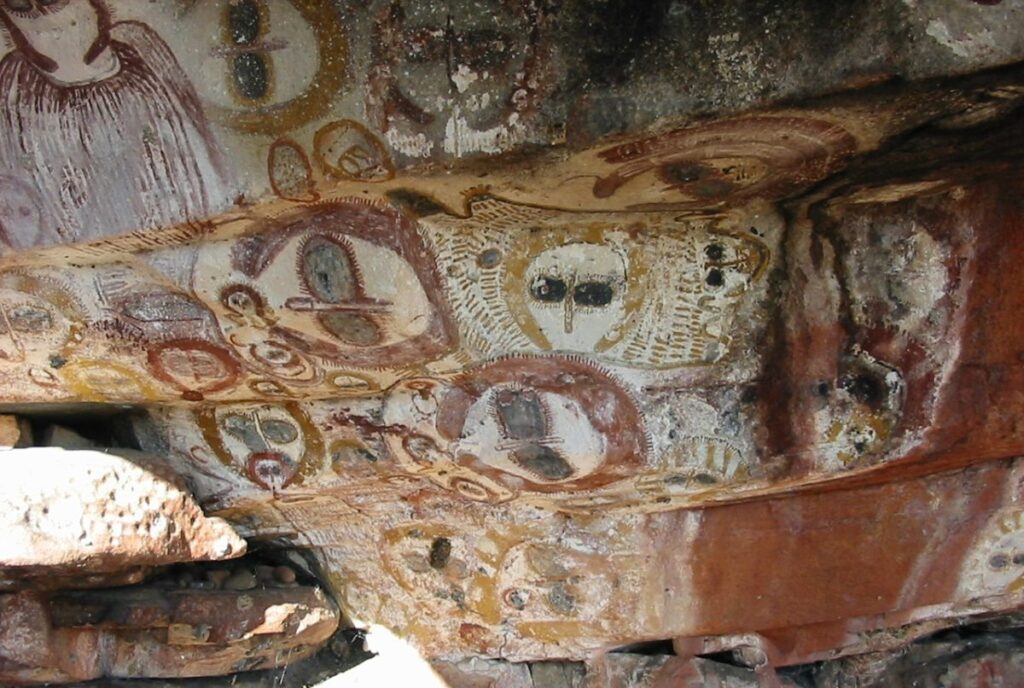
Dating back approximately 4,000 years, the Wandjina rock art paintings emerged after a prolonged drought, marking the advent of a wetter climate featuring regular monsoons. Scattered across the Kimberley region on rocks and cave walls, these paintings are considered sacred by the custodial Worrorra, Ngarinyin, and Wunumbul people. To rejuvenate the life force of the Wandjinas, Aboriginal communities periodically refresh these sacred depictions.
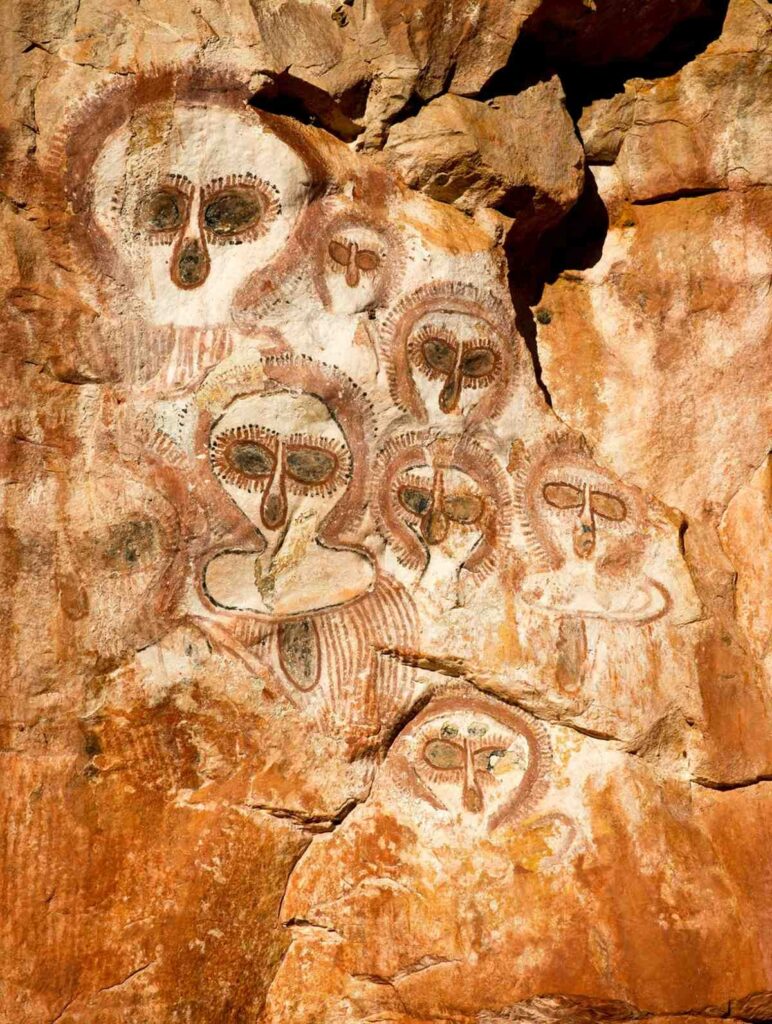
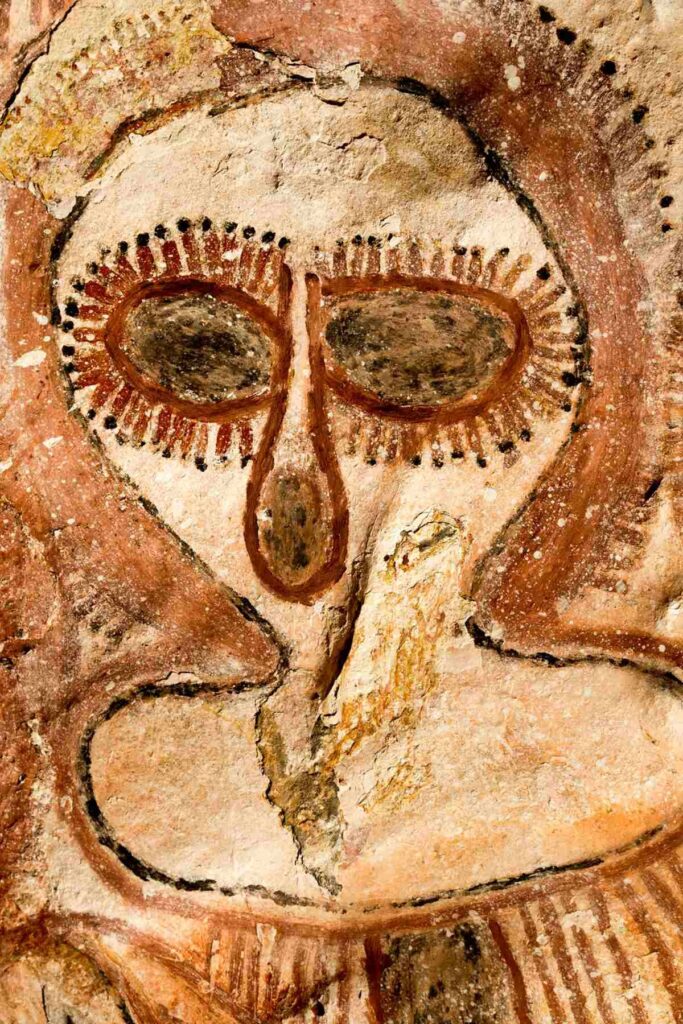
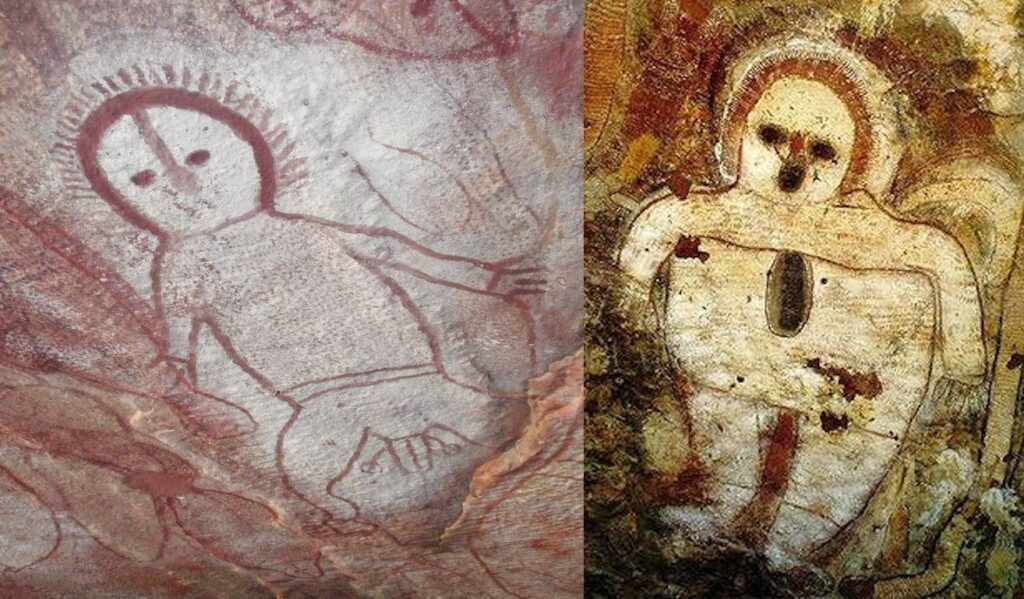
Characterized by distinctive features, the Wandjina paintings exhibit large upper bodies and heads with prominent black eyes, often encircled by a halo or helmet. Strikingly, these depictions lack mouths, attributed to the Wandjinas’ immense power rendering verbal communication unnecessary, and a belief that mouths could perpetually bring rain. Additional motifs in the paintings include figures and objects associated with the Wandjinas, such as the Rainbow Serpent, yams, boomerangs, and stone axes.
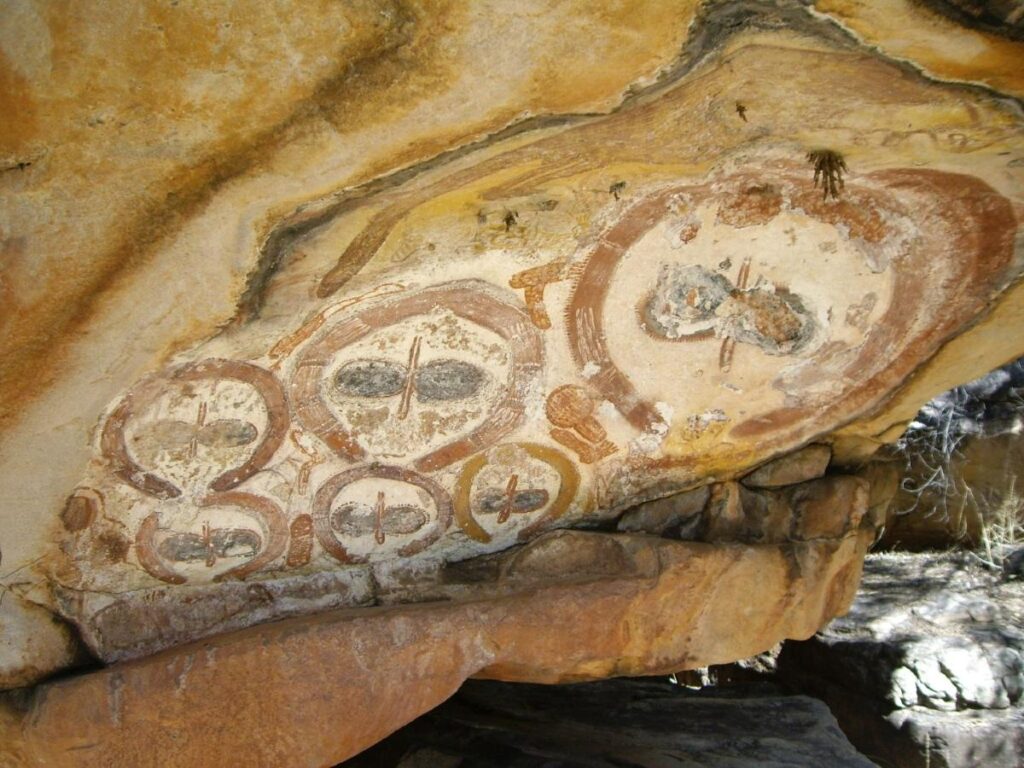
Interpreting the Wandjina rock art has sparked diverse speculations. While some view them as stylized representations of humans or animals, others perceive them as symbols of spiritual authority. Intriguingly, a faction suggests that these enigmatic beings might depict extraterrestrial visitors from outer space.
The resemblance between the Wandjina depictions and common portrayals of extraterrestrial beings fuels this hypothesis. The white faces, large black eyes, and long noses of the Wandjinas have led some to propose that these ancient artworks depict encounters with aliens. The halo or helmet surrounding the heads further stokes speculation, hinting at advanced technology or knowledge attributed to extraterrestrial involvement in the creation process.
The Aboriginal creation story casts the Wandjinas as “sky-beings” or “spirits from the clouds” who descended during Dreamtime to shape Earth and its denizens. Facilitated by the Dreamtime snake, they fulfilled roles as creators, teachers, and deities. Eventually, they vanished, retreating into the earth near water sources linked to each painting, perpetually generating new ‘child-seeds,’ considered the origin of human life. Some Wandjinas returned to the sky, visible as celestial lights moving high above the earth at night.
This prompts intriguing questions: Could these celestial lights signify alien spacecraft, and the Wandjinas their extraterrestrial owners? The portrayal of Wandjinas with white skin, distinct from the Aboriginal people’s black skin, raises questions. The disproportionate size of the eyes, nose, and the consistent absence of a mouth in the depictions further fuels curiosity.
However, it is crucial to note that despite the striking resemblance, there is currently no empirical evidence supporting the extraterrestrial hypothesis. Moreover, such speculations may be deemed disrespectful to indigenous Australians who regard the Wandjina as sacred ancestral spirits. Regardless of the interpretation, the Wandjina rock art paintings stand as a testament to the rich and complex culture of the Aboriginal people. These ancient depictions reflect their profound connection to land, ancestors, and spirituality, challenging us to reassess assumptions about humanity’s past, present, and future.
Leave a Reply