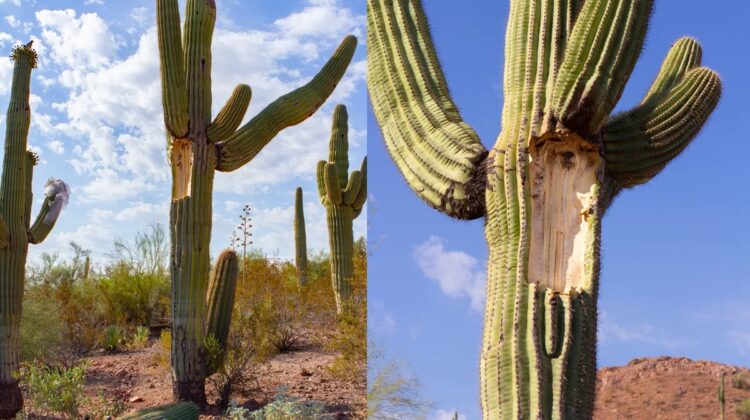
In the heart of the scorching Arizona desert, where the relentless sun beats down relentlessly, even the most tenacious residents of the arid landscape are showing signs of struggle. The iconic saguaro cactuses, known for their towering presence and hardy disposition, have fallen victim to the relentless heat of this summer. The soaring temperatures have caused distressing changes in these desert giants, offering a poignant glimpse into the impact of climate change on even the hardiest of organisms.
Phoenix, a city accustomed to sweltering heat, faced an unparalleled challenge this summer as temperatures soared to record highs. Throughout July, the city experienced an unyielding heatwave, with daily temperatures consistently surpassing 43.3°C (110°F) for an astonishing 31 consecutive days. As the mercury climbed, the Desert Botanical Garden in Phoenix bore witness to a striking transformation among its resident cactuses.
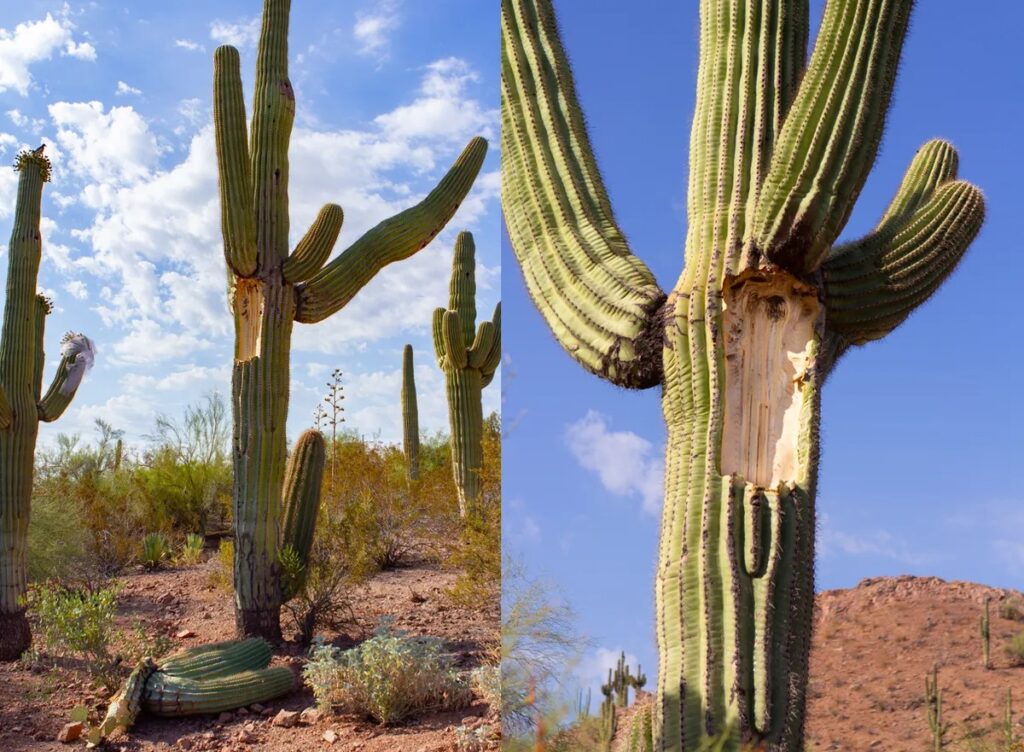
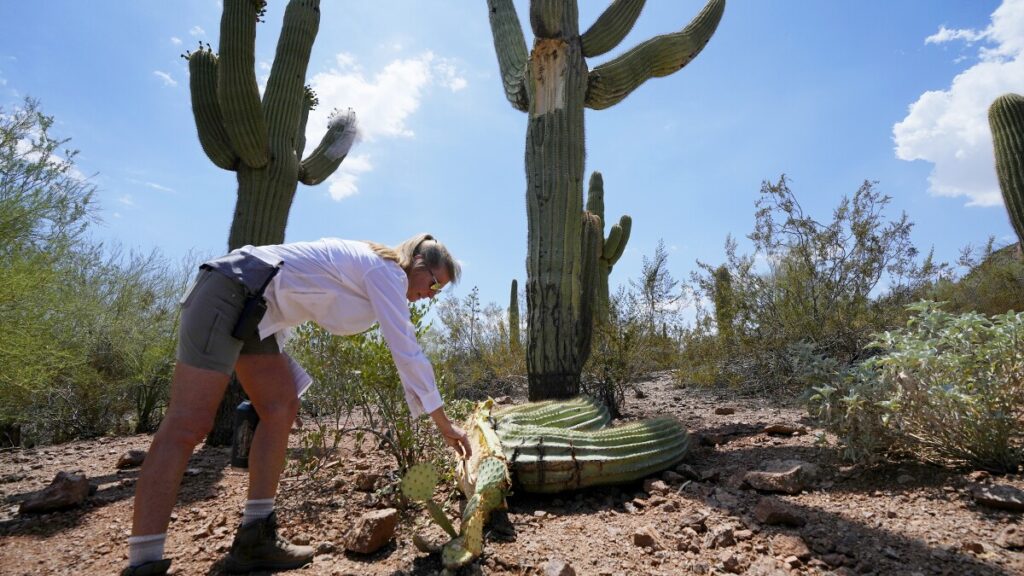
In a display of vulnerability, the cactuses exhibited distress signals in response to the heat stress. Some cacti, once vibrant and green, faded to a sickly yellow or brown hue. Dehydration, a consequence of the parching heat, manifested in diminished flesh and a shrinking of the cactuses’ distinctive “ribs.” Perhaps most notably, a few of the saguaro cactuses suffered the loss of their arms—a poignant emblem of the toll exacted by the unforgiving climate.
While these startling changes have triggered concern among observers, it remains uncertain whether the heatwave has ushered in a widespread die-off of saguaros. The Desert Botanical Garden emphasized that while the damage is significant, conclusive evidence is lacking. Kimberlie McCue, the garden’s chief science officer, postulated that the impact could be cumulative, with saguaros compromised by previous challenges succumbing to the unprecedented stress of consecutive extreme heatwaves.
Remarkably, the desert’s nighttimes, typically a respite from the relentless daytime heat, have also succumbed to the influence of climate change. Cactuses, adept at conserving water by opening their pores during cooler nights, have faced a new challenge: unrelenting nighttime heat. Throughout July 2023, temperatures in Phoenix scarcely abated, remaining above 32.2°C (90°F) during the nocturnal hours.
The saguaro cactus, an emblem of the Sonoran Desert’s unique beauty, boasts towering heights, with some specimens reaching up to 12 meters (40 feet) tall. Their majestic stature is a testament to their resilience, as they endure the harsh desert conditions for over two centuries before reaching their full height at the age of 200. Adaptations such as shallow yet extensive root systems and a sponge-like interior tissue help these cactuses capture and retain precious rainfall, allowing them to thrive in their arid habitat.
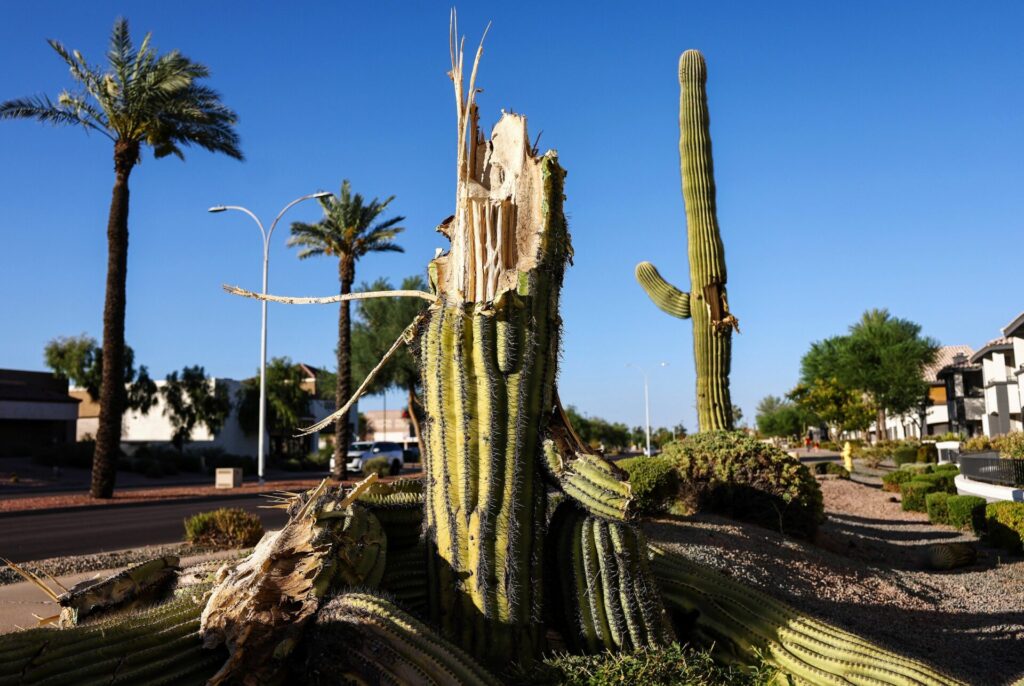
However, the alarming changes witnessed in the Desert Botanical Garden serve as a poignant reminder that even the hardiest of organisms are not immune to the rapid shifts brought on by our changing climate. Across the globe, cactuses, guardians of the desert landscape, face a perilous future. Studies have predicted that up to 90 percent of the world’s cactus species, spanning over 1,500 varieties, could face negative repercussions due to climate change, with some on the brink of extinction.
As the saguaro cactuses of Phoenix’s desert succumb to the relentless heat, their plight echoes a broader reality—the intricate dance of life on Earth is undeniably intertwined with the ever-changing rhythms of our planet’s climate. From towering giants to delicate flora, all living beings share a common fate, navigating the challenges posed by a world in flux.
Leave a Reply