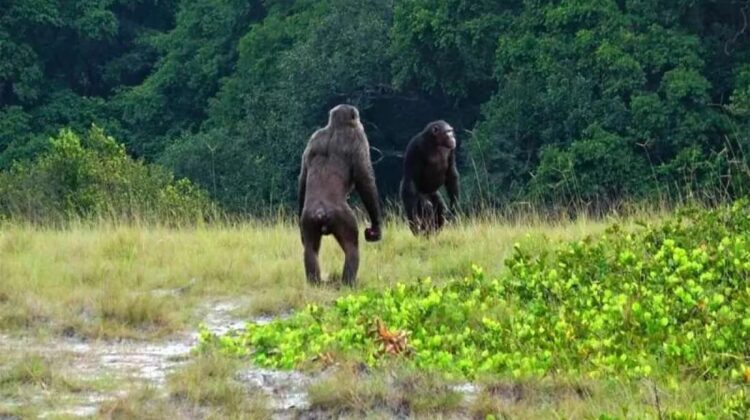
In an unprecedented and shocking revelation, researchers have reported the first observations of chimpanzees engaging in lethal attacks against gorillas. This alarming behavior not only highlights the complex dynamics within the animal kingdom but also underscores the potential impact of human activity on these interactions.
The startling events took place in Loango National Park, Gabon, a region that is home to both chimpanzees and western lowland gorillas. For over a decade and a half, the Loango Chimpanzee Project has been meticulously studying the social structures and interactions within and between chimpanzee groups in this area.
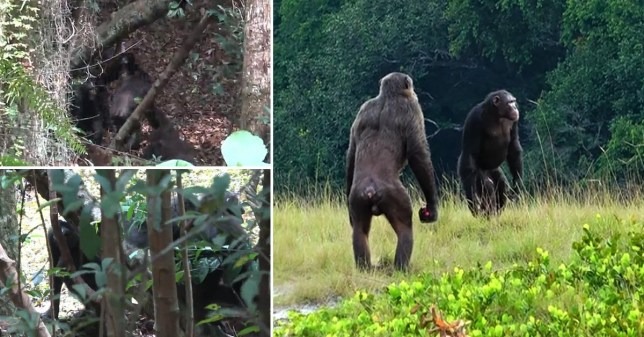
Chimpanzees, known for their aggressive tendencies among the great apes (second only to humans), have often directed their violence towards their own kind or smaller animals. Peaceful coexistence between chimpanzees and gorillas had been previously observed, with accounts of both species foraging harmoniously in trees and even engaging in playful interactions.
However, everything changed two years ago when a group of researchers, led by Lara Southern, a PhD student from Osnabrück University, heard distressing sounds typically associated with hostile confrontations between chimpanzee troops. What followed was a 52-minute battle between the chimpanzees and a group of five gorillas. Another altercation occurred ten months later. In both instances, the chimpanzees, despite being outnumbered, used their collective strength to offset the gorillas’ physical advantage. The confrontations involved aggression from both sides, with the second battle witnessing chimpanzees pursuing gorillas up and down trees, ultimately attacking them in the trees and on the ground. Tragically, during these conflicts, an infant gorilla was separated from its mother and killed, while three chimpanzees sustained injuries in the first battle.
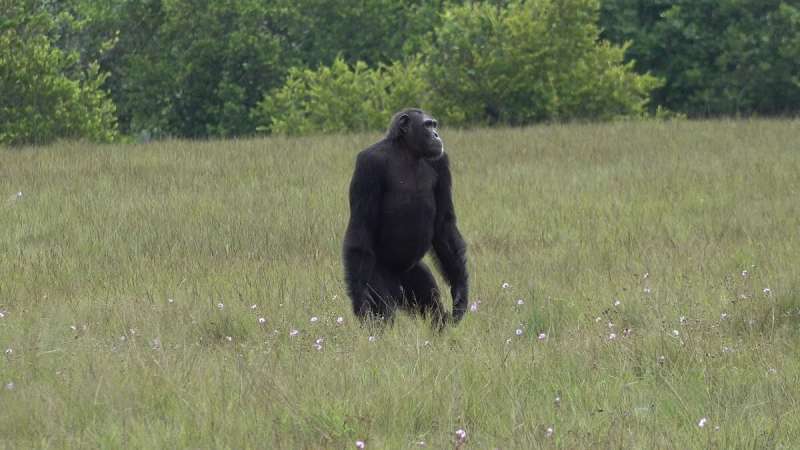
While West African chimpanzees had previously been regarded as less aggressive towards their own kind compared to their East African counterparts, Southern’s team discovered that Loango’s annual intercommunity killing rate was among the highest recorded.
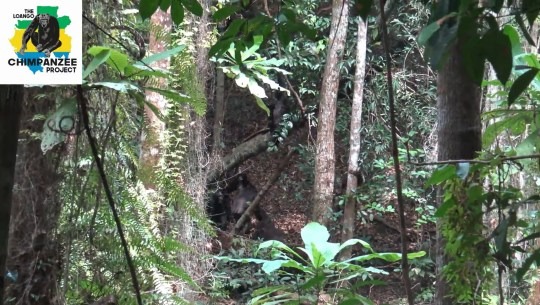
The question that perplexes researchers is not just why these attacks occurred but also why they happened only recently. Both incidents coincided with periods when chimpanzee and gorilla diets significantly overlapped, whereas the peaceful interactions occurred when their dietary preferences diverged.
The scientists suspect that the timing and nature of these conflicts may be linked to environmental changes driven by climate change. The researchers point out that Gabon’s forests have experienced reduced fruit production, which could potentially have intensified competition for limited resources. This theory is supported by the fact that the first baby gorilla killed was not initially consumed as food, suggesting that the violence may have been driven more by resource competition than direct predation.
Professor Simone Pika from Osnabrück University emphasized that this research is just the beginning of understanding the complex dynamics between these two great ape species in Loango. The unique habitat of Loango National Park offers an extraordinary opportunity for further exploration and discovery, shedding light on our closest living relatives and the potential impact of environmental changes on their behavior.
Leave a Reply