
The Bald Eagle, a symbol of strength and freedom, is instantly recognizable with its striking white head and tail, contrasted by a powerful dark brown body. But how does this iconic bird transform from a three-ounce hatchling into a majestic adult with a wingspan of up to six feet? This article dives into the fascinating five-year journey of age progression in Bald Eagles, highlighting their physical changes and behavioral milestones.
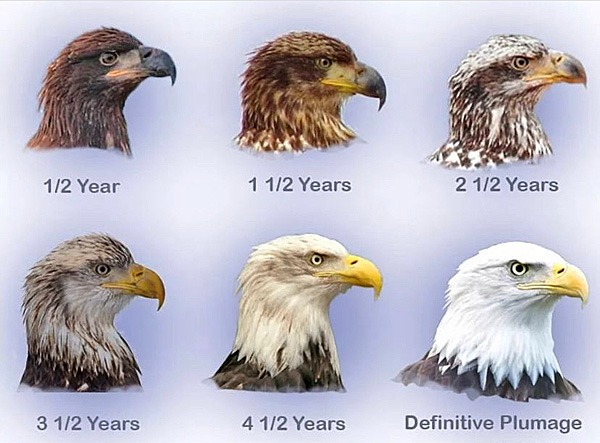
Image courtesy of Avian Report
The Early Days: Hatchlings and Eaglets
Bald Eagles begin life as fragile hatchlings, covered in light gray natal down. During the first two weeks, this down is replaced by a darker gray thermal layer, providing better insulation. Soon after, the eaglets develop their first set of feathers, which give them a darker appearance of brown, gray, and black. At this stage:
- Beak Color: Black
- Eyes: Brown
- Physical Development: Rapid growth to prepare for fledging
At around 12 weeks, these eaglets, now called fledglings, take their first flight, marking the beginning of their journey toward independence.
Juvenile Bald Eagles: The First Year
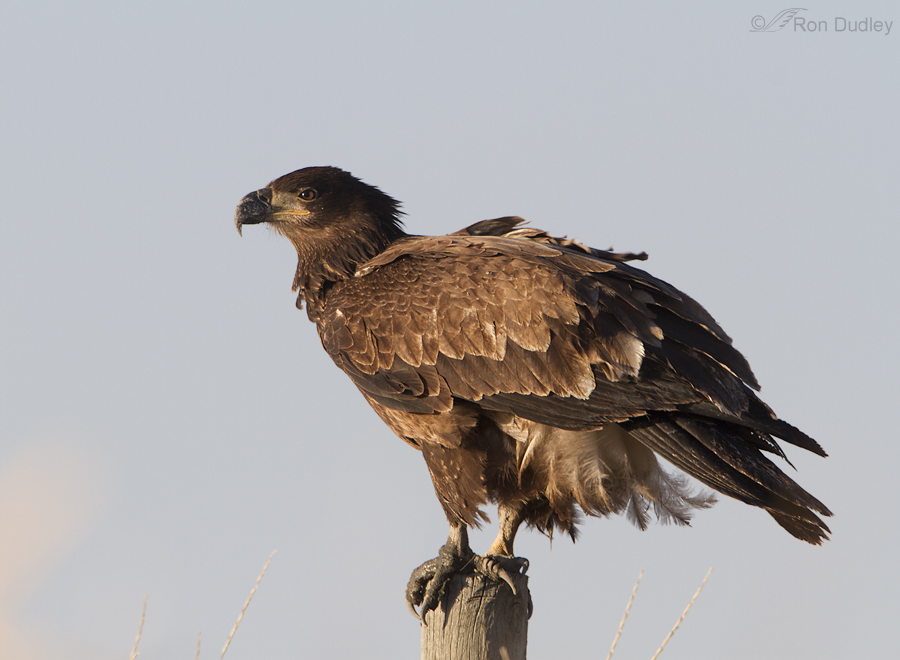
Once fledglings leave the nest for good, they are considered juveniles. Their dark plumage often leads to confusion with Golden Eagles. By six months, subtle changes begin:
- Plumage: Lighter brown with white flecking
- Beak and Cere: Start transitioning to a lighter shade
Juveniles remain dark overall, but their growth and molting signal the start of more pronounced transformations.
Immature Bald Eagles: Year Two and Beyond
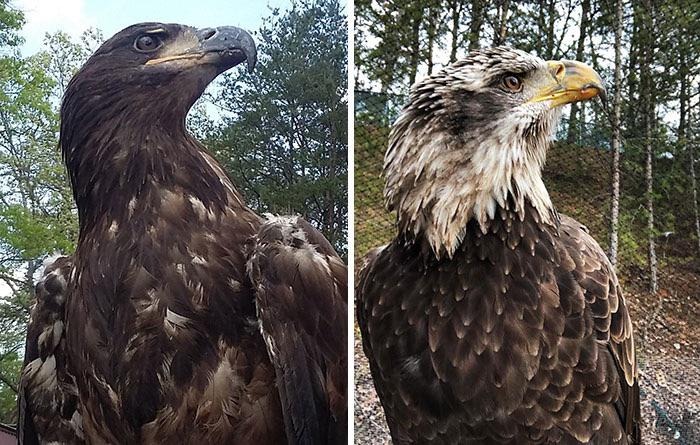
During the second and third years, Bald Eagles are referred to as immature. At around two and a half years, they showcase the most varied plumage:
- Breast Feathers: Dark brown
- Legs: Bright yellow
- Eyes and Beak: Gradually lighten
This stage reflects a dynamic shift in appearance, setting the groundwork for the iconic adult look.
Sub-Adults: Approaching Maturity
By three and a half years, Bald Eagles enter the sub-adult phase. Their appearance becomes increasingly similar to adults:

- Head: More white feathers appear, though dark patches remain
- Tail: Begins losing dark banding
- Beak: Predominantly yellow
By four years, most Bald Eagles resemble adults, though some retain minor dark features.
The Majestic Adult Bald Eagle
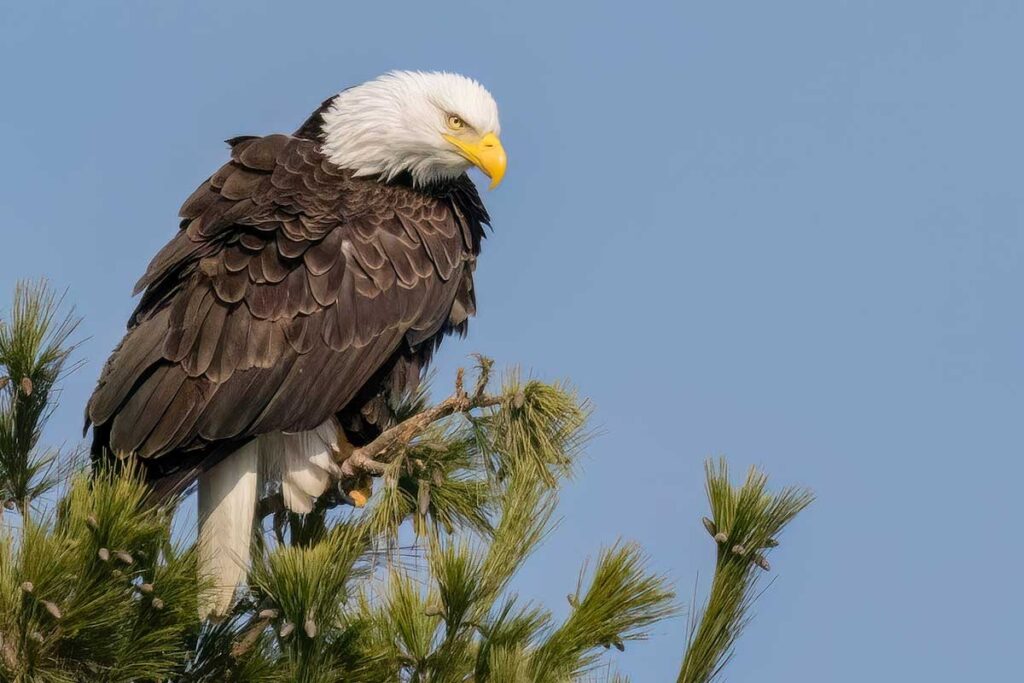
At around five years, Bald Eagles achieve full maturity, displaying their characteristic white head and tail feathers. With bright yellow eyes, legs, and beak, they are now ready to seek a mate and establish a nesting territory.
The age progression of Bald Eagles is a captivating journey marked by gradual changes in plumage, beak coloration, and behavior. From fragile hatchlings to commanding adults, these birds embody resilience and transformation. Their developmental milestones highlight the intricacies of nature and the beauty of growth over time.
Leave a Reply