
In the arid landscapes of Afghanistan, where American war correspondent and photographer Michael Yon accompanied U.S. troops in 2009, an extraordinary phenomenon came to light, one that added a touch of spectacle to the gritty realities of war. Yon observed an awe-inspiring spectacle while photographing helicopters taking off or descending in dusty conditions – their rotor blades would come alive, resembling nothing less than “distant galaxies” amidst the desert sands.
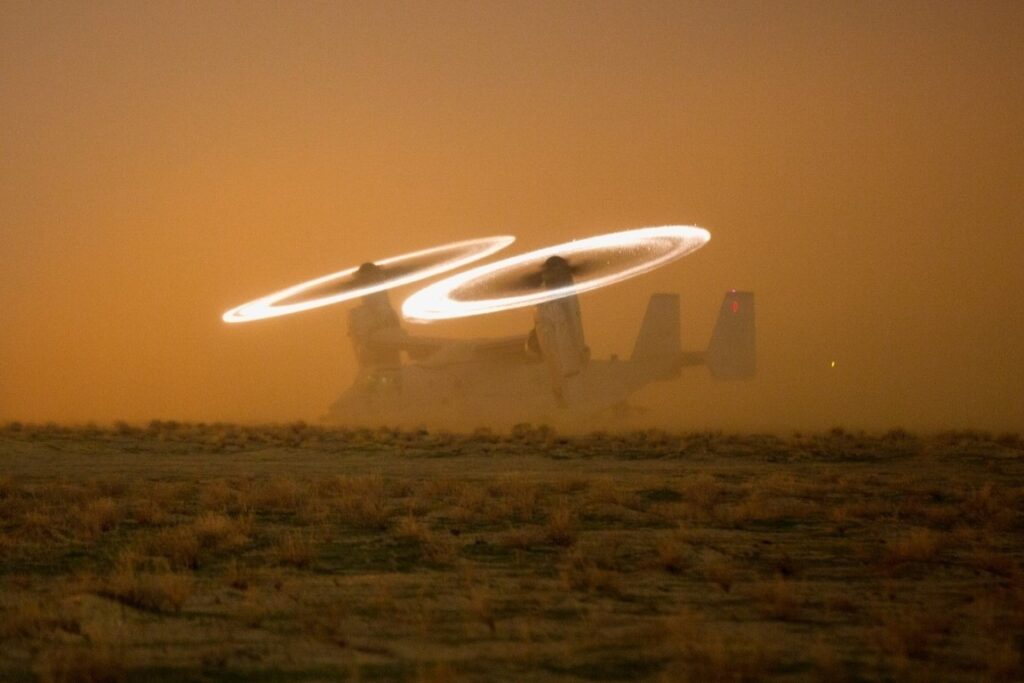
Describing this mesmerizing sight, Yon noted, “The halos spark, glitter, and veritably crackle, but in still photos, the halos appear more like intricate orbital bands.” However, as the rotors changed pitch, the dust settled, and the helicopters touched down, these captivating halos would vanish, leaving behind only the memory of their ethereal display.
Curiously, when Yon inquired about this phenomenon with the helicopter pilots, they could offer little more than theories. One suggestion was that the halos might result from static electricity generated by friction as dissimilar materials struck against each other.
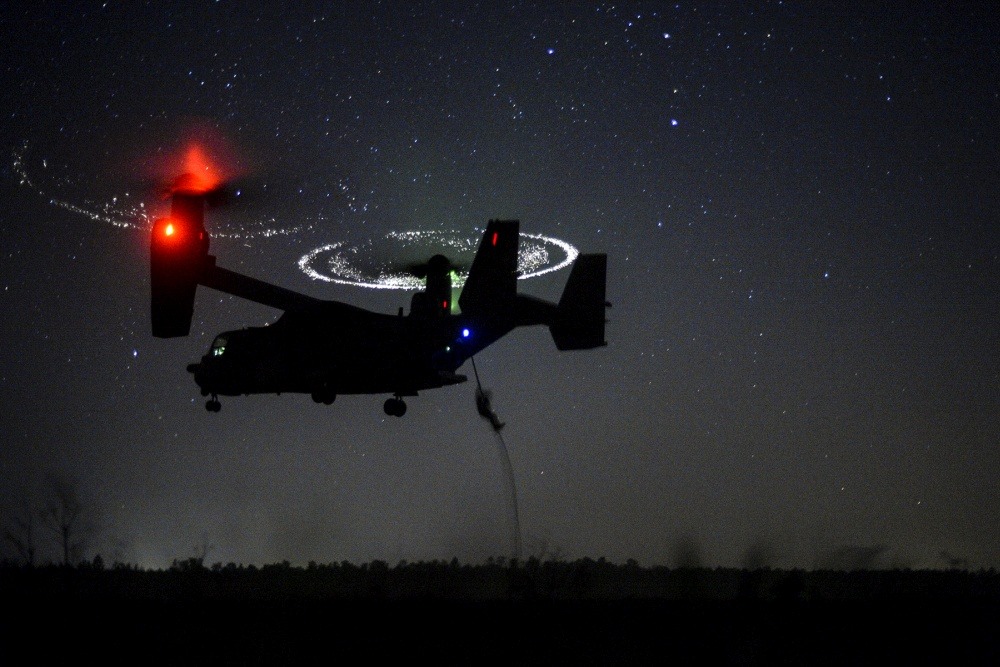
However, there’s a discrepancy in this theory. A static discharge typically doesn’t produce the dazzling hail of sparks seen in Yon’s photographs. The actual explanation is both fascinating and grounded in scientific reality.
Helicopter rotor blades, especially their leading edges, are equipped with abrasion shields made from materials like titanium, stainless steel, or nickel alloys. When these rotor blades operate close to the ground in desert environments, they churn up copious amounts of dust and sand into the air. This airborne sand, harder than the metal abrasion shields, can strike the shields with force, causing erosion and gouging tiny grooves on the blade’s surface. As a result, minuscule fragments of metal are sent flying into the air, akin to the sparks produced during metal grinding. Since the rotor blades rotate in a circular motion, this phenomenon generates a visible corona or halo around the blades.

The likelihood of sand hitting the rotor is higher when the rotorcraft is near the ground. This occurs as sand particles are propelled into the air by the downward airwash, and a vortex of air carries them to the upper reaches of the rotor disk. This process, known as recirculation, can even lead to complete brownouts in severe cases. Intriguingly, the halo effect has been observed at altitudes as high as 1,700 feet, dispelling the notion that it is exclusively linked to takeoff and landing operations.
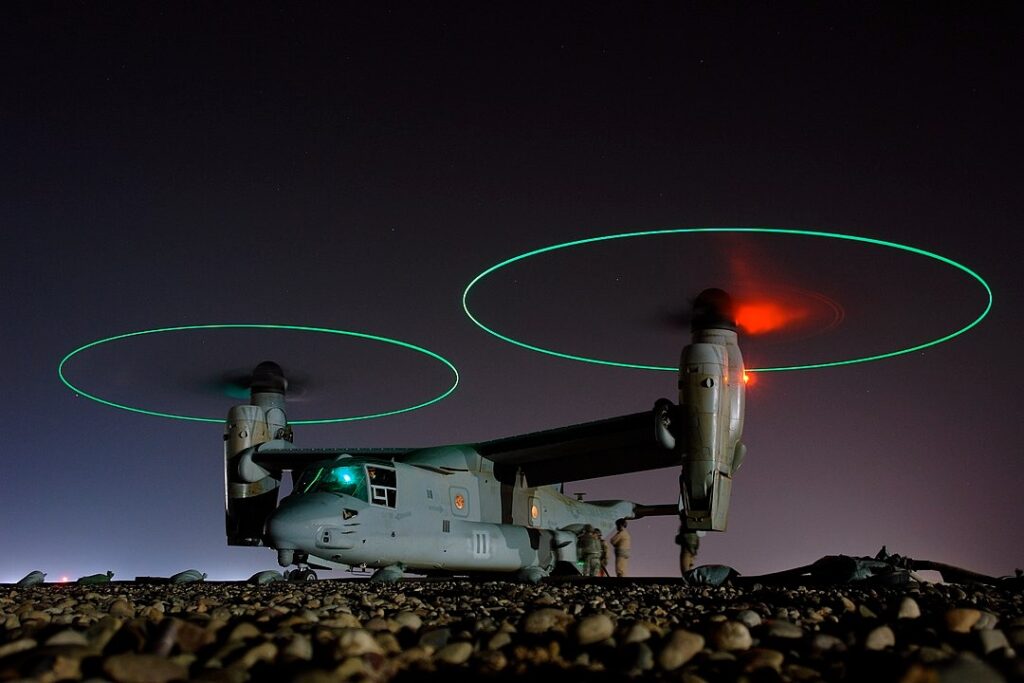
Notably, rotor tip lights can produce a similar yet distinct visual effect, adding another layer of intrigue to the phenomenon.
When Michael Yon first stumbled upon this mesmerizing display, he was struck by the fact that it didn’t have a name. In tribute to two soldiers, Benjamin Kopp, a U.S. Army Ranger, and Joseph Etchells, a British soldier, both of whom lost their lives in combat in Sangin, Afghanistan, in July 2009, Yon christened it the “Kopp-Etchells Effect.”
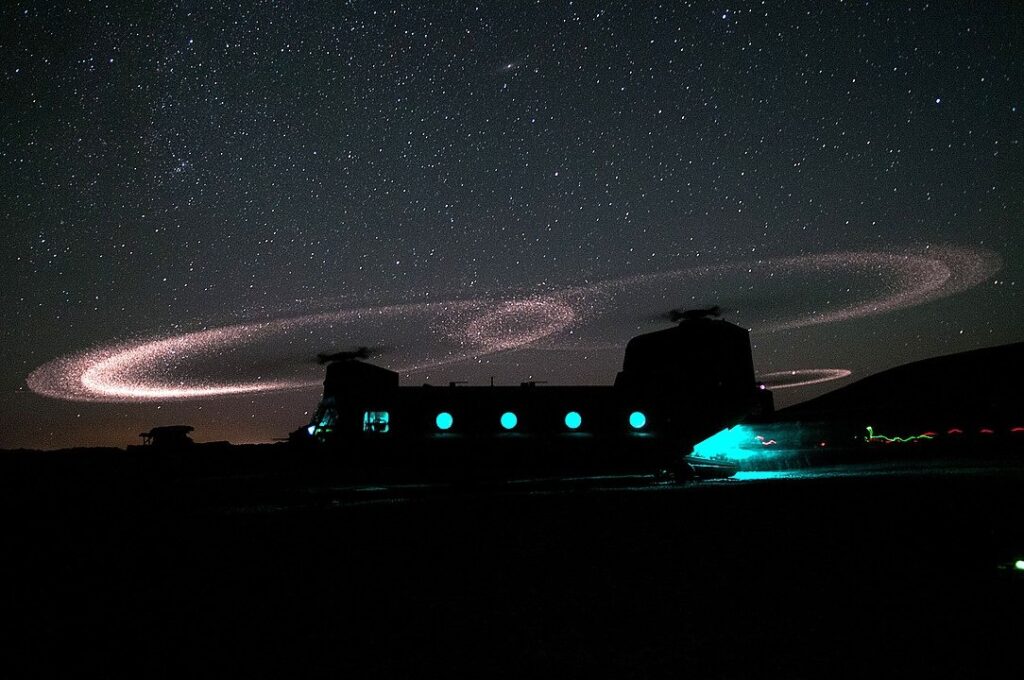
In his words, “It’s not hard to imagine the two Corporals have already linked up and regrouped, and in a sense, they have. Knowing combat soldiers, it’s easy to imagine them laughing away at the idea.” This remarkable natural phenomenon, given a name that echoes the memory of fallen heroes, serves as a poignant reminder of the captivating mysteries that continue to unfold in our world, even amidst the challenges of war.
Leave a Reply