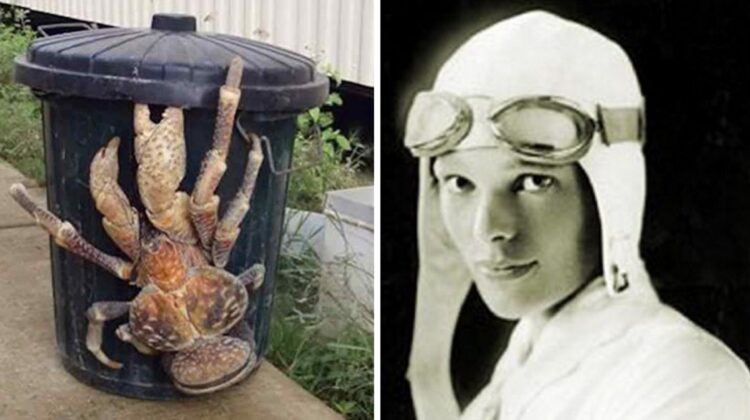
The coconut crab – the world’s largest land crab – can weigh over 4 kg (8.8 lbs) and span nearly a meter (3 feet) across. This extraordinary creature possesses the ability to crack open a coconut using its formidable power-claws, and astonishingly, it can also scale trees with surprising agility. There is even speculation that it could be the enigmatic creature responsible for the disappearance of famed aviator Amelia Earhart.
“Monstrous.”
This was the utterance that escaped Charles Darwin’s lips upon his initial encounter with the coconut crab. And, indeed, this crab is anything but ordinary. With the capacity to carry more than six times its own weight, it is a true testament to nature’s remarkable engineering.
In the era of Darwin, tales circulated about these crabs defying gravity by ascending trees and remaining suspended from branches for hours, defying the laws of physics with a single pincer. Reports abounded of their claws being robust enough to rupture a coconut or even dismember a human being.
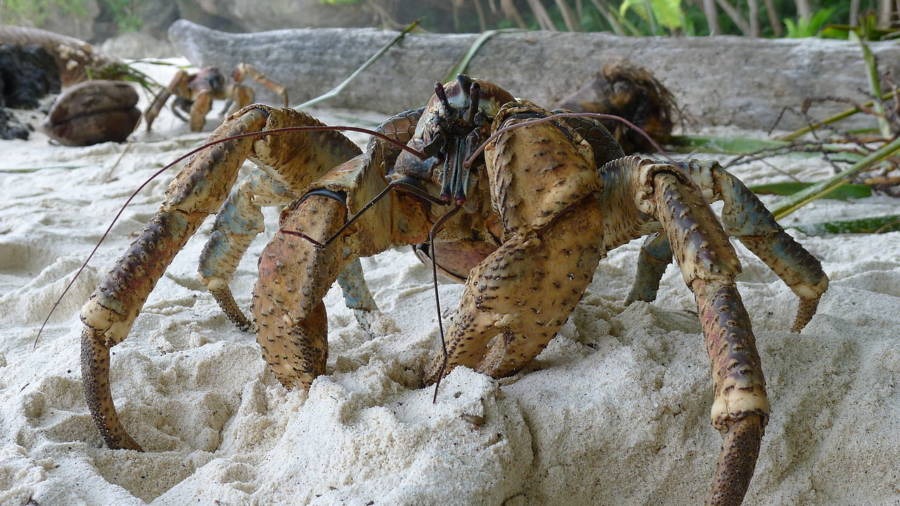
While Darwin himself doubted many of these accounts, it turns out that reality surpassed even the most sensational stories. Subsequent observations and research have consistently validated the awe-inspiring attributes of this creature.
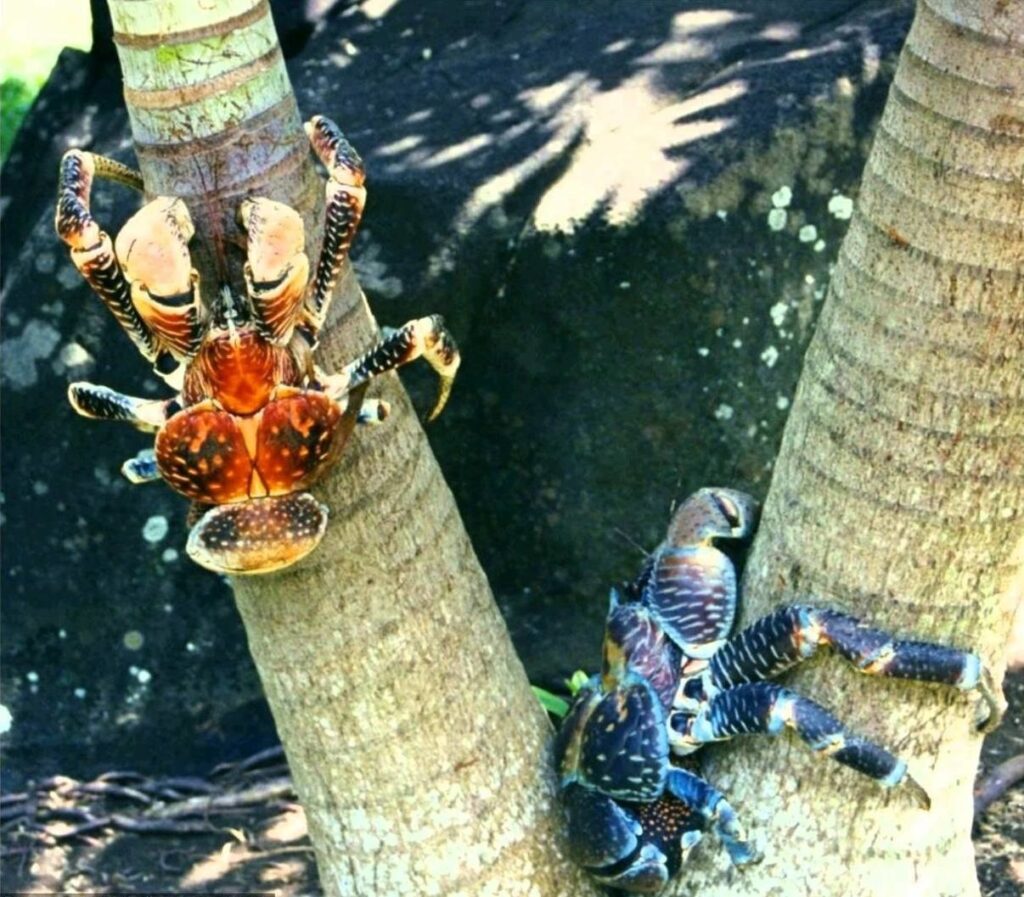
Consider, for instance, the crab’s pincers. Among the most potent and hazardous armaments across the entire animal kingdom, these pincers can deliver a grip equivalent in force to a lion’s bite. The individuals depicted in certain images alongside these crabs remain motionless for a reason – these claws are not to be trifled with.
Remarkably, these nightmarish claws are not primarily aimed at humans. The coconut crab is aptly named due to its penchant for consuming coconuts. Using its raw claws, it can dismantle a coconut with astonishing ease – a sight that evokes both fascination and trepidation.
However, its dietary habits are far from discerning, as these crabs demonstrate a willingness to feast upon a wide array of sustenance. Observations have documented them hunting and vanquishing birds, tearing apart live pigs, and even resorting to cannibalism by consuming deceased members of their own species. Moreover, as their own exoskeletons become obsolete, they resort to consuming these cast-offs, ingesting their old shells in a rather unsettling manner.
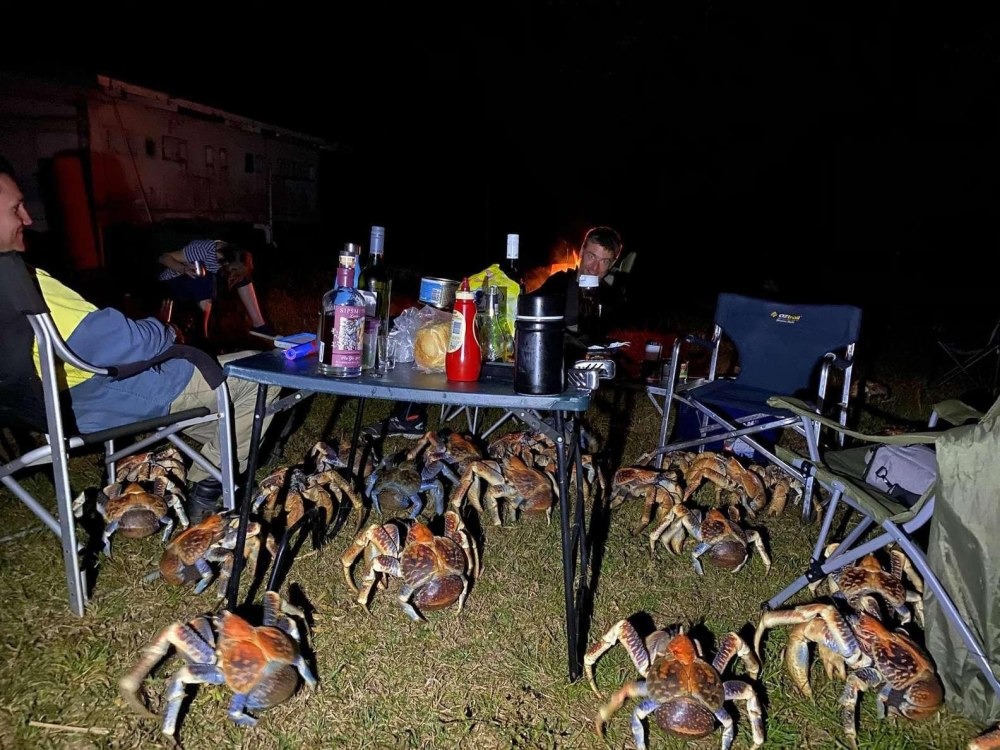
The process of disassembling a coconut is not a swift affair. It can take several days for the crab to successfully breach the coconut’s defenses. This is where another captivating aspect of the coconut crab’s repertoire comes into play.
These colossal crabs are exceptional climbers, effortlessly ascending any vertical structure in their vicinity. They can procure a fallen coconut, strip away its husk, grasp it using their claw, ascend heights of up to 10 meters (33 feet) within a tree, and subsequently release the nut to access its succulent interior. Astonishingly, they often descend by falling, withstanding drops of at least 4.5 meters (15 feet) unscathed.
The crab’s pincers are so formidable that they can maintain their grip on various surfaces for hours on end. Whether clamped onto a tree branch, the links of a fence, or the walls of a dwelling, these crabs exhibit unparalleled tenacity. Their tree-climbing endeavors extend beyond obtaining fruit; in certain regions, they ascend trees to prey on birds, ensnaring and hauling them to subterranean burrows that serve as their dwellings.
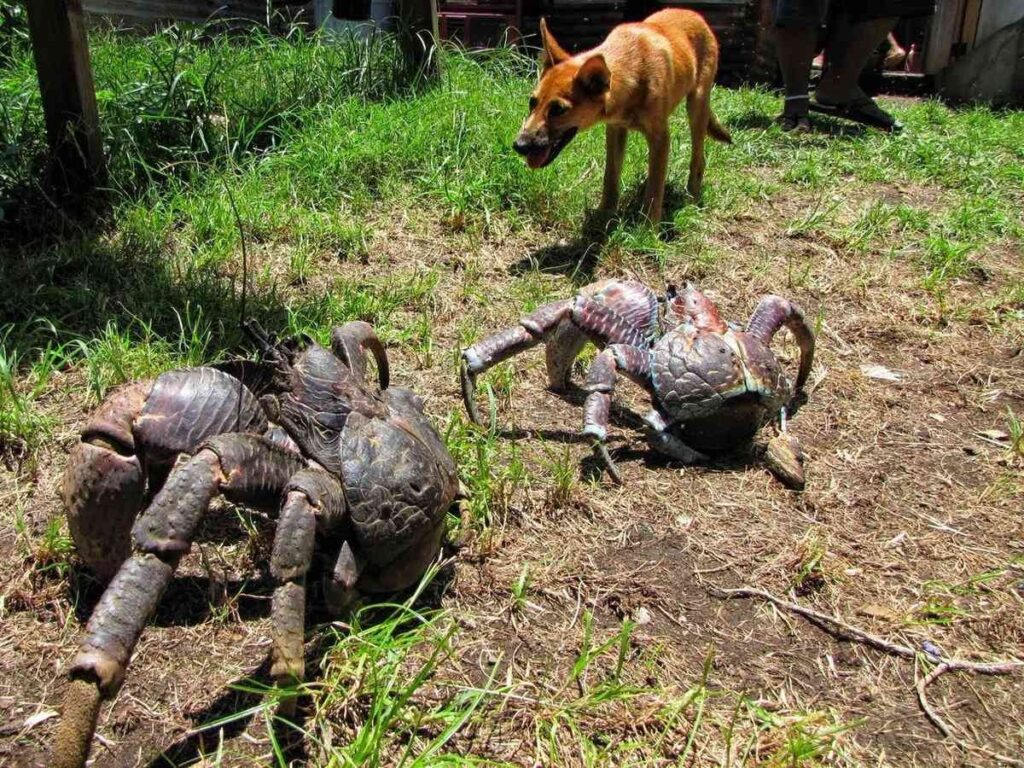
Their interactions with humans seldom result in harm, yet exceptions have been recorded. Humans remain the solitary predators of these crabs, and when provoked, they are not averse to retaliation. An example of this interaction involves the indigenous peoples of the Pacific Islands, who often probe the crabs’ burrows in search of leftover coconuts. Unfortunately, these endeavors sometimes lead to fingers ensnared within the crab’s formidable pincers – an experience not soon forgotten.
The most chilling narrative linked to coconut crabs revolves around one of history’s enduring mysteries. In 1940, researchers discovered a dismembered skeleton on Nikumaroro Island, suggesting a macabre fate of being torn limb from limb. Speculation arose that the remains might belong to aviation pioneer Amelia Earhart, who had allegedly crashed on the island. The description of coconut crabs attacking and subduing birds by Mark Laidre, a biologist who extensively studied the species, vividly underscores the potential danger these creatures pose:
“During the dead of night, I witnessed a coconut crab seize and dispatch an adult red-footed booby. The booby had been perched on a low branch, scarcely a meter above ground. The crab meticulously ascended the tree, clutching the booby’s wing and fracturing the bone, causing the bird to plummet.”
Thereafter, the crab descended to complete the task. “The crab proceeded to approach the bird, seizing and shattering its other wing,” Laidre recounted. No matter how valiantly the booby struggled or pecked at the crab’s unyielding shell, release remained unattainable.
Subsequently, a swarm of coconut crabs arrived on the scene, contending for the spoils in a display of nature’s relentless tenacity.
In conclusion, the coconut crab stands as a remarkable embodiment of nature’s ingenuity, bearing a combination of strength, adaptability, and resourcefulness that continues to both captivate and intrigue. Its prodigious power-claws, tree-climbing prowess, and ability to conquer even the toughest of nutty adversaries make it a symbol of nature’s limitless variety. While its involvement in historical mysteries might be the stuff of speculative legends, there’s no denying the coconut crab’s astonishing place in the realm of living wonders.
Leave a Reply