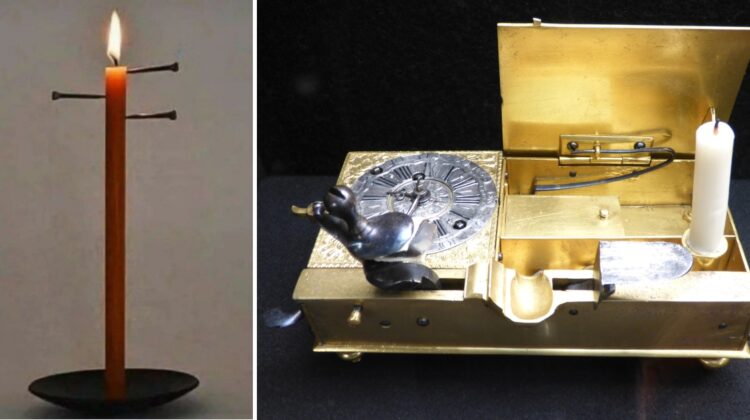
The candle clock. A timeless invention that has been used to measure time – and wake people up – for centuries. And it works in such a simple but cool way.
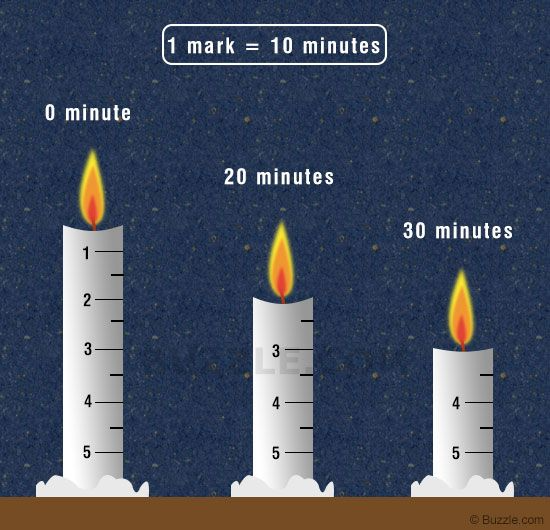
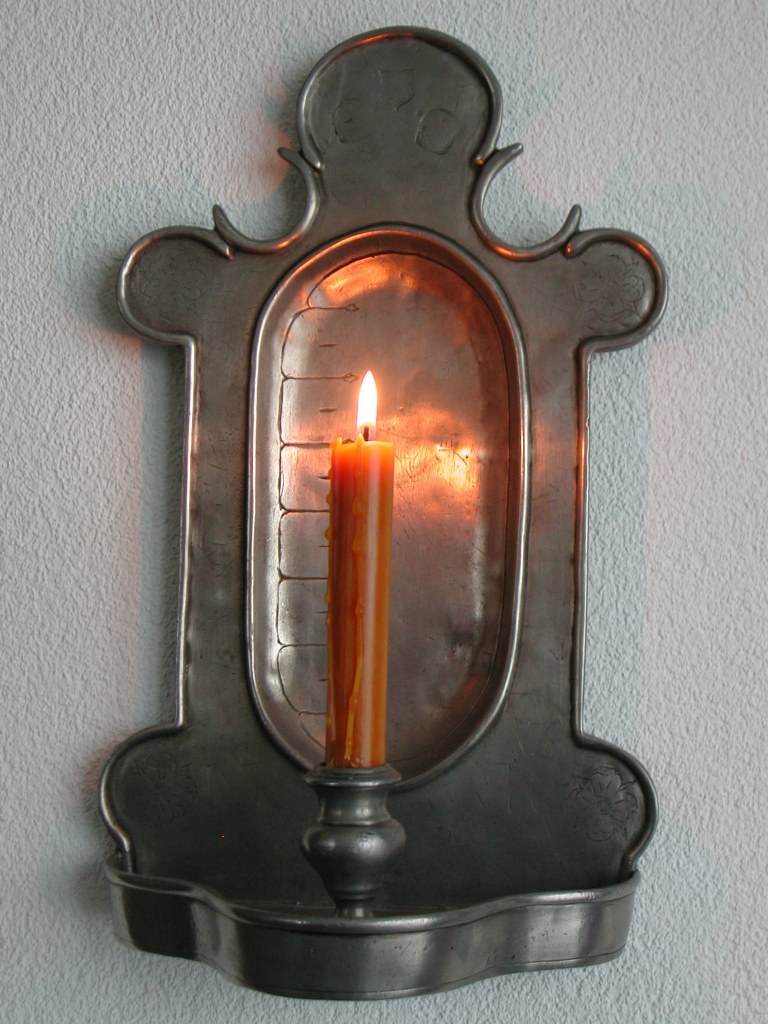
Candle clocks, also known as candle timers, are devices that use the rate of burning of a candle to determine how much time has passed. A candle clock in its most basic form consists of a candle, a holder, and a marking on the candle or holder that indicates the amount of time that has passed.
A candle clock works on the principle that the rate at which a candle burns is relatively consistent, making it a fairly reliable method of measuring time. A candle clock works by burning a candle at a constant rate and marking the candle or holder at regular intervals, such as every half-inch, to indicate how much time has passed.
Candle clocks date back to ancient China, with the first recorded reference appearing in a Chinese poem written by You Jiangu in 520 CE. They were used to track the passage of time during religious ceremonies there. The candle was lit at the start of the ceremony and allowed to burn until it reached a certain point, after which the ceremony ended. This was a simple but effective method of keeping track of time.
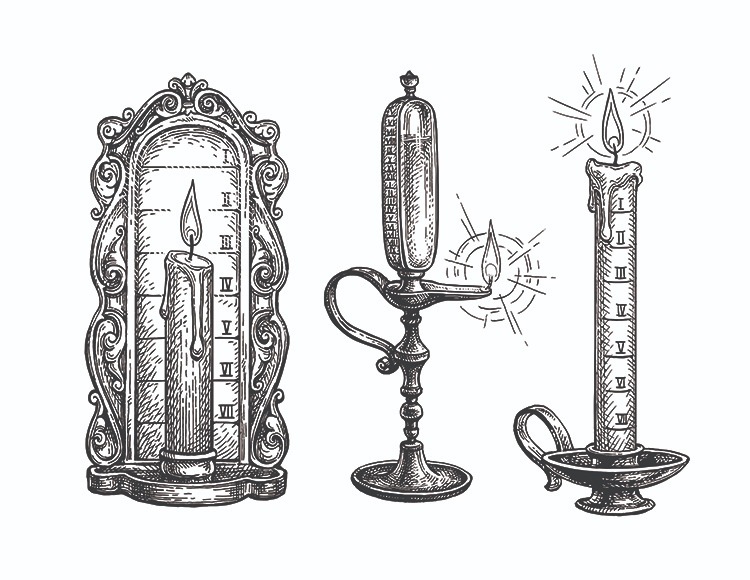
The candle clock was also used to measure the length of the day in ancient Egypt. The Egyptians would light a candle at sunrise and time how long it took for the candle to burn down to a specific point. This enabled them to precisely calculate the length of the day.
Al-Jazari, a 12th century Muslim engineer and polymath who created a clock using a system of pulleys and weights to transform the continuous burning of the candle into time that could be read on a frontward dial, is a famous example of an especially intricate candle clock design. In addition, the inventor created water-based clocks that tracked astrological movements.
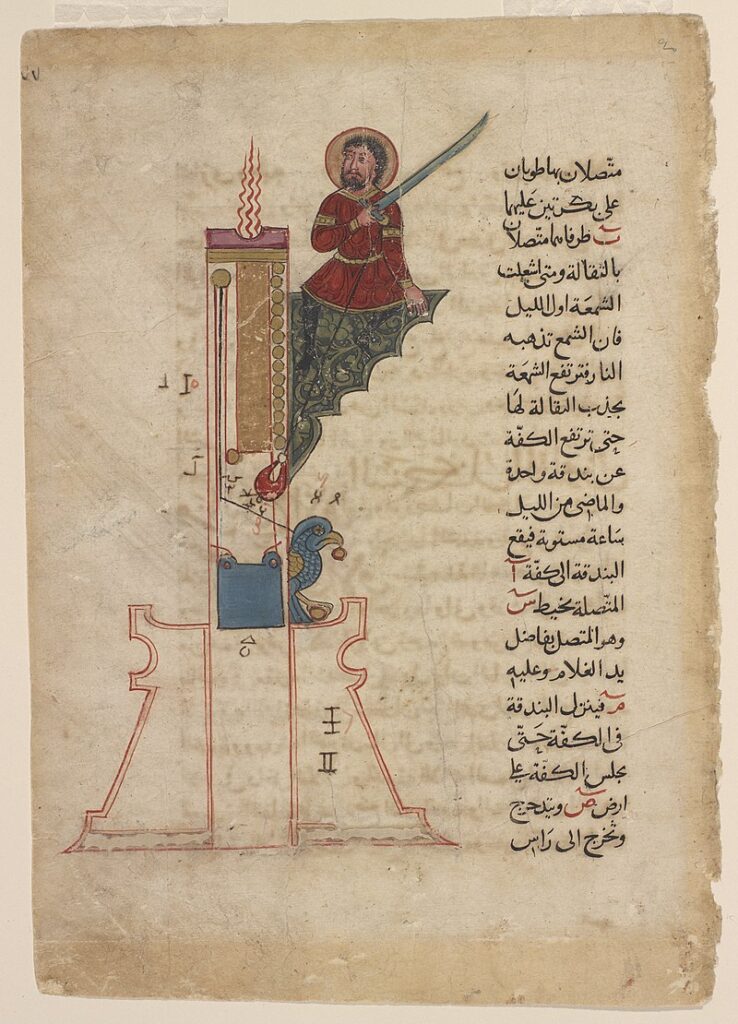
During the Middle Ages, the candle clock was also used in Europe, for example, by monks who used it to time their prayers and other religious ceremonies. The simple design was also used in the American colonies during the 18th century to measure the time between sunrise and sunset, allowing farmers to know when to begin and end their workday.
Despite the increasing availability of traditional wound clocks, this method of telling time was used until at least the 18th century. Candle clocks, in addition to displaying the time, could also function as alarm clocks, with the candle acting as an alarm mechanism. The flame would gradually fade away over time before extinguishing itself and sounding an alarm.
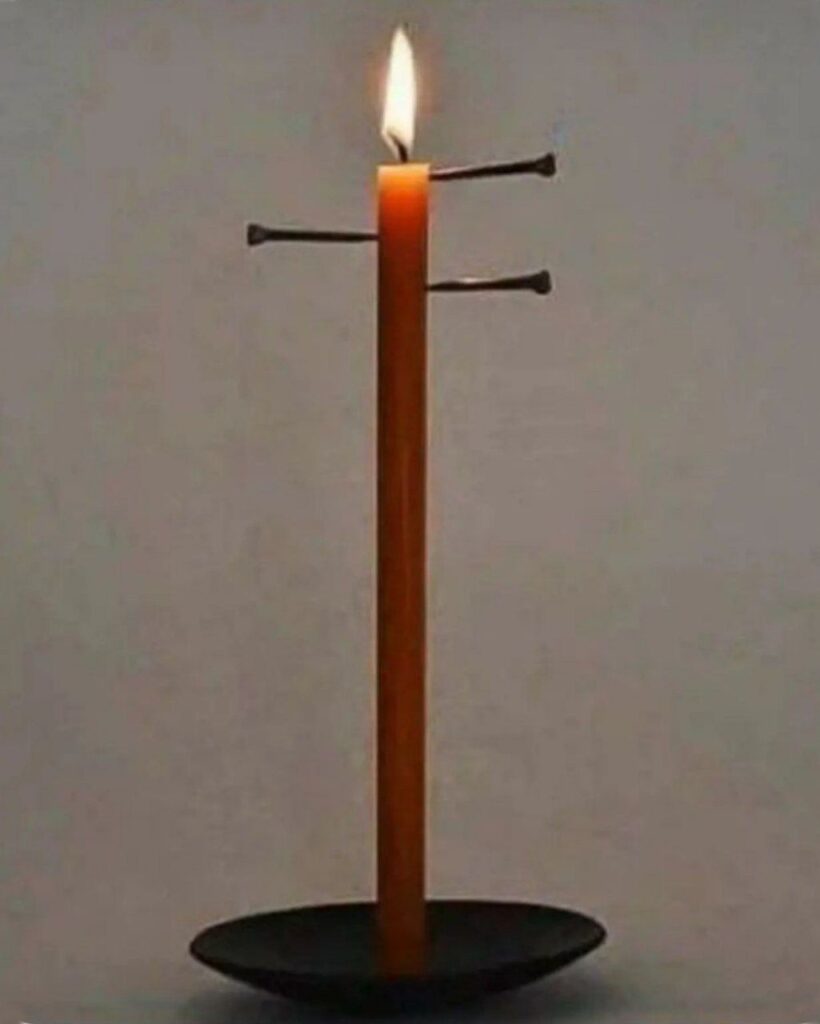
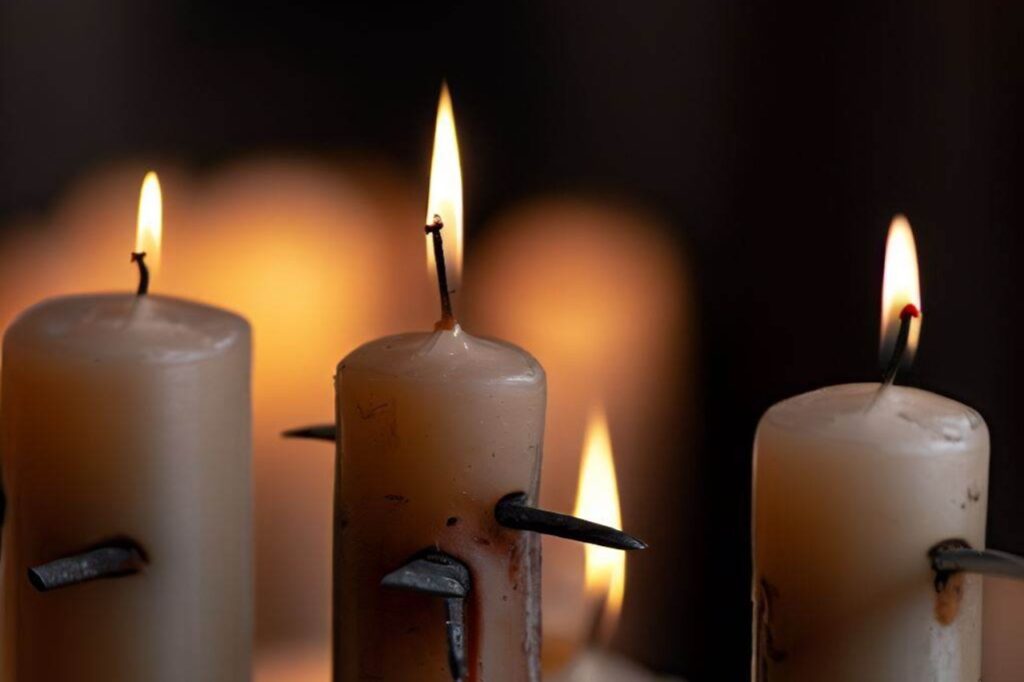
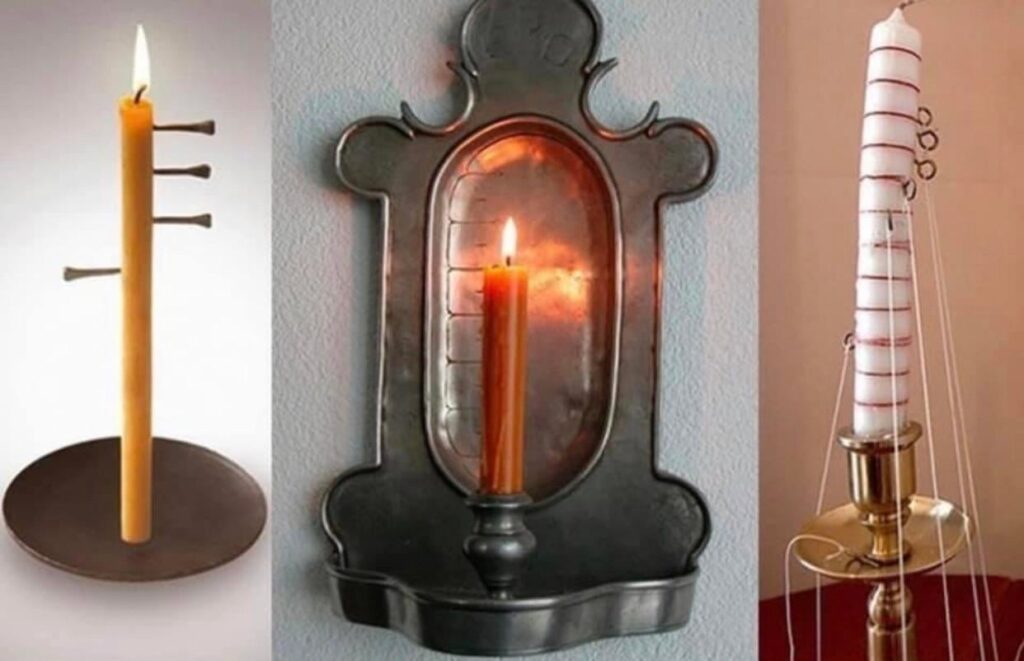
The most basic design, which was also used in Ancient Rome, involved placing a candle in a metal holder and inserting metal nails into the candle at predetermined intervals. When the wax reaches the desired level of melting, the nail clatters into the metal base, waking the person up. This was probably the simplest substitute for roosters, street cries, and (of course) factory whistles for the workers.
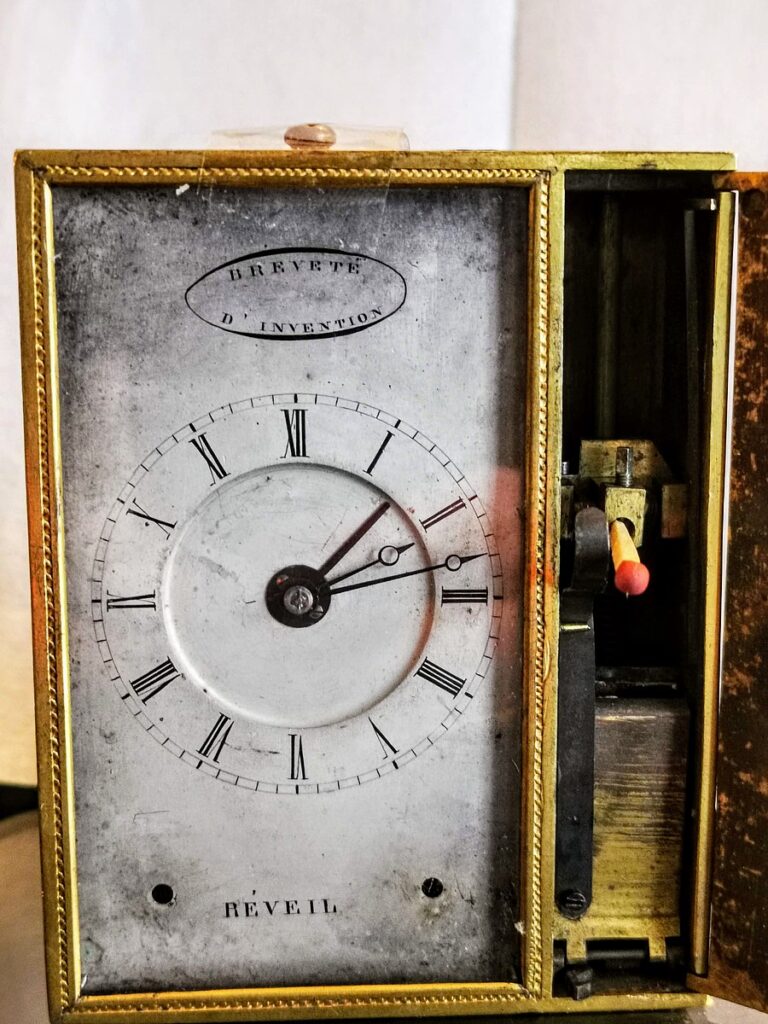
In Milan, Italy’s Museo Poldi Pezzoli, you can see a more complex 17th-century design. This candle alarm clock was a luxurious and cutting-edge timepiece for its era, with an alarm mechanism that would sound at a particular time, triggered by a burning candle.
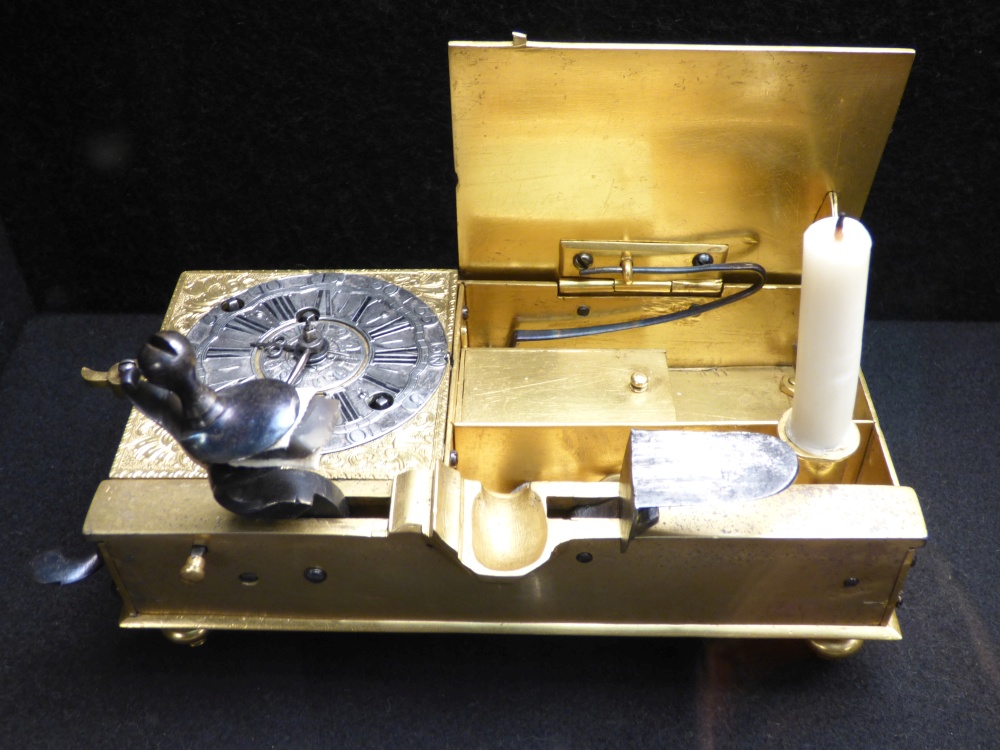
The candle clock is still in use in some parts of the world today, despite having been largely replaced by more advanced timekeeping techniques. However, it is also becoming more and more popular with many people for various reasons, running parallel to this trend.
The soothing and calming effect that a flickering flame can have on the user is one advantage of using a candle alarm clock. Many people find that candles have a softer glow than traditional alarm clocks, which have harsh lights and digital displays. Additionally, the candle’s gradual burning can act as a visual cue for the passage of time, promoting relaxation and making it simpler for the user to go to sleep.
The environmental friendliness of candle alarm clocks is another advantage. Candle alarm clocks are entirely powered by a candle and do not use any electricity, in contrast to conventional alarm clocks that do.
The candle clock also serves as a reminder of a simpler time when life was measured by the rate at which a candle burned. This is likely the main reason why it continues to hold a special place in the hearts of many people.
Leave a Reply