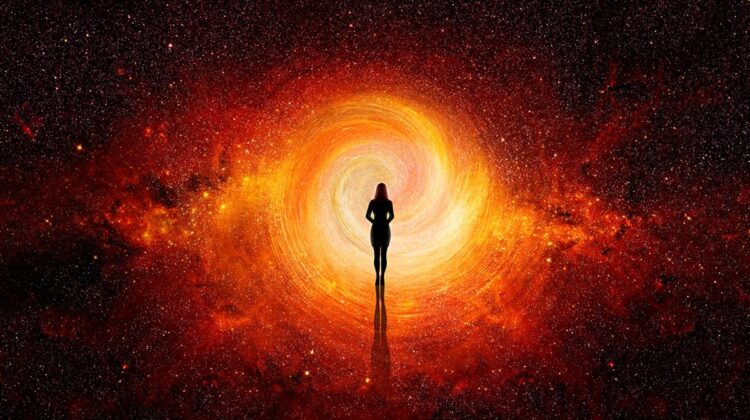
Renowned computer scientist and futurist Ray Kurzweil has made some bold predictions regarding the future of humanity. According to Kurzweil, immortality will become a reality for humans by the year 2030, alongside the emergence of artificial intelligence (AI) reaching the singularity. While these claims may seem extraordinary, it’s worth noting that Kurzweil has a track record of accurate predictions in the field of technology.
Throughout his career, Kurzweil has accurately forecasted several technological advancements. As early as 1990, he predicted that a computer would defeat human world chess champions by 2000. His foresight also encompassed the rise of portable computers, smartphones, wireless technology, and the explosive growth of the Internet. In fact, in 2010, Kurzweil revisited his predictions from two decades prior and found that a significant majority of them had proven to be either entirely or essentially correct.
Of course, Kurzweil has also had his fair share of incorrect predictions. For instance, he overestimated the timeline for self-driving cars to be in widespread use by 2009. Nevertheless, his consistent adherence to the timelines he sets is impressive, and it suggests that his claims regarding immortality should not be summarily dismissed.
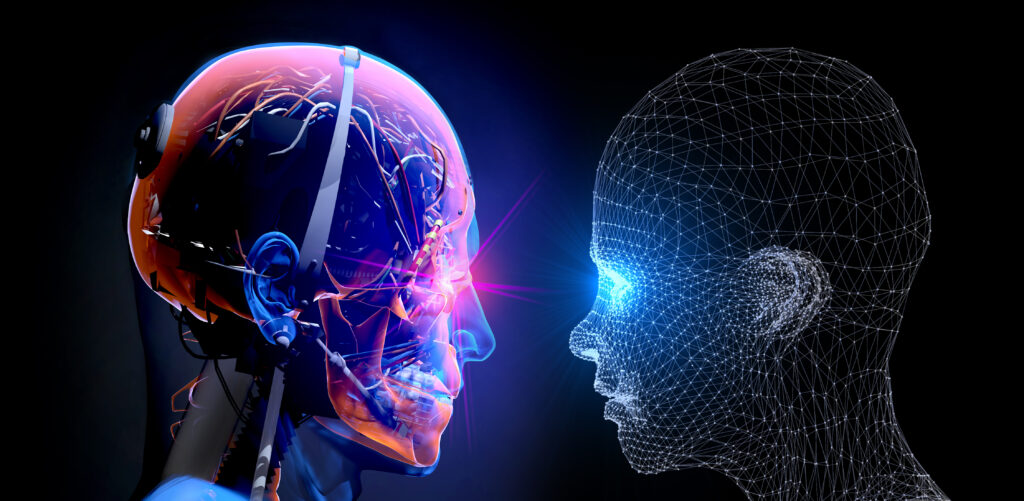
Kurzweil’s projection for achieving human-level AI intelligence is by the year 2029, which is when he believes an AI will pass a valid Turing test. This milestone will be followed by the “Singularity” in 2045, when humans will merge with the AI intelligence they have created, resulting in a billion-fold increase in effective intelligence.
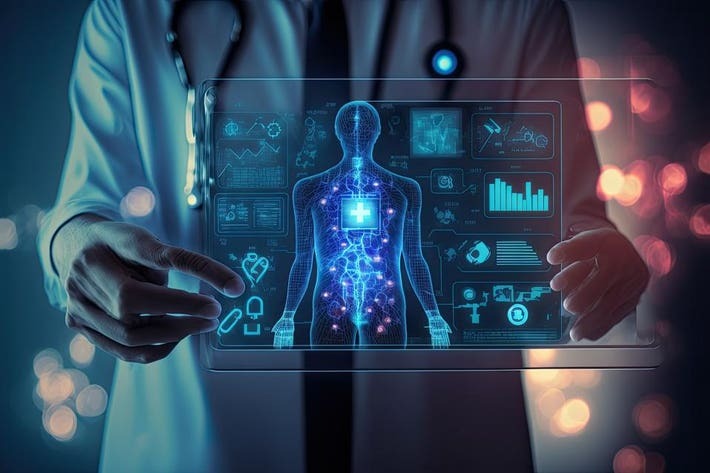
Regarding immortality, Kurzweil asserts that by 2030, human life expectancy will be progressively extended by more than a year every year. This progress will involve the deployment of nanobots that can navigate through our bloodstream, making necessary repairs and establishing a connection between our brains and the cloud. Once this connection is established, individuals will have the ability to transmit videos or emails directly from their brains, and they can even back up their memories.
Contrary to popular fears, Kurzweil views the singularity as a positive transformation for humanity. He believes that it will enhance human capabilities, making us “godlike” in various aspects. In his words, “We’re going to be funnier. We’re going to be sexier. We’re going to be better at expressing loving sentiment.” Kurzweil envisions a future where the neocortex, through cloud-based connections, allows individuals to access vast computational power wirelessly, multiplying their intelligence manifold.
While nanobots have already demonstrated their potential in delivering drug payloads to brain tumors, significant advancements will be necessary to achieve Kurzweil’s vision within the next seven years. Similarly, while brain-computer interfaces have made substantial progress, human-AI interactions are still largely limited to conventional means. Only time will tell if Kurzweil’s predictions hold true. Fortunately, according to his timeline, we will have ample time to witness the unfolding of these advancements.
It is important to note that Kurzweil’s predictions are not universally accepted, and skepticism remains among experts in various fields. Nonetheless, his thought-provoking projections challenge us to consider the potential of emerging technologies and their impact on our future. As the years progress, we will gain a clearer understanding of whether Kurzweil’s predictions are on the mark or if further developments are necessary to achieve the remarkable advancements he foresees.
Leave a Reply