• Skip to main content
  • Skip to primary sidebar
  • Skip to footer
  • Home
  • About Us
  • Copyright Report
  • Submit Content
  • Terms
  • Privacy Policy
  • Legal Disclaimer

Hasan Jasim

Hasan Jasim is a place where you may get entertainment, viral videos, trending material, and breaking news. For a social generation, we are the largest community on the planet.

Study Discovers Antarctica’s “Doomsday Glacier” Is Melting and Getting More Unstable

by Hasan Jasim Editorial Team Leave a Comment

ShareTweet

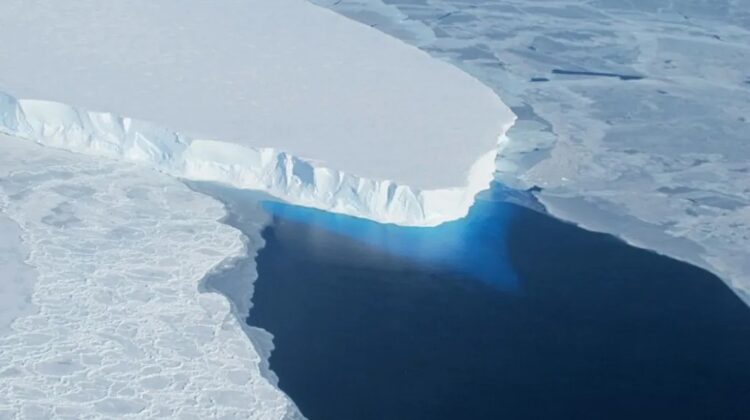
The Thwaites glacier in western Antarctica, also known as the “doomsday glacier,” has the power to completely destroy the world. According to NASA estimations, it is roughly the size of Britain and if it melted, the sea level would rise by 0.5 meters (1.6 feet). The cascade of ice melt that would undoubtedly result from it is more worrisome because it would expose glaciers that are currently shielded from the warmer ocean by Thwaites. This sea level rise would submerge New York City, Miami, and the Netherlands. The ice shelf is already receding at a startling rate, but according to new study published in the journal Proceedings of the National Academy of Sciences, this rate may accelerate as further damage is discovered to be compromising the ice shelf’s structural stability.

The study tracked how areas of the ice shelf would break and fragment from the glacier’s edge using multisource satellite photos to map how increasing damage to the ice shelf affected its strength. The Pine Island and Thwaites ice shelves’ shear zones, which are where the glacier meets the ocean, were the focus of the investigation because of their rapid development of damaged areas. These damaged regions, which are composed of exposed cracks and crevasses where moving ice meets rock, are frequently the earliest signs of ice shelves’ catastrophic deterioration.

According to their simulation, when the ice shelf sustains more damage, it starts a feedback mechanism that weakens it even more. This process accelerates the formation of thinning areas and fissures until chunks of ice break away. The finding offers new insight for researchers studying sea ice, highlighting the significance of taking these feedback loops into account when predicting sea level rise and evaluating the viability of remaining ice shelves.

Beyond ensuring its own life, the Thwaites glacier is crucial because it serves as a buffer between other glaciers and the rising ocean. It might have a cascading impact and bring down ice masses throughout western Antarctica if it were to totally melt. Sea levels might increase by roughly 3 meters (10 feet) as a result of the subsequent release of water into our oceans, destroying coastal communities all over the world.

According to the study’s findings, damaging feedback mechanisms will be crucial for ice shelf stability, grounding line retreat, and contributions from Antarctica to sea level rise in the future. Additionally, they highlight the necessity of including these feedback processes, which are currently not taken into consideration in the majority of ice sheet models, in order to enhance sea level rise estimates.

Filed Under: Trends Worldwide Tagged With: “doomsday, antarctica’s, discovers, getting, glacier, melting, more, study, trends, unstable, worldwide

Reader Interactions

Leave a Reply Cancel reply

Your email address will not be published. Required fields are marked *

Primary Sidebar

More to See

Fresh Water for Japanese Honeybees Is Provided by a Temporary Sanctuary at Hitokotonushi Shrine

By Hasan Jasim Editorial Team

Human Civilization At Junction Between An Evolutionary Leap Or An Authoritarian Collapse

By Hasan Jasim Editorial Team

Perfectly Preserved Baby Woolly Mammoth ‘Mummy’ Found By Gold Miners in Canada – The First Such Discovery in North America

By Hasan Jasim Editorial Team

Head in the Sand

By Hasan Jasim Editorial Team

Potential Consequences of Canada Becoming the 51st US State

By Hasan Jasim Editorial Team

Incredible ancient ruins resurface in Texas, but the reason has residents conflicted: ‘It’s actually kind of sad’

By Hasan Jasim Editorial Team

‘Spanish Stonehenge’ Revealed By Drought After 50 Years

By Hasan Jasim Editorial Team

Footer

ABOUT HASANJASIM.ONLINE

Hasanjasim.online is a digital platform dedicated to publishing well-researched articles about the animal kingdom, nature, and the environment. Our editorial team works to source stories from credible outlets, scientific research, and verified reports, aiming to inform as much as we entertain. From wildlife conservation and animal behavior to natural wonders and environmental science, we cover the topics that help readers better understand and appreciate the natural world. Whether you're a lifelong nature lover or simply curious about the planet we share, Hasanjasim.online aims to be a trustworthy destination for stories worth reading — and worth citing.

Recent

  • Euphorbia Hirta (“Asthma-Plant”): What Traditional Use and Real Research Actually Show
  • A Mystery Animal Has Been Randomly Attacking People in New Hampshire — Here’s What We Know
  • A Woman Was Filmed Sharing Her Ice Cream With Her Dog — Here’s What Vets Actually Say About It
  • Dolphin Calf Incident in Ceuta Sparks Outrage After Disturbing Beach Footage Emerges
  • Lactuca Serriola Root: Traditional Uses of Prickly Lettuce (Wild Lettuce) Root
  • The Puppy a Firefighter Couldn’t Leave Behind — and the Story Didn’t End There
  • A Mother Dog Dove Into Floodwater Again and Again — Until All 7 of Her Puppies Were Safe

Search