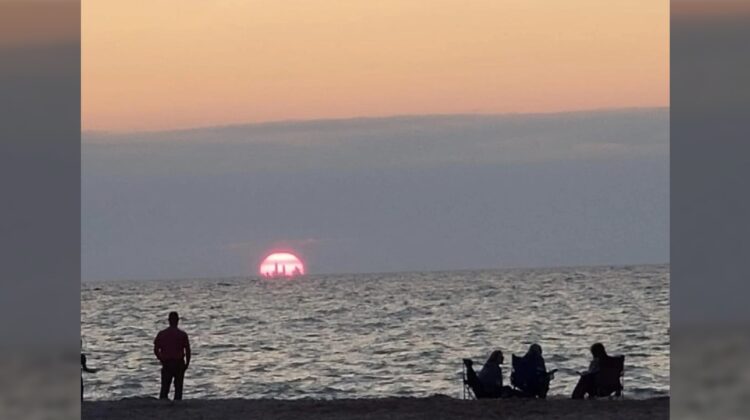
Visitors at Indiana Dunes National Park are often stunned to discover that the skyline of Chicago can sometimes be seen glowing across Lake Michigan from dozens of miles away.
On especially clear evenings, the distant skyscrapers appear along the horizon during sunset, creating one of the most unexpected and surreal views in the American Midwest.
What makes the phenomenon even more remarkable is that the skyline can occasionally appear sharper, taller or seemingly much closer than it truly is.
Scientists explain that this effect is caused by a rare atmospheric optical phenomenon known as “looming.”
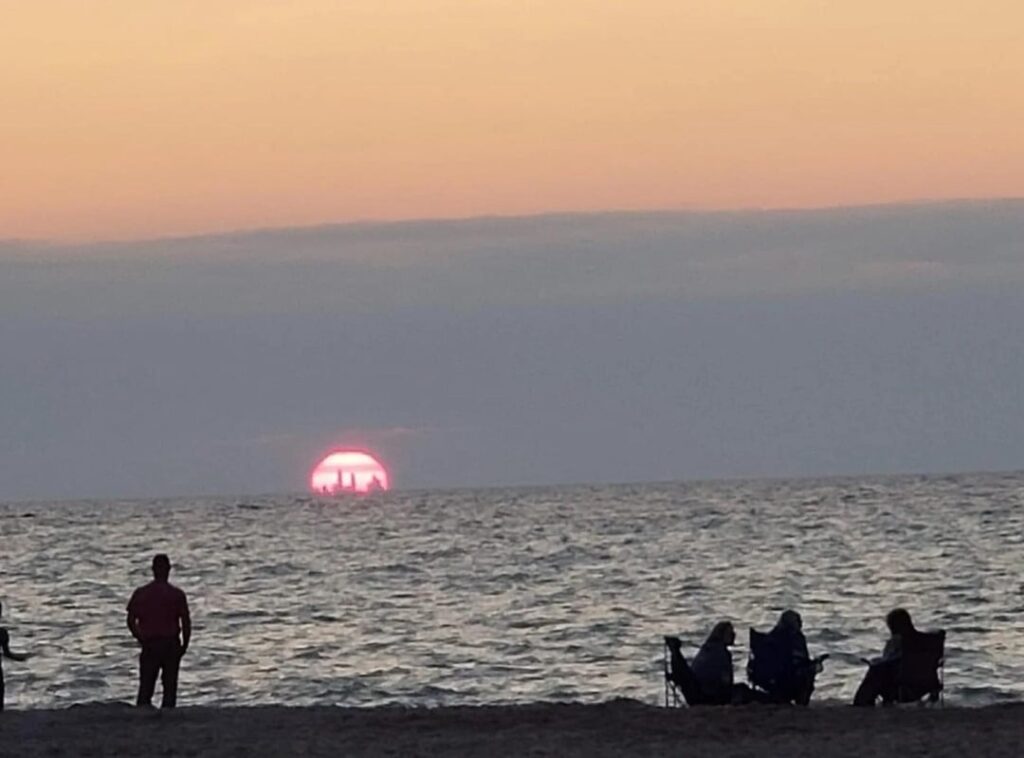
Looming occurs when layers of warm and cold air form above large bodies of water, bending light as it travels near the Earth’s surface.
The distorted light can magnify or elevate distant objects beyond their normal visible range, making faraway city buildings appear almost unreal against the horizon.
Under the right weather conditions, Chicago’s skyline becomes visible from parts of Indiana located more than 30 miles away across the lake.
Photographers and tourists frequently gather along the dunes at sunset hoping to witness the striking combination of glowing city lights, reflective water and shifting atmospheric conditions.
The sight creates a unique visual alignment involving two states, one of North America’s Great Lakes and one of the world’s most recognizable skylines.
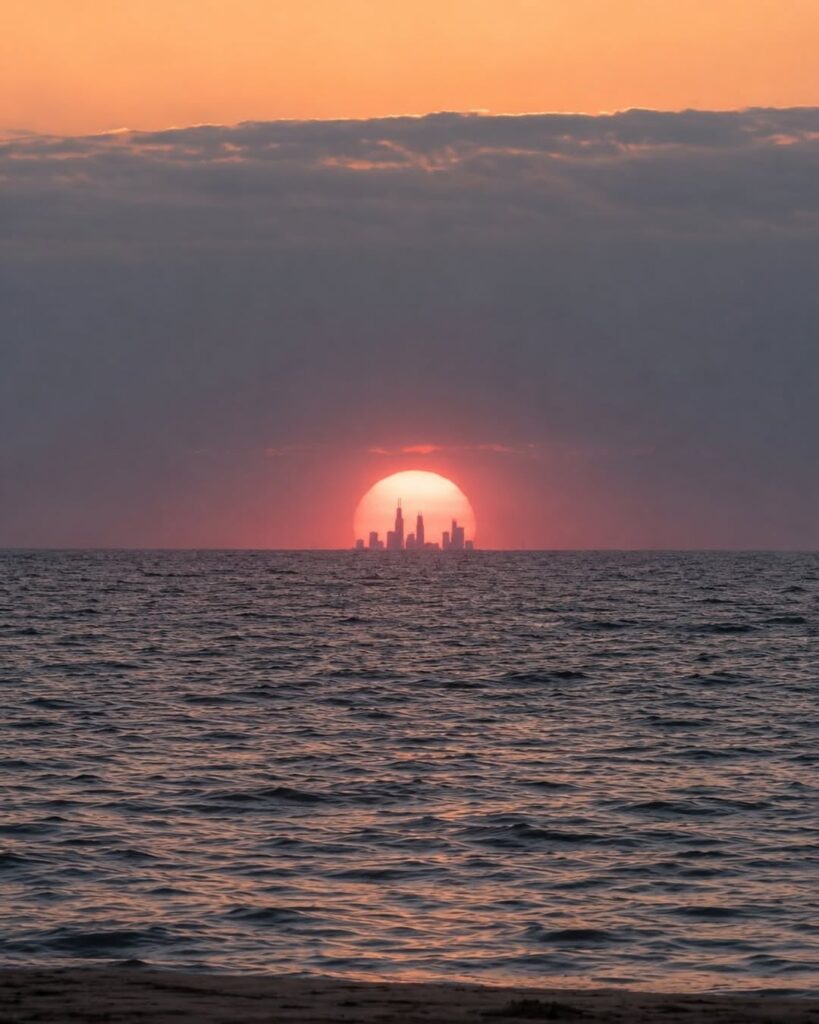
Many visitors say the illusion feels almost like a mirage because the city appears to float above the water.
Atmospheric refraction events like this are relatively uncommon and depend heavily on temperature differences, humidity and air stability above the lake.
The phenomenon has become especially popular among landscape photographers and weather enthusiasts fascinated by unusual natural optics.
Beyond the skyline views, Indiana Dunes National Park is known for its beaches, forests, wetlands and biodiversity along the southern shore of Lake Michigan.
Why atmospheric optical illusions fascinate scientists and photographers
Rare optical effects such as looming, mirages and atmospheric refraction continue attracting global attention because they dramatically alter how humans perceive landscapes. These events blend meteorology, physics and visual illusion, often creating scenes that appear almost impossible to the naked eye.
Leave a Reply