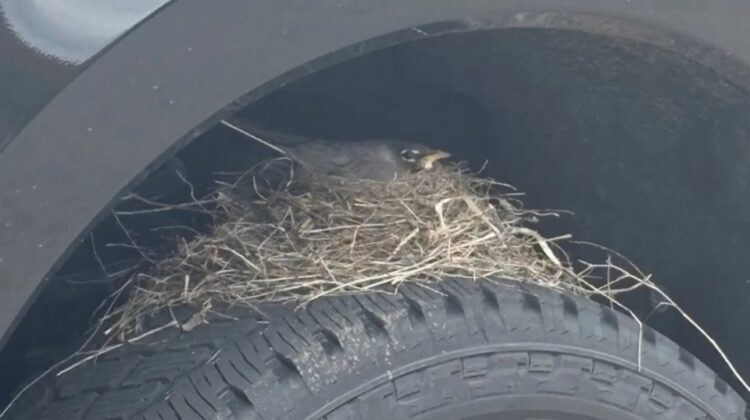
A routine truck sale at a Kansas dealership took an unexpectedly wholesome turn after a robin decided the vehicle was the perfect place to raise a family.
At Ford Motor Company dealership Olathe Ford Lincoln, staff discovered that a robin had built a nest directly on the front passenger-side tire of a newly sold Ford F-250. What started as a small nest quickly became a full-fledged wildlife standoff when the bird laid four bright blue eggs — and the chicks later hatched inside the dealership lot.
Because the nest is protected under the Migratory Bird Treaty Act, employees legally cannot move or disturb the truck until the baby robins safely leave the nest on their own.
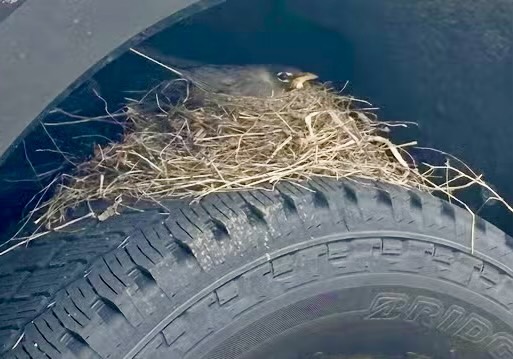
Instead of frustration, the situation sparked an outpouring of support online.
“We’ve become way too emotionally invested in these babies to rush them out now,” the dealership wrote in a Facebook update, thanking the customer for being patient while nature runs its course.
The buyer of the massive pickup truck reportedly agreed to delay delivery so the robin family could remain undisturbed. Employees say the tiny birds have now become unofficial celebrities around the dealership, with staff checking on them daily.
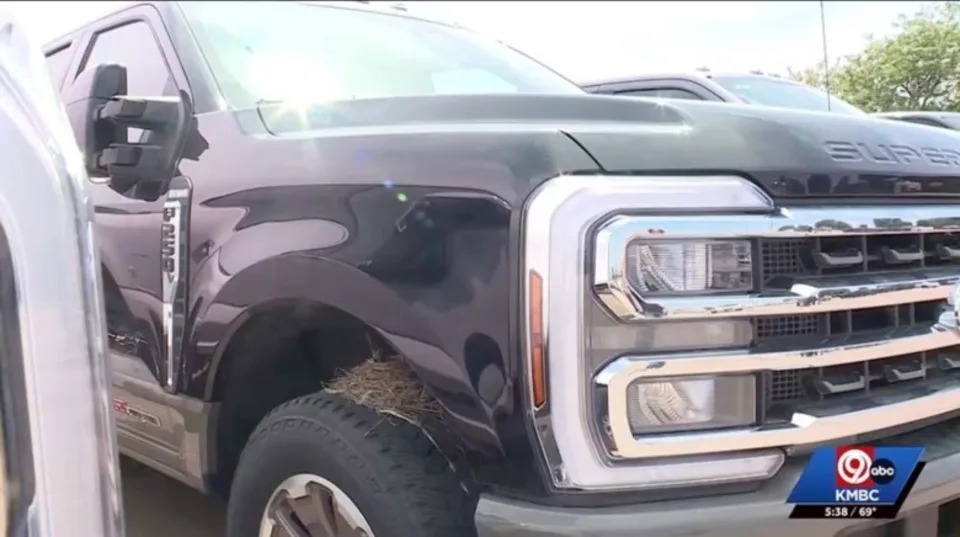
Wildlife experts note that robins often seek sheltered spots near humans to protect their nests from predators, though choosing the wheel of a heavy-duty truck is certainly unusual.
Ironically, this is not the first unexpected animal rescue at the dealership. Workers say they have previously found kittens hidden inside vehicles and even discovered a mother possum with several babies tucked beneath a customer’s hood during an oil change.
Baby robins typically leave the nest around two weeks after hatching, meaning the F-250’s new owner may soon finally get the keys — assuming the feathered passengers are ready to move out first.
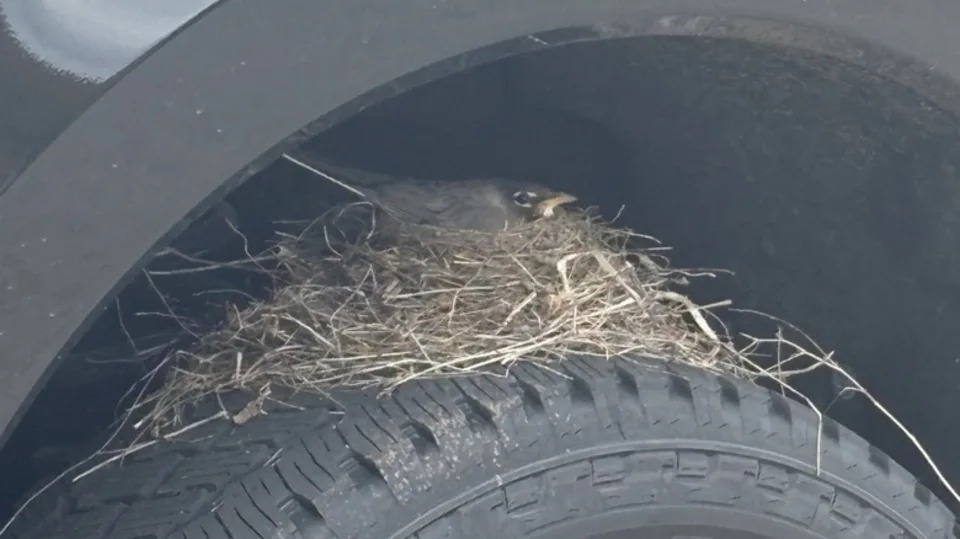
Why Birds Nest In Cars More Often Than People Realize
Wildlife specialists say parked vehicles can accidentally mimic natural nesting environments. Warm engine compartments, sheltered wheel wells, and quiet dealership lots can feel safe to birds searching for protection during breeding season.
Bird nests inside vehicles can also create legal complications in the United States because many native bird species are federally protected. Moving active nests, eggs, or hatchlings without authorization may violate wildlife protection laws.
Leave a Reply