• Skip to main content
  • Skip to primary sidebar
  • Skip to footer
  • Home
  • About Us
  • Copyright Report
  • Submit Content
  • Terms
  • Privacy Policy
  • Legal Disclaimer

Hasan Jasim

Hasan Jasim is a place where you may get entertainment, viral videos, trending material, and breaking news. For a social generation, we are the largest community on the planet.

The Amorphophallus paeoniifolius: A One-Night Hotel for Insects with a Pungent Aroma

by Hasan Jasim Editorial Team Leave a Comment

ShareTweet

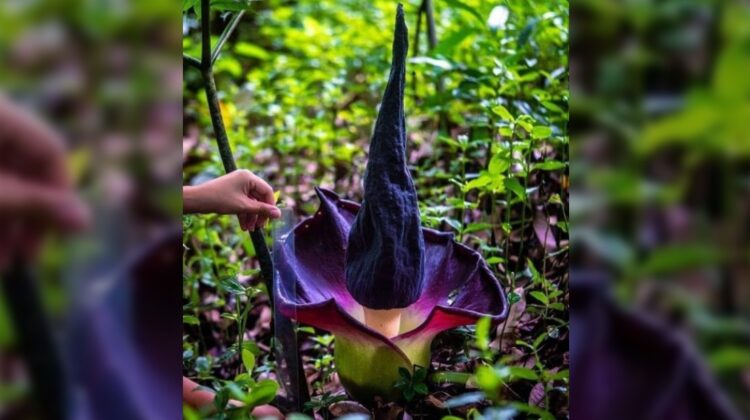
Deep within the tropical forests of Southeast Asia, a curious plant blooms, promising a fragrant feast for insects and a spectacle for onlookers. This is the Amorphophallus paeoniifolius, known by many names: the elephant foot yam, the corpse flower, and in Indonesia, the pongapong flower.

But beyond its unusual nicknames, the pongapong flower hides a fascinating reproductive story, one that involves a one-night hotel for pollinators, a pungent aroma, and a clever trick of timing.

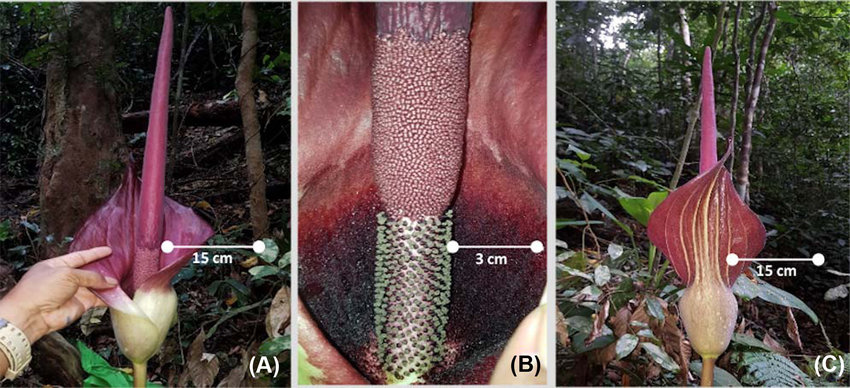
Standing tall atop a bulbous base, the pongapong flower emerges as a towering purple and green phallus-shaped structure. At its tip lies a chamber called the inflorescence, where the magic happens. This chamber houses both male and female flowers, but not at the same time.
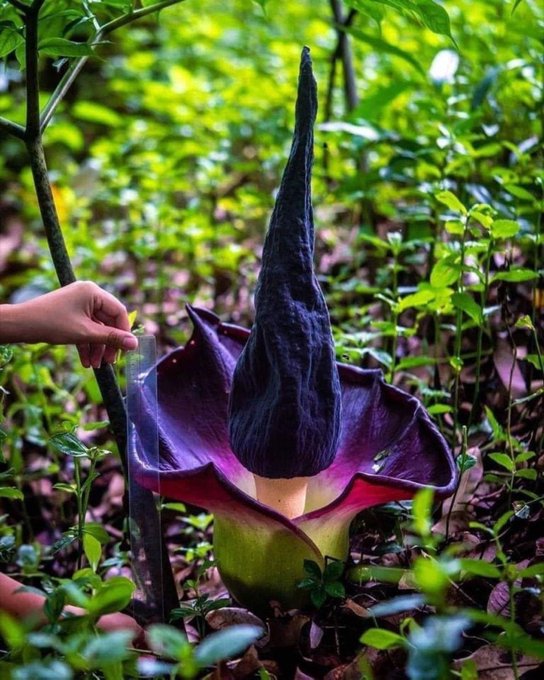
A 2-foot-tall specimen of the Pongapong flower (Amorphophallus paeoniifolius) in full bloom during the rainy season. It looks like a witch’s hat and is one of the rarest plants found in the Masungi georeserve, the Philippines.

The drama begins on the first day of the bloom. The female flowers take center stage, their stigmas ready to receive pollen. But to attract their guests, the pongapong flower unleashes its secret weapon: a pungent odor reminiscent of rotting flesh. This foul fragrance, while unpleasant to human noses, is an irresistible invitation to carrion-eating beetles and flies.

Lured by the stench, the insects crawl into the inflorescence, seeking a meal. But once inside, they find themselves trapped! As the sun sets, the inflorescence seals shut, turning into a temporary hotel for the unsuspecting guests.
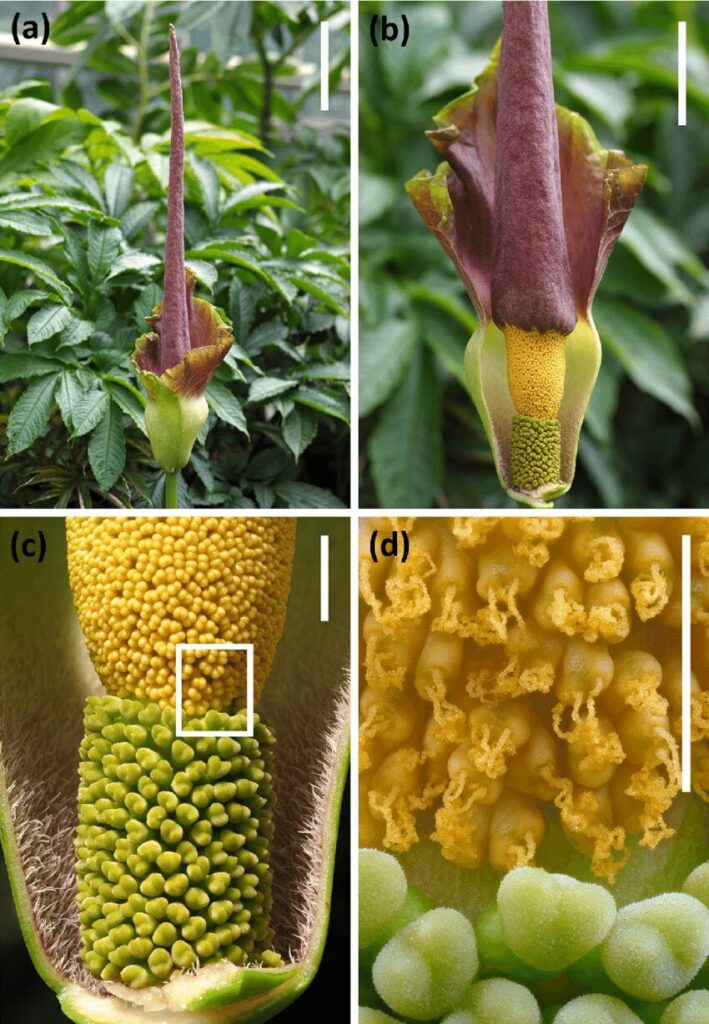
Throughout the night, the pollen dust from the male flowers, which hadn’t yet bloomed, coats the bodies of the trapped insects. As the sun rises on the second day, the female flowers fade, no longer receptive to pollen. But now, it’s the male flowers’ turn. The inflorescence reopens, releasing the trapped insects, who, dusted with pollen, unwittingly carry it to other blooming pongapong flowers, ensuring pollination.

The pongapong flower’s strategy is a masterpiece of timing and deceit. It offers a one-night stay with a less-than-pleasant aroma, but for its insect guests, it’s a necessary pit stop on their journey of spreading life.
So, the next time you encounter a pongapong flower, don’t be put off by its smell. Remember, it’s a testament to the intricate dance of nature, where even the most unpleasant scents can play a vital role in the delicate tapestry of life.

Beyond its fascinating pollination story, the pongapong flower offers other benefits:

  • Food: The edible bulb of the plant is a valuable source of starch in Southeast Asia.
  • Medicine: Traditionally, the plant has been used for medicinal purposes, treating ailments like rheumatism and skin conditions.
  • Decoration: The unusual flower can be used as a unique and conversation-starting centerpiece.

The pongapong flower is a reminder that nature is full of surprises and marvels, waiting to be discovered. By understanding its story, we gain a deeper appreciation for the interconnectedness of life and the ingenious ways plants have evolved to ensure their survival.

Filed Under: Trends Worldwide Tagged With: amorphophallus, aroma, hotel, insects, one-night, paeoniifolius:, pungent, trends, with, worldwide

Reader Interactions

Leave a Reply Cancel reply

Your email address will not be published. Required fields are marked *

Primary Sidebar

More to See

Cat severely burned in fire makes “miracle” recovery, is finally going home

By Hasan Jasim Editorial Team

Japan arrests Americans over stunt at baby monkey Punch’s zoo

By Hasan Jasim Editorial Team

A Caring Cop Goes Above And Beyond For A Lonely Coyote Pup

By Hasan Jasim Editorial Team

While Air Raid Sirens Sound, A Woman In Ukraine Is Seen Comforting A Cat

By Hasan Jasim Editorial Team

The 25,000-Year-Old “Pyramid” In Indonesia Was Likely Not Made By Humans

By Hasan Jasim Editorial Team

Bigfoot captured in wild viral video by terrified hiker: ‘Scariest moment of my life’

By Hasan Jasim Editorial Team

Microscopic Organisms Have been Resurrected After 24,000 Years in Permafrost

By Hasan Jasim Editorial Team

Footer

ABOUT HASANJASIM.ONLINE

Hasanjasim.online is a digital platform dedicated to publishing well-researched articles about the animal kingdom, nature, and the environment. Our editorial team works to source stories from credible outlets, scientific research, and verified reports, aiming to inform as much as we entertain. From wildlife conservation and animal behavior to natural wonders and environmental science, we cover the topics that help readers better understand and appreciate the natural world. Whether you're a lifelong nature lover or simply curious about the planet we share, Hasanjasim.online aims to be a trustworthy destination for stories worth reading — and worth citing.

Recent

  • Euphorbia Hirta (“Asthma-Plant”): What Traditional Use and Real Research Actually Show
  • A Mystery Animal Has Been Randomly Attacking People in New Hampshire — Here’s What We Know
  • A Woman Was Filmed Sharing Her Ice Cream With Her Dog — Here’s What Vets Actually Say About It
  • Dolphin Calf Incident in Ceuta Sparks Outrage After Disturbing Beach Footage Emerges
  • Lactuca Serriola Root: Traditional Uses of Prickly Lettuce (Wild Lettuce) Root
  • The Puppy a Firefighter Couldn’t Leave Behind — and the Story Didn’t End There
  • A Mother Dog Dove Into Floodwater Again and Again — Until All 7 of Her Puppies Were Safe

Search