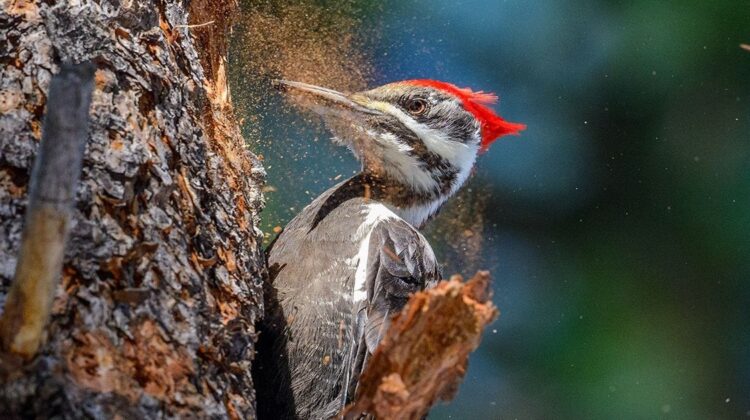
Woodpeckers are known for their unique behavior of repeatedly slamming their heads into trees without suffering serious brain injury. For years, scientists and birders have been captivated by this phenomenon and proposed theories about how woodpeckers protect themselves. One long-held belief suggested that their skulls acted as helmets, absorbing the shock of impact. However, a groundbreaking new study has challenged this theory and shed light on the true mechanics behind woodpeckers’ remarkable ability.
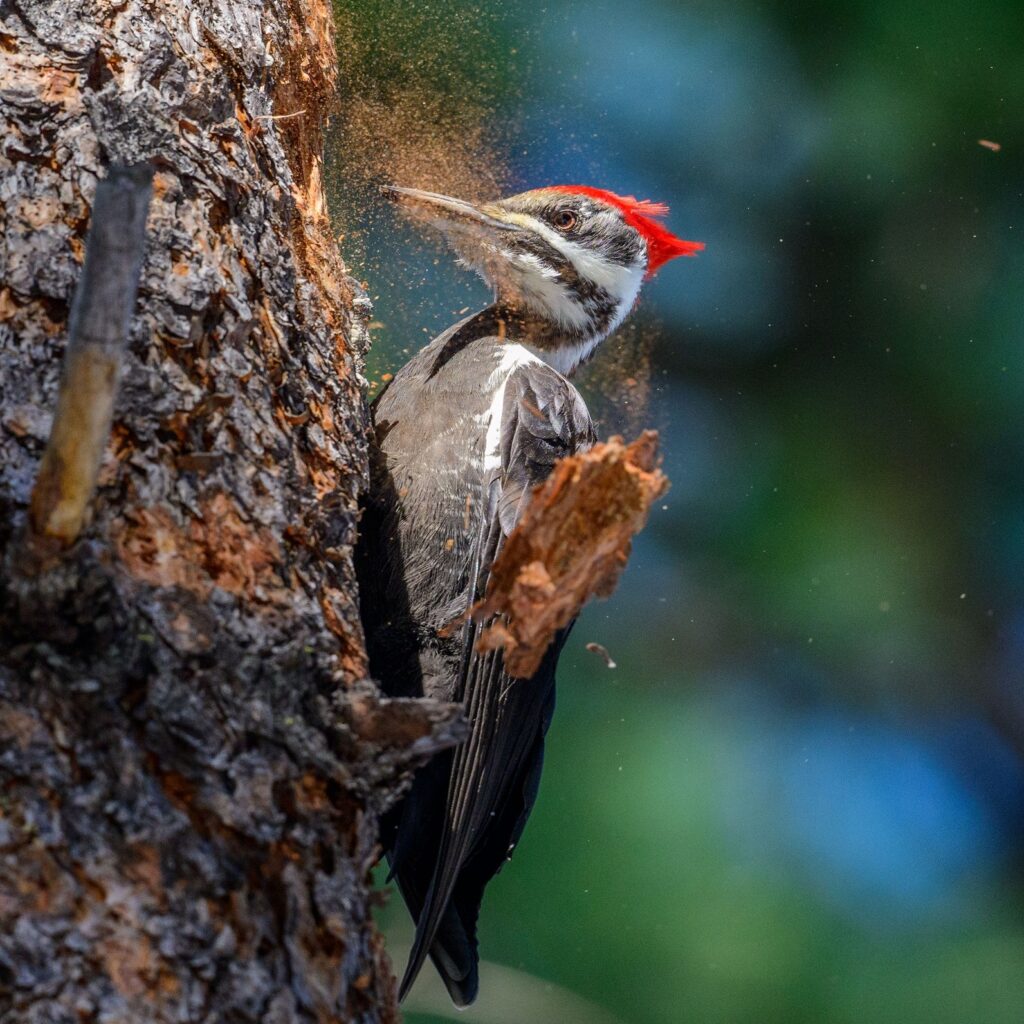
Researchers used high-speed videos to closely examine the pecking behavior of three woodpecker species: Black, Pileated, and Great Spotted Woodpeckers. By recording at an impressive 4,000 frames per second, the scientists were able to analyze the subtle movements of the birds’ beaks and heads upon impact. Surprisingly, the findings contradicted the notion of shock absorption.
Contrary to expectations, the study revealed that woodpeckers do not rely on their skulls to absorb the shock. Instead, their heads and beaks act like stiff hammers, striking and stopping in unison. When analyzing the video recordings, researchers observed that the beaks and heads stopped moving at the same rate, indicating that both experienced the same force of impact.
To further investigate this phenomenon, the scientists conducted computer modeling experiments. They compared different models of pecking behavior, including one without shock absorption and several with a small spring connecting the bill to the head, mimicking a shock absorber. The results showed that the presence of a cushioning mechanism significantly reduced the woodpecker’s ability to peck with force.
These findings have led to a paradigm shift in our understanding of woodpecker hammering. It appears that by minimizing the need for shock absorption, woodpeckers can strike harder and more effectively. Evolutionarily, this makes sense since absorbing all the shock would hinder their ability to drill holes for food or excavate nests.
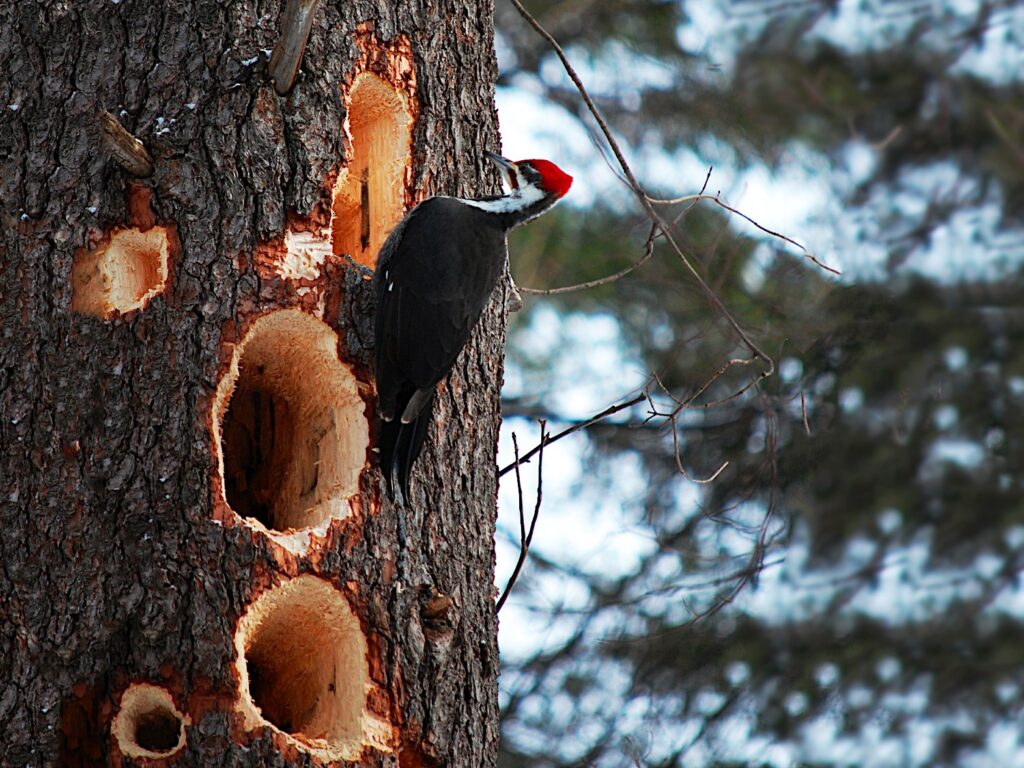
While this study has debunked the theory of built-in shock absorbers in woodpeckers, it has opened up new avenues for exploration. Biologists and engineers are now intrigued by other possible explanations for the birds’ brain protection. Some propose that the engagement of neck muscles or the presence of cushioning structures in the jaw or tongue bone may play a role.
Future studies may delve deeper into the flexing of neck muscles prior to impact as a contributing factor. Additionally, researchers have considered the possibility that woodpeckers’ smaller size enables them to withstand more force before incurring brain trauma compared to humans.
By investigating the intense forces exerted by woodpeckers during their pecking behavior, scientists have determined that the birds perform within a safety threshold. They would need to drill much faster or hit a significantly stiffer surface, such as metal, to sustain brain injury. This suggests that woodpeckers have developed a remarkable ability to avoid brain trauma through the principles of physics.
As our understanding of woodpeckers’ avoidance of brain injury evolves, it continues to spark fascination among biologists, engineers, and bird enthusiasts. By unraveling the secrets behind this extraordinary ability, we may gain insights that could have implications for injury prevention in humans or inspire innovative engineering solutions.
Leave a Reply