• Skip to main content
  • Skip to primary sidebar
  • Skip to footer
  • Home
  • About Us
  • Copyright Report
  • Submit Content
  • Terms
  • Privacy Policy
  • Legal Disclaimer

Hasan Jasim

Hasan Jasim is a place where you may get entertainment, viral videos, trending material, and breaking news. For a social generation, we are the largest community on the planet.

The First Giant Anteater Diagnosed With Diabetes And Fitted With A Human-Useable Device

by Hasan Jasim Editorial Team Leave a Comment

ShareTweet

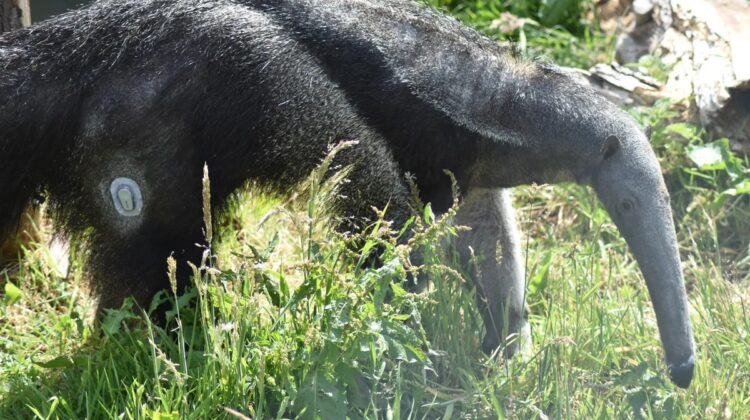
Nala, an Edinburgh Zoo giant anteater, is the first known instance of diabetes in her species. “Keepers first noticed anything was awry when Nala began to lose weight while eating the same amount, or even more, as usual,” said Stephanie Mota, the resident veterinary surgeon at the Royal Zoological Society of Scotland (RZSS), in a statement.

“We performed a comprehensive health check under general anaesthesia, doing numerous tests, and discovered that Nala has type one diabetes.”

Diabetes patients may be more prevalent today than ever before. It is a chronic ailment – or, depending on how you define it, up to five chronic conditions – that kills millions of people each year. Despite popular belief, anyone can acquire it; however, certain factors, such as being physically inactive or taking certain drugs, make it more likely.

So, what do you do when you have a massive anteater that needs insulin? When a person is diagnosed with type one diabetes, they are likely to face a life of injections, insulin pumps, and blood sugar monitoring. This is also true for cats and dogs, both of which can develop the disease.

But a massive anteater? They don’t have any fingers to prick, so the human approach is out; they’re much larger than a cat, so you can’t just pick them up and give them a shot; and they’re not exactly known as humans’ closest friends, so you can’t just tell them to “sit!” while you check their blood.

“Our keepers did an excellent job fast training Nala to take an insulin injection every day, but the problem for us was figuring out how to continuously monitor her blood glucose levels to ensure she was getting the right dose,” Mota explained. “Taking blood tests on a daily basis was not an option.”

As a result, the keepers chose a new approach: a wearable glucose monitor.

“We did originally start monitoring the levels using urine samples,” Mota explained, “but we decided to contact several firms that developed human glucose monitors to try and shorten the process and find a technique that would be least invasive for Nala.”

“Dexcom, one of the main providers of this technology, kindly provided the monitor to our charity, and we were able to use it during one of her training sessions, allowing us to check her blood glucose levels remotely via an app.”

Nala is not only super-fashionable in giant anteater terms now that she has a brand-new blood monitor, but she is also assisting her keepers in learning how to treat diabetic animals in the future.

“Nala is the ideal candidate for this technology because of her great nature,” stated Mota. “[This] allows us and her incredible team of keepers to manage her condition as best as could.”

Filed Under: Trends Worldwide Tagged With: anteater, device, diabetes, diagnosed, first, fitted, Giant, human-useable, trends, with, worldwide

Reader Interactions

Leave a Reply Cancel reply

Your email address will not be published. Required fields are marked *

Primary Sidebar

More to See

This giraffe left photographer speechless, then sad truth is revealed

By Hasan Jasim Editorial Team

Chipmunk Photobombs Girlfriend’s Lake Moraine Shot: A Hilarious Wildlife Encounter

By Hasan Jasim Editorial Team

Six Beluga Whales Relocated From Closed Canadian Marine Park as International Rescue Effort Begins

By Hasan Jasim Editorial Team

Before and After Photos of People Whose Smiles Improved as a Result of a Free Dentist’s Work

By Hasan Jasim Editorial Team

The Unknown Crocodiles

By Hasan Jasim Editorial Team

Are .gov websites reliable?

By Hasan Jasim Editorial Team

Proud Aboriginal Man Travels 2,000 Miles To Watch His Granddaughter Graduate

By Hasan Jasim Editorial Team

Footer

ABOUT HASANJASIM.ONLINE

Hasanjasim.online is a digital platform dedicated to publishing well-researched articles about the animal kingdom, nature, and the environment. Our editorial team works to source stories from credible outlets, scientific research, and verified reports, aiming to inform as much as we entertain. From wildlife conservation and animal behavior to natural wonders and environmental science, we cover the topics that help readers better understand and appreciate the natural world. Whether you're a lifelong nature lover or simply curious about the planet we share, Hasanjasim.online aims to be a trustworthy destination for stories worth reading — and worth citing.

Recent

  • The Viral Trend of Dogs Getting Their Own Maternity Photoshoots
  • The Seahorse Photo That Captured a Silent Farewell — And Won Photography’s Top Ocean Prize
  • Blood-Soaked California Poachers Arrested After Cops Make Horrifying Discovery
  • The Moment an Emu Wrestled a Man to the Ground — Then Turned the Tables
  • Why didn’t anyone tell me there’s an animal that smells exactly like hot, buttered popcorn?
  • I Never Liked the Caribbean—But This Island With Waterfalls, Hot Springs, and Rainforests Won Me Over
  • He Was a Magnificent 17-Point Buck — Now His Life Is Over

Search