• Skip to main content
  • Skip to primary sidebar
  • Skip to footer
  • Home
  • About Us
  • Copyright Report
  • Submit Content
  • Terms
  • Privacy Policy
  • Legal Disclaimer

Hasan Jasim

Hasan Jasim is a place where you may get entertainment, viral videos, trending material, and breaking news. For a social generation, we are the largest community on the planet.

The Science Behind the “Lava Pit” That Appears To Suck The Bodies of the Damned Into Hell

by Hasan Jasim Editorial Team Leave a Comment

ShareTweet

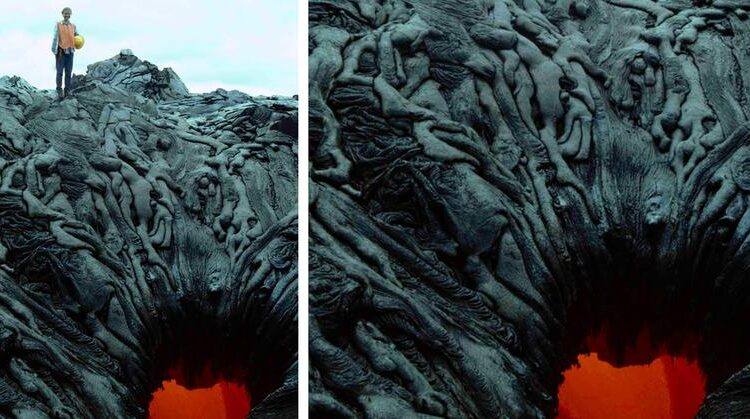
A photo of a lava skylight, taken by volcanologist Laszlo Kestay in Hawaii Volcanoes National Park, has gone viral on social media with the caption “Lava formed to look like a pile of bodies being sucked into hell.” But what is a lava skylight, and how does it form?
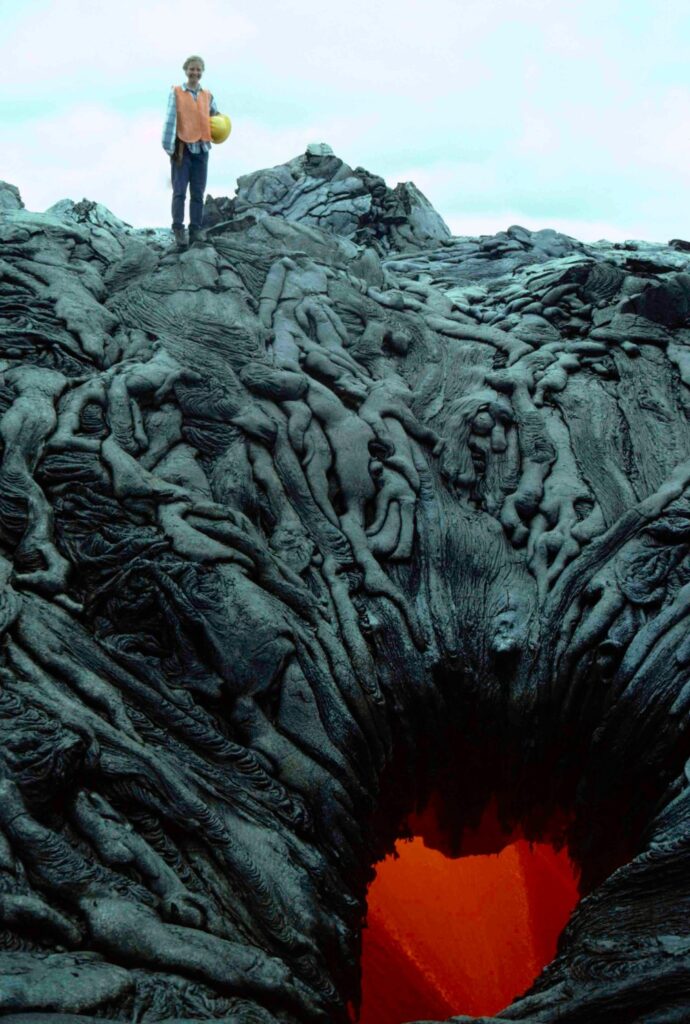
Lava skylights are openings in the ceiling of a lava tube that provide a view of the flowing lava. These skylights are usually inaccessible to visitors due to the high risk of roof collapses and hot air emissions. The lava tube is formed by two processes: a lava channel can generate an arc above it that solidifies and cools, or an insulated pahoehoe flow can have molten lava flowing within while the exterior layers freeze.
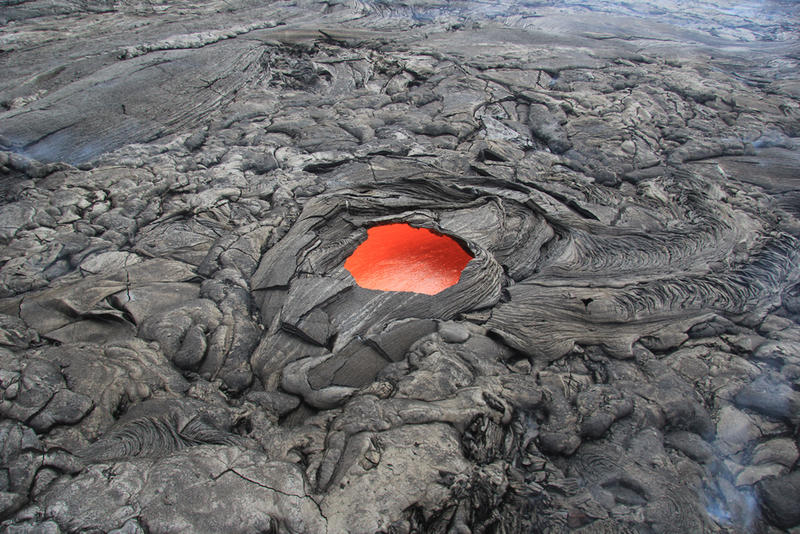
A skylight, revealing the molten lava underneath. Source: (hawaiimagazine.com)

While lava skylights are typically subterranean, they may collapse in specific areas, forming skylights that offer a glimpse of the flow within. Tubes can completely collapse and become channels, drain out, or become obstructed.
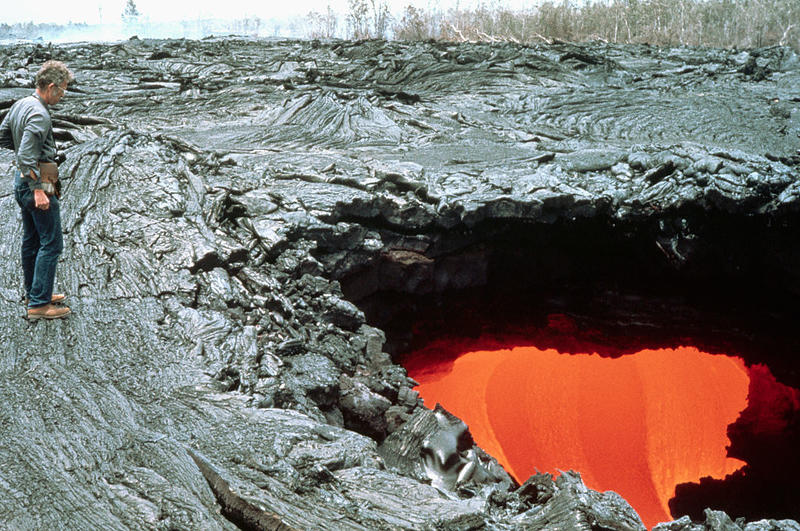
D.W. Peterson stands next to the skylight of a lava tube near Mauna Ulu Crater. Location: Kilauea Volcano East Rift, Hawaii Volcanoes National Park, Hawaii, USA. Source: (Photo by © CORBIS/Corbis via Getty Images)

According to Kestay, the skylight in the photo was situated on the coastal flats beneath Pulama Pali, an ideal spot for scientific investigations. The visible pahoehoe lava around the edges of the skylight are the result of a lava flow that traversed across the skylight and caused the lava to tumble back into the tube, giving it the appearance of dead bodies being sucked into the abyss.
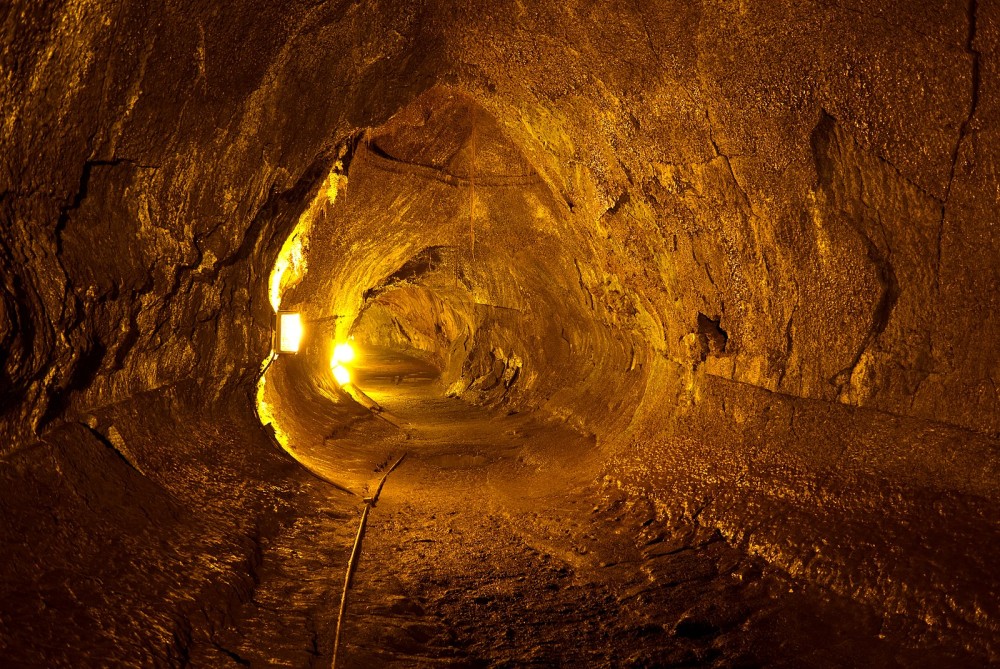
Thurston Lava Tube at Hawaii Volcanoes National Park, Big Island, Hawaii. The step mark on the right wall indicates the depth at which the lava flowed for a period of time. Photo: Frank Schulenburg

Kestay explained that while the phenomenon might resemble a doorway to hell, it should not be seen as particularly scary since it’s just an opening in the ceiling above a lava tube. Although having an active surface flow cross over an active skylight is a bit of a rare coincidence, Kestay says it was definitely worth taking a photo, even back in the days of film cameras where photographers had a limited number of shots.
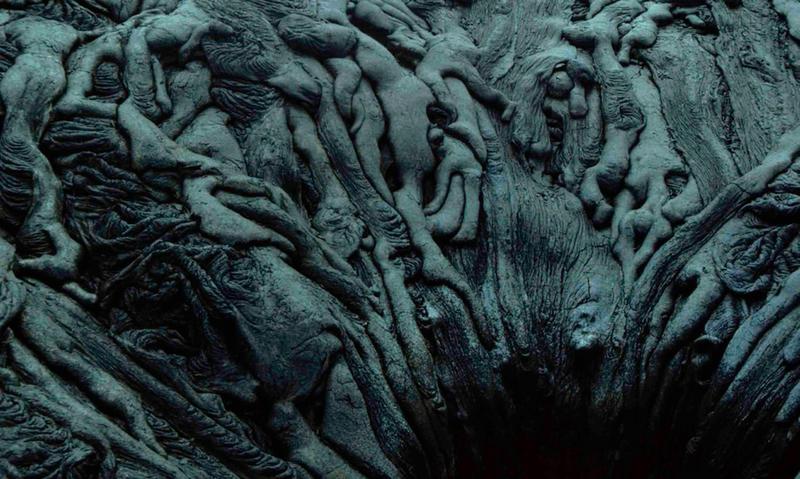
The eerie shapes of the West Komokuna portal to hell. Source: (mymodernmet.com)

So while the photo might look like lava-formed bodies being sucked into hell, it’s just a natural phenomenon resulting from the flow of lava in a tube and the formation of a skylight.

Filed Under: Trends Worldwide Tagged With: AdSense optimization, Earth science, Geological Phenomena, Geothermal Activity, Hawaii Volcanoes National Park, high-CPC keywords, Lava Skylight, Lava Tube, Natural Phenomena, natural wonders, Pahoehoe Lava, Skylights, Volcanology, Volcanology Photography

Reader Interactions

Leave a Reply Cancel reply

Your email address will not be published. Required fields are marked *

Primary Sidebar

More to See

Spanish women transform summer shade into public art with giant crochet canopy in Malaga

By Hasan Jasim Editorial Team

Woman buys ”cute puppy” in the pet store: 1 year later, she realizes her big mistake

By Hasan Jasim Editorial Team

Are 077 numbers free?

By Hasan Jasim Editorial Team

21-year-old Peanut is officially the oldest chicken in the world — congratulations

By Hasan Jasim Editorial Team

Last male of his kind: The rhino that became a conservation icon

By Hasan Jasim Editorial Team

Road Trip Ready: Europe’s Longest North-South Highway

By Hasan Jasim Editorial Team

The Stunning Power of Nature: Eyjafjallajökull Eruption Featured on Astronomy Picture of the Day

By Hasan Jasim Editorial Team

Footer

ABOUT HASANJASIM.ONLINE

Hasanjasim.online is a digital platform dedicated to publishing well-researched articles about the animal kingdom, nature, and the environment. Our editorial team works to source stories from credible outlets, scientific research, and verified reports, aiming to inform as much as we entertain. From wildlife conservation and animal behavior to natural wonders and environmental science, we cover the topics that help readers better understand and appreciate the natural world. Whether you're a lifelong nature lover or simply curious about the planet we share, Hasanjasim.online aims to be a trustworthy destination for stories worth reading — and worth citing.

Recent

  • Scientists Found Ancient Americans Living Where No Humans Should Have Been
  • This African Bird Wears Sunflowers Around Its Eyes — Meet the White-Crested Helmetshrike
  • 25 Animals You’ve Probably Never Heard Of — From a Cuban Land Snail to a Marsupial That Mates Itself to Death
  • Woman finds cow’s tooth in takeout taco. The chain says it can happen
  • Healthy Senior Dog Spared After Family Asked Veterinarians to Euthanize Her, Georgia Rescue Says
  • How People Around the World Write Laughter Online
  • The Disturbing Story Behind This Award-Winning Photojournalism Image

Search