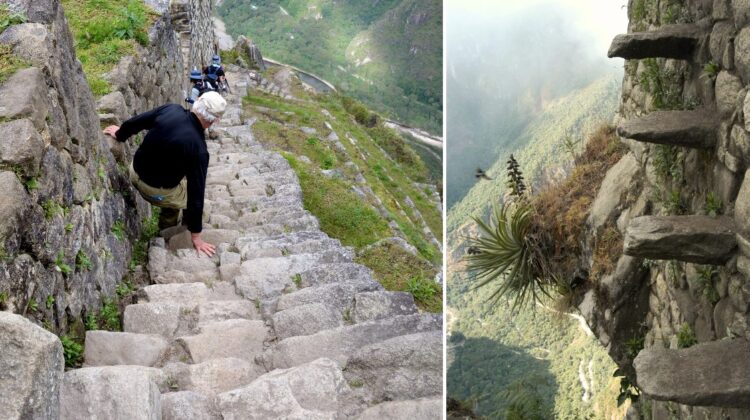
Located on a mountain overlooking the famous Machu Picchu in Peru, Huayna Picchu is famous for its steep staircases on the edge of cliffs.
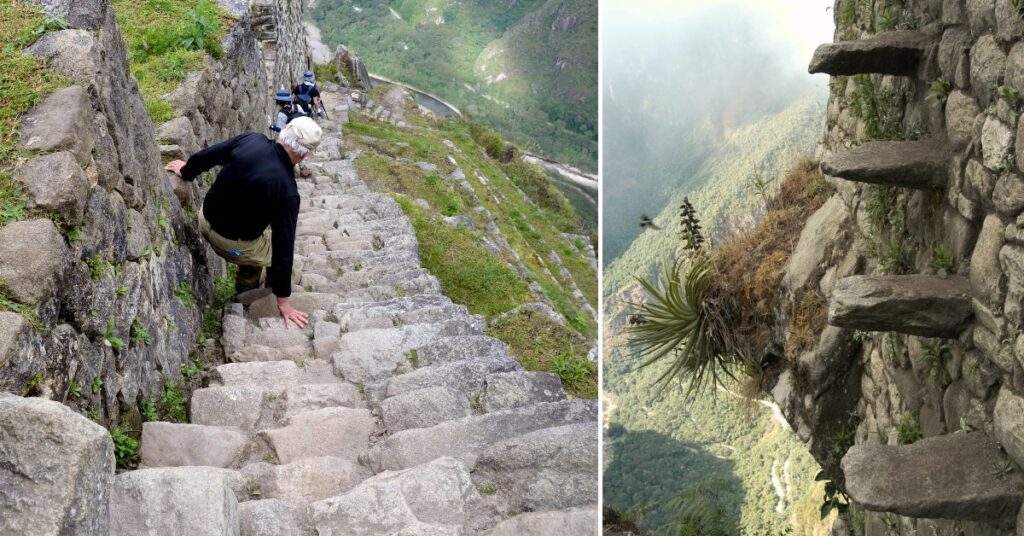
Huayna Picchu’s allure goes beyond its breathtaking views. This steep, rocky peak located at 2,720 meters above sea level stands as a companion to Machu Picchu and possibly held religious significance for the Inca. The challenging ascent on narrow stairs, built directly into the mountainside, might have tested pilgrims’ devotion. Today, it remains a thrilling challenge for hikers, offering a glimpse into Inca engineering marvels and a chance to stand atop a historical wonder, shrouded in both mystery and stunning Andean vistas.
Huayna Picchu has a section nicknamed the “Stairs of Death” leading to the “Temple of the Moon.” It’s a steep, narrow section of stairs leading to the summit, built by the Inca to follow the mountainside. Although, despite the name, these stairs are not a perilous death trap, they do lack switchbacks, making them appear more intimidating. Climbing them is a challenging yet exhilarating experience for visitors.
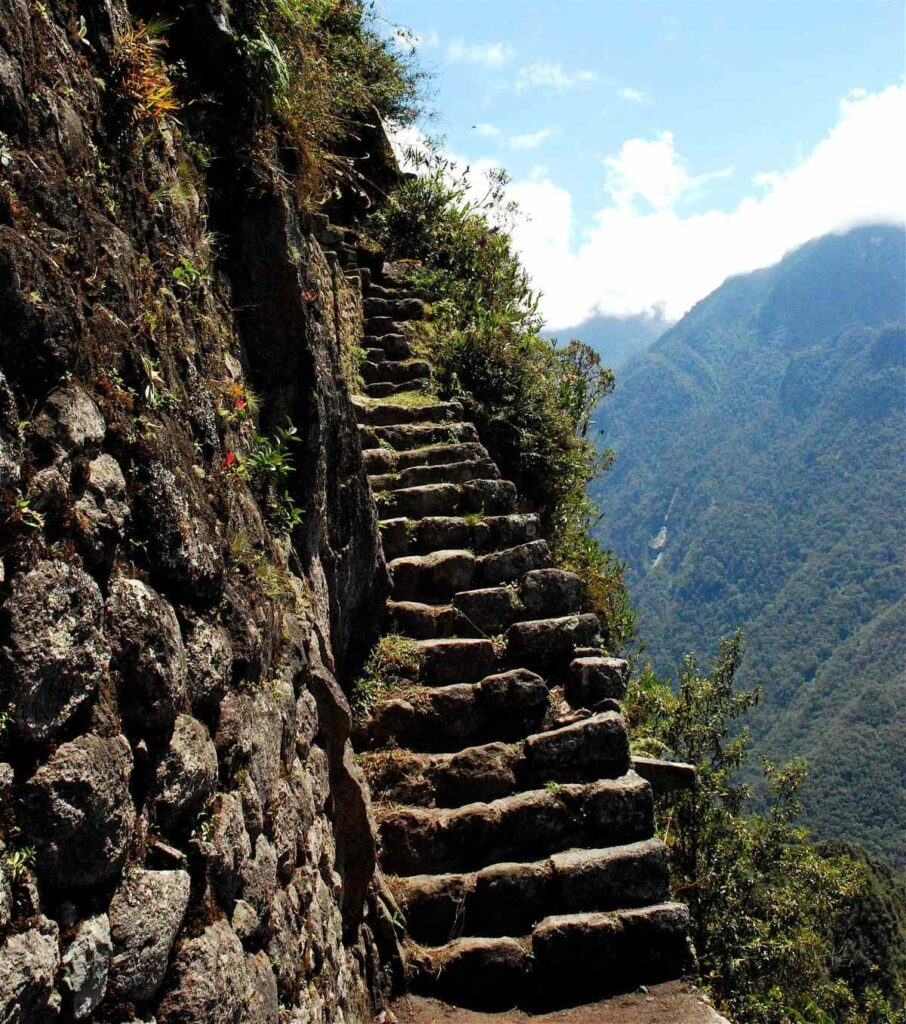
These ancient stone steps, crafted by the Incas over 500 years ago, present a daunting ascent of 183 meters along the mountain’s steep cliffs. Despite their name and the myths surrounding them, fatalities don’t occur on these perilous stairs, although they demand careful attention and physical exertion from climbers. That said, a German blogger did find two confirmed deaths occurring while climbing Huayna Picchu, but even so, the chances of losing your life there are not higher than on Machu Picchu or elsewhere in the Andes (the same blogger, who has conquered peaks in the Alps, calls the experience scary though).
At any rate, ascending the Stairs of Death does require climbers to use both hands for support against the damp walls, with the Urubamba River lying hundreds of meters below. The steep slope of approximately 60 degrees adds to the challenge, forcing tourists to proceed step by step. Reaching the summit of Huayna Picchu marks a triumph over this arduous ascent, offering breathtaking views as a reward.
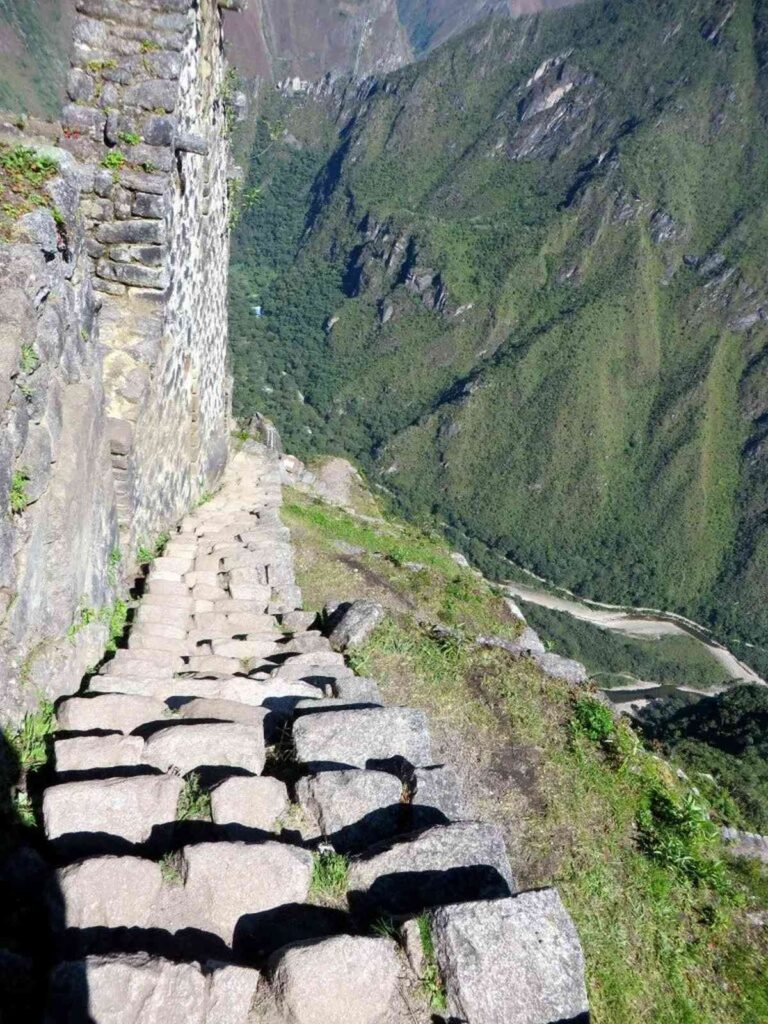
However, the descent can be equally daunting, if not more so, as travelers cautiously navigate the steep slopes while yielding to ascending climbers. Descending the Stairs of Death is particularly nerve-wracking for those with a fear of heights, yet, as noted above, there are hardly any documented fatalities due to falls on this path.
Despite the myths surrounding these stairs, hundreds of people from all ages continue to conquer Huayna Picchu daily (there’s an age limit of 12 and above though). 400, to be precise, because that’s the number of visitors that are allowed to climb them on any given day.
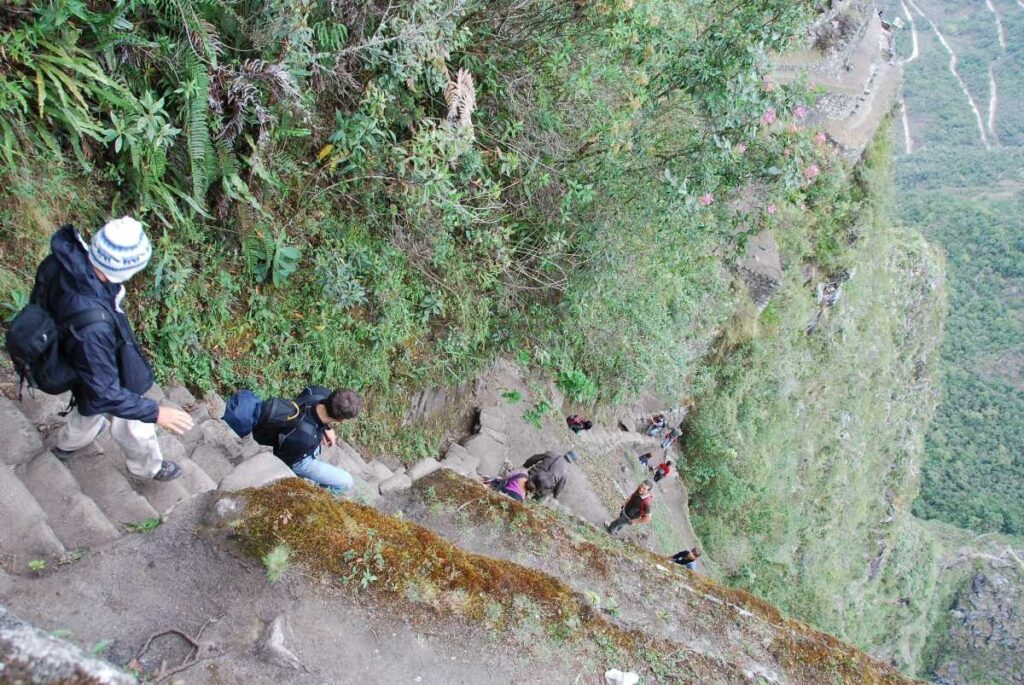
But why are these steps so steep? The dominant factor is the rugged topography of Huayna Picchu. Unlike switchback trails on modern mountains, the Inca stairs follow the mountain’s natural contours. Arguably, building a gradual path with switchbacks would have been incredibly time-consuming and resource-intensive, given the steep slopes and the Inca’s technology.
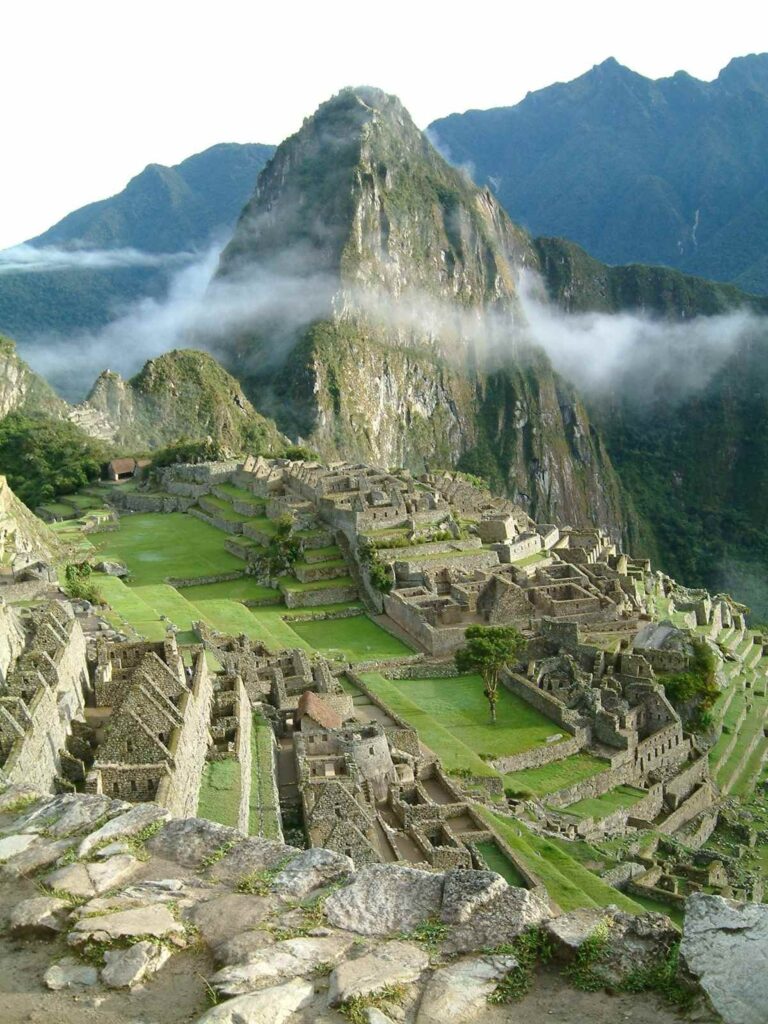
While efficiency played a role, there might be more to the story. Some theories suggest the Inca prioritized strategic advantages. The steep and narrow stairs could have served as a defensive measure, making it difficult for enemies to reach the summit. Additionally, the challenging climb might have held religious significance. Overcoming the steep ascent could have been seen as a test of strength and devotion for pilgrims reaching the top.
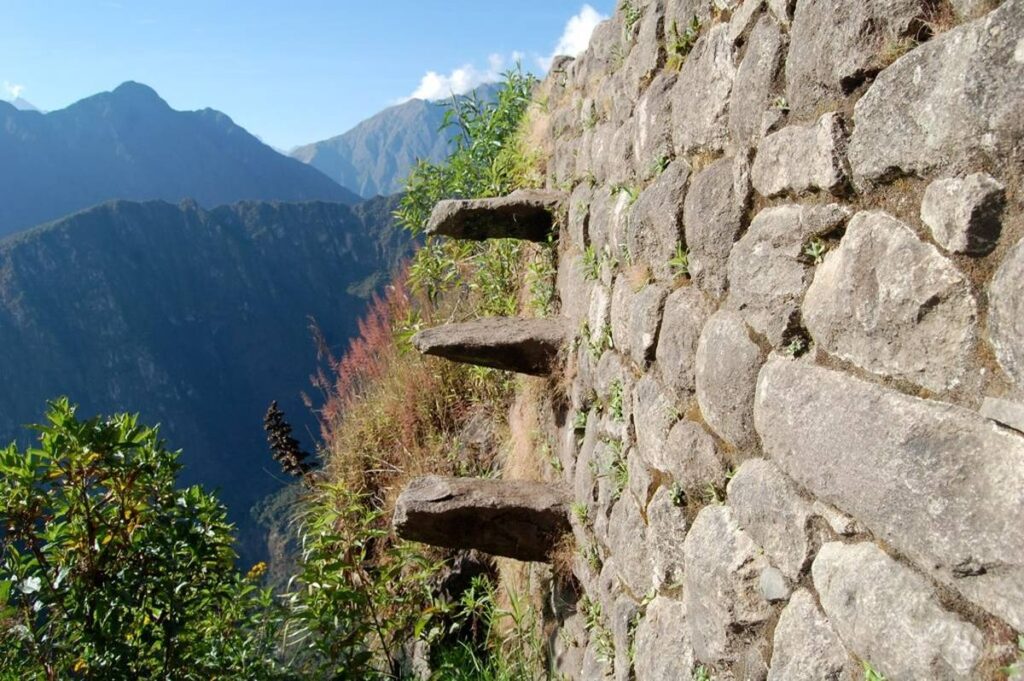
So, unless you have a fear of heights, don’t be deterred by the name of these stairs and the myths surrounding them. Climbing the Huayna Picchu is actually considered one of the most incredible short walks in the world, so if you visit Machu Picchu, don’t miss out! But if you plan to visit in the high tourist season (from April to October), make sure to book your ticket 2 or 3 months in advance, so that you will be among the 400 that can climb the mountain on the day of your visit!
Leave a Reply