
• Skip to main content
  • Skip to primary sidebar
  • Skip to footer
  • Home
  • About Us
  • Copyright Report
  • Submit Content
  • Terms
  • Privacy Policy
  • Legal Disclaimer

Hasan Jasim

Hasan Jasim is a place where you may get entertainment, viral videos, trending material, and breaking news. For a social generation, we are the largest community on the planet.

Ad example

The Stele of Thonis-Heracleion: A Submerged Marvel Emerges from Ancient Egypt’s Watery Depths

by Stephen King Leave a Comment

ShareTweet

One of the most astonishing discoveries in ancient Egyptian archaeology has recently emerged from the depths of the sea. The stele of Thonis-Heracleion, created by Pharaoh Nectanebo I (378-362 BC), has been raised from the waters where it rested for over a thousand years, marking a momentous find in the submerged ruins of the port city of Thonis-Heracleion.
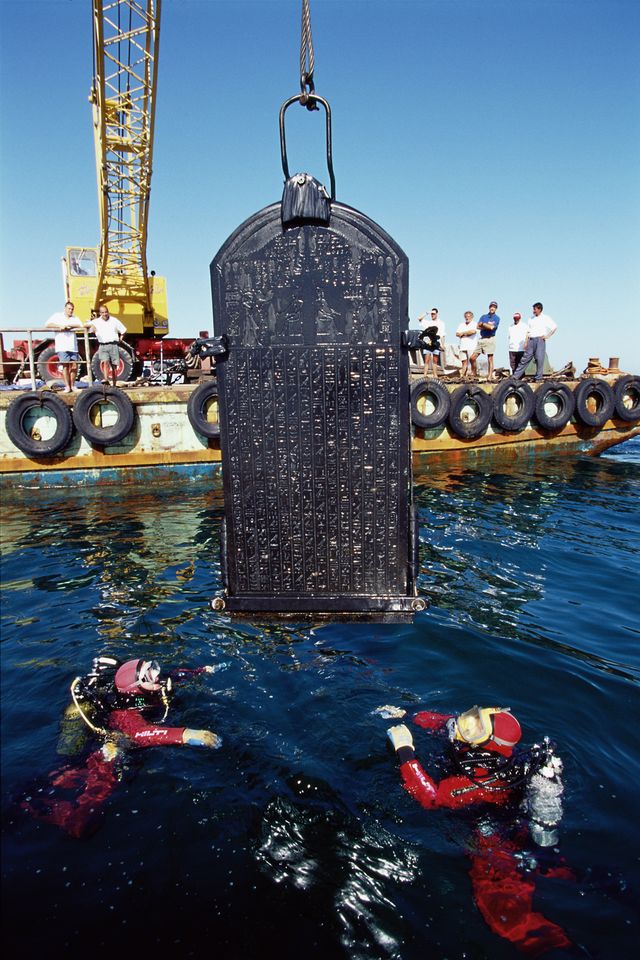
The stele of Thonis-Heracleion (1.90 m), ordered by Pharaoh Nectanebo I (378-362 BC), is almost identical to the stele of Naukratis in the Egyptian Museum of Cairo. The text of the stele mentions the site where it was erected: Thonis.©Franck Goddio/Hilti Foundation, photo: Christoph Gerigk
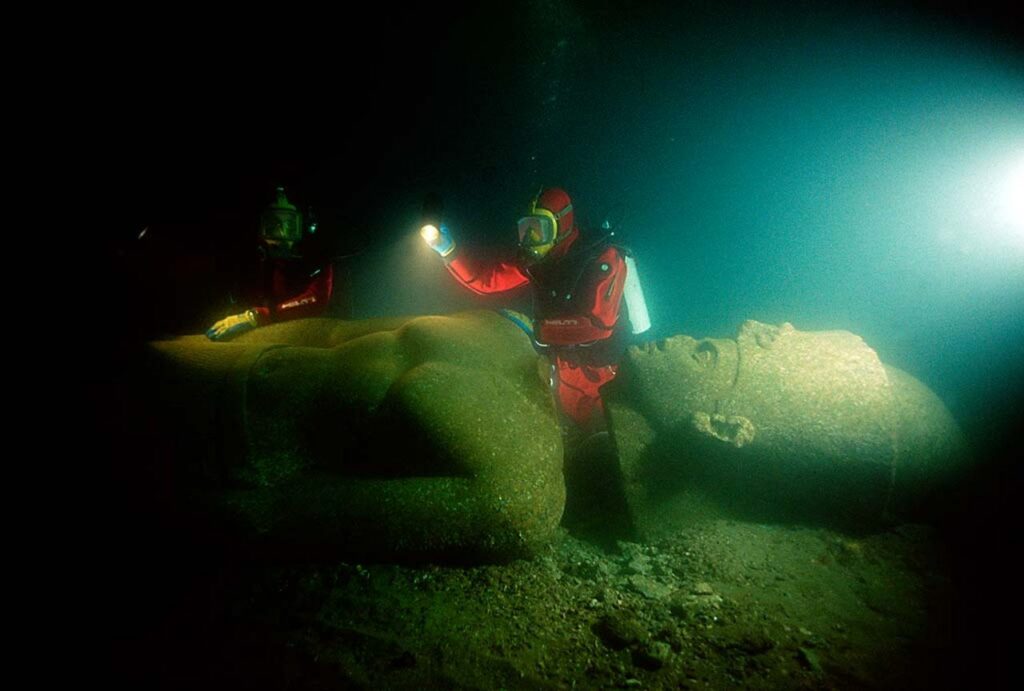
Before bringing it to the surface, archaeologists Franck Goddio and his team inspect the colossal red granite statue of a pharaoh of over 5 metres height, weighing 5.5 tons, and shattered into 5 fragments. It was found close to the great temple of sunken Heracleion.©Franck Goddio/Hilti Foundation, photo: Christoph Gerigk

Located near the Canopic mouth of the River Nile, approximately 32 kilometers northeast of Alexandria, Egypt, the submerged city of Thonis-Heracleion has captivated researchers and historians for decades. The stele of Thonis-Heracleion, discovered by the European Institute for Underwater Archaeology, adds a remarkable chapter to the ongoing exploration of this ancient metropolis.
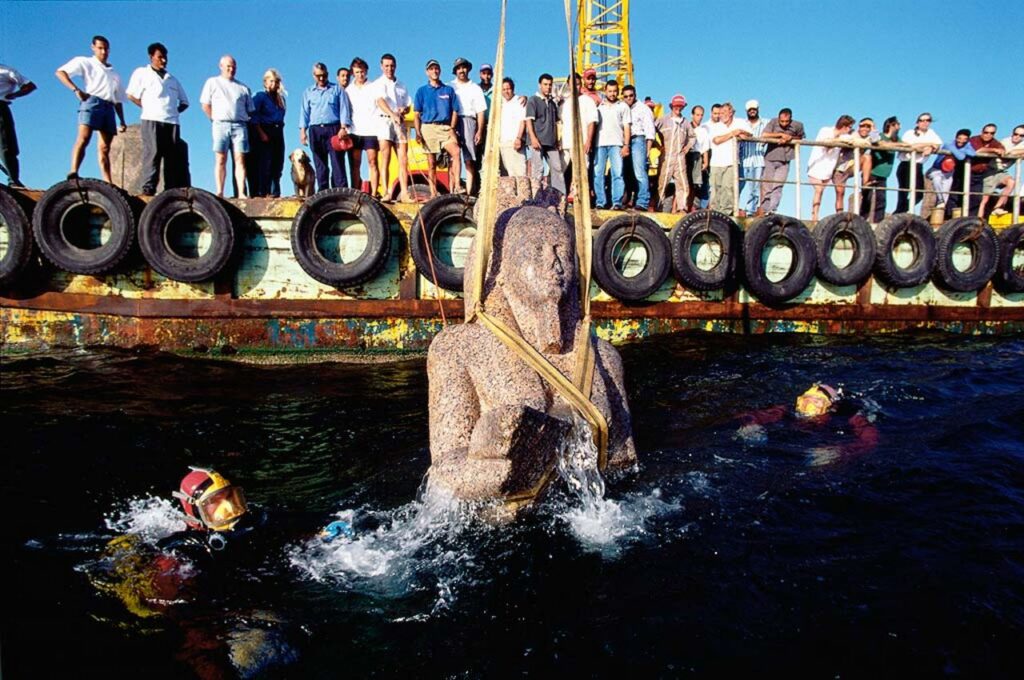
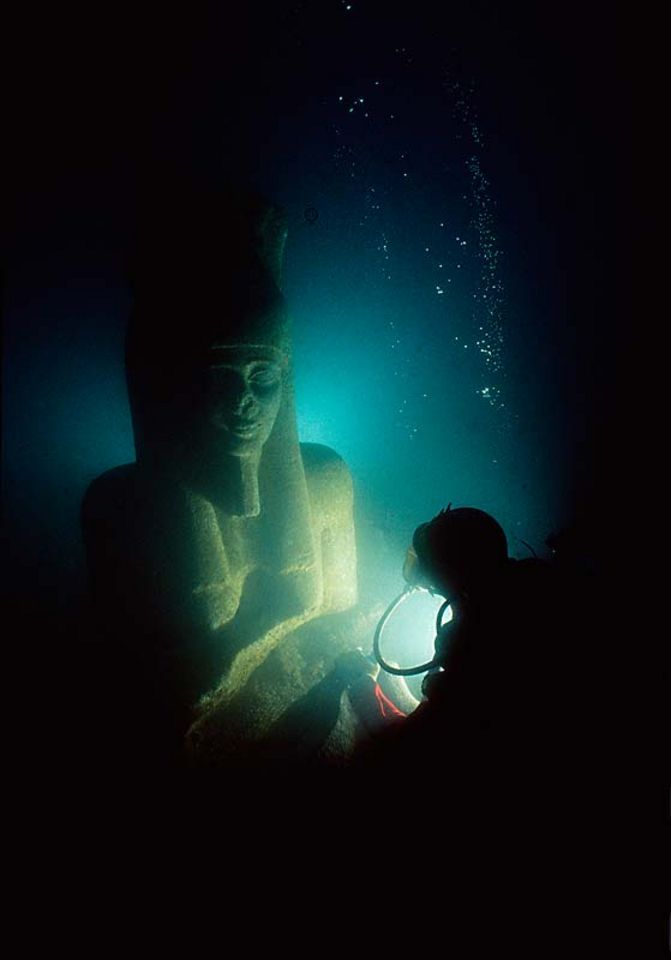
Franck Goddio and his team watch the rise to the surface of a colossal statue of red granite (5.4 m) representing the god Hapy, symbol of abundance and fertility and god of the Nile flood which stood in front of the temple of Heracleion. Never before has the statue of a god of this size been discovered in Egypt, which indicates Hapy’s importance for the Canopic branch, the largest and most important of the Nile branches at that time.©Franck Goddio/Hilti Foundation, photo: Christoph Gerigk
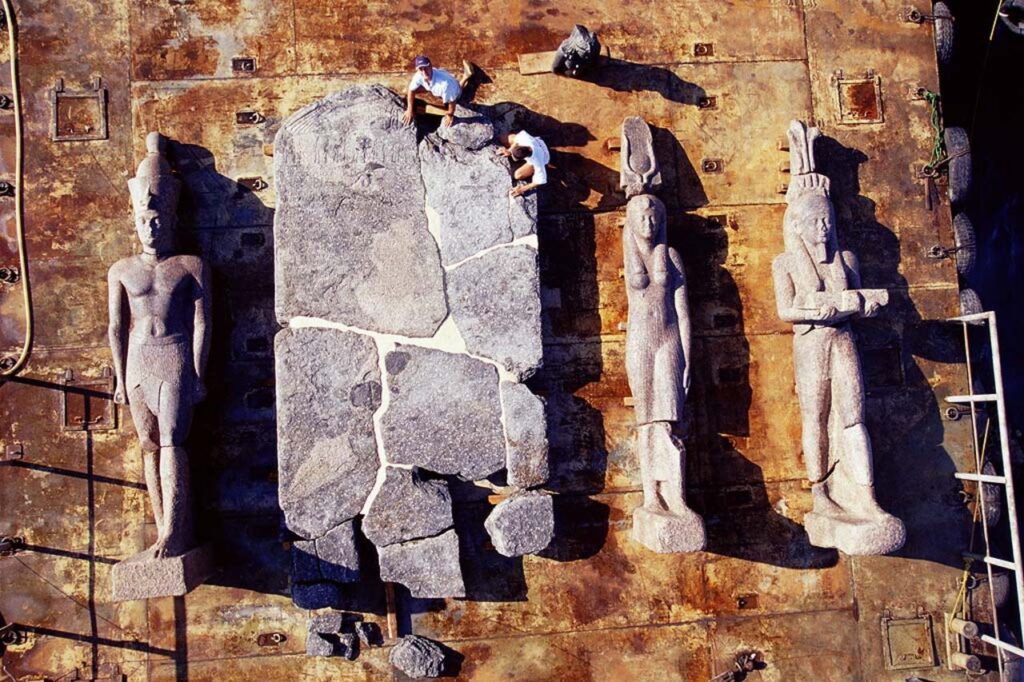
Aerial view of the colossal triad of 5-metre high red granite statues of a pharaoh, his queen and the god Hapy, dating from the 4th century BC, which stood in front of the great temple of Heracleion. They are placed on a pontoon barge together with the 17 fragments of an over 5-metre high 2nd century BC red granite stele in reassembly; the workers on the pontoon provide a notion of the dimensions of these objects.©Franck Goddio/Hilti Foundation, photo: Christoph Gerigk

The stele itself is a black granodiorite stone, standing nearly two meters tall. Interestingly, it bears a striking resemblance to the stele of Naukratis, which was also commissioned by Pharaoh Nectanebo I. Inscriptions on the stele provide valuable insights into trade and taxation agreements, as well as details regarding the city’s royal beneficiaries. Most notably, it confirms that Thonis and Heracleion were two different names for the same city, with Thonis being the Egyptian name and Heracleion being the Greek name. To avoid confusion, the name Thonis-Heracleion is now commonly used to refer to this ancient port city.
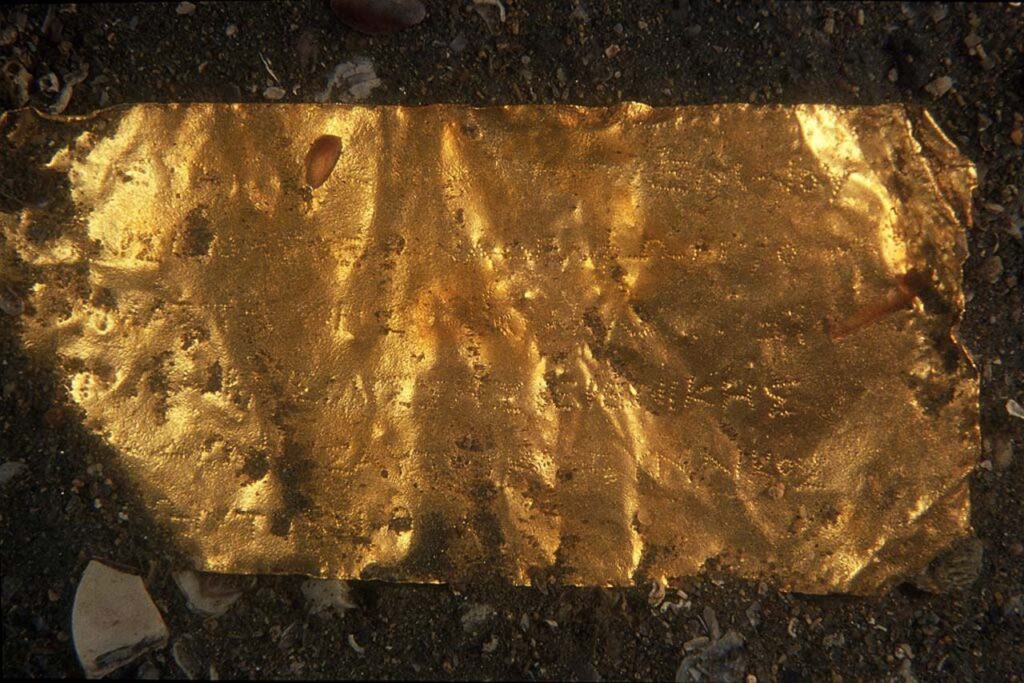
Gold plaque (11 x 5 cm) engraved with a Greek text of five and a half lines found during preliminary exploration of the southern sector of Heracleion. It is an example of the plaques added to foundation deposits as dedications from donators, here king, Ptolemy III (246–222 BC), who commissioned the building.©Franck Goddio/Hilti Foundation, photo: Christoph Gerigk
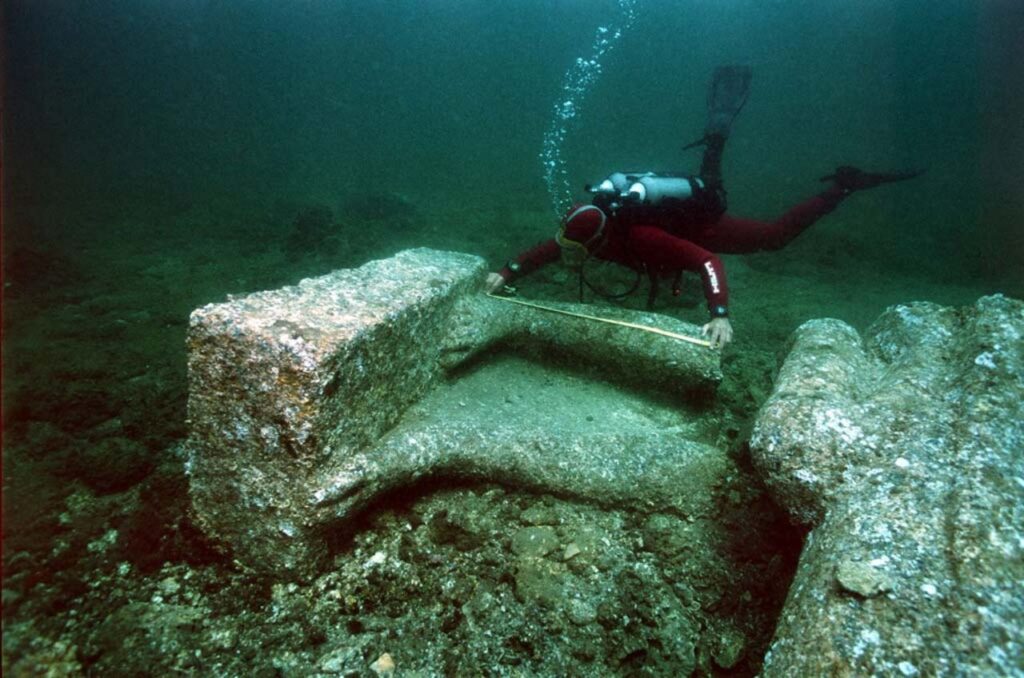
An archaeologist measuring the feet and other fragments of a colossal statue after preliminary cleaning on site at Thonis-Heracleion in the Bay of Aboukir.©Franck Goddio/Hilti Foundation, photo: Christoph Gerigk

Thonis-Heracleion likely came into existence during the 8th century BC and rapidly flourished as a bustling port city with a complex network of canals. Before the founding of Alexandria in 331 BC, Thonis-Heracleion served as a significant gateway into Egypt for vessels arriving from various parts of the Mediterranean. However, a series of natural disasters, including earthquakes, tsunamis, and flooding, gradually led to the demise of this once-thriving city. Eventually, in the 8th century AD, Thonis-Heracleion was entirely submerged and remained lost to humanity for over a millennium.
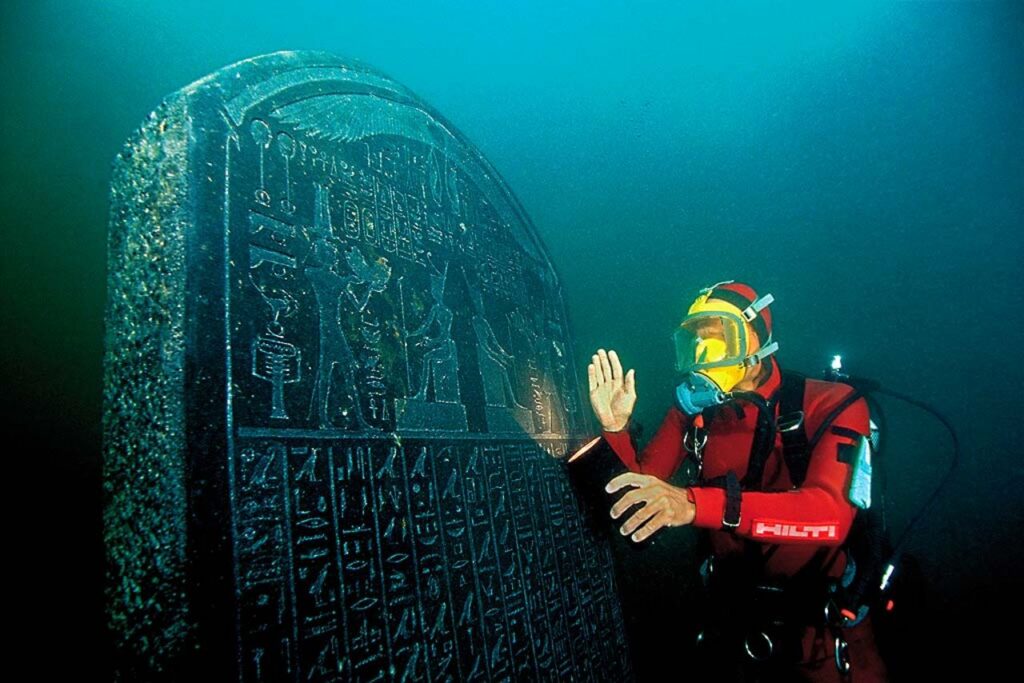
Franck Goddio with the intact engraved Thonis-Heracleion stele of 1.90 m height, commissioned by Nectanebo I (378-362 BC) and almost identical to the Naukratis stele in the Egyptian Museum in Cairo. Its text names the site where it was erected: Thonis.©Franck Goddio/Hilti Foundation, photo: Christoph Gerigk
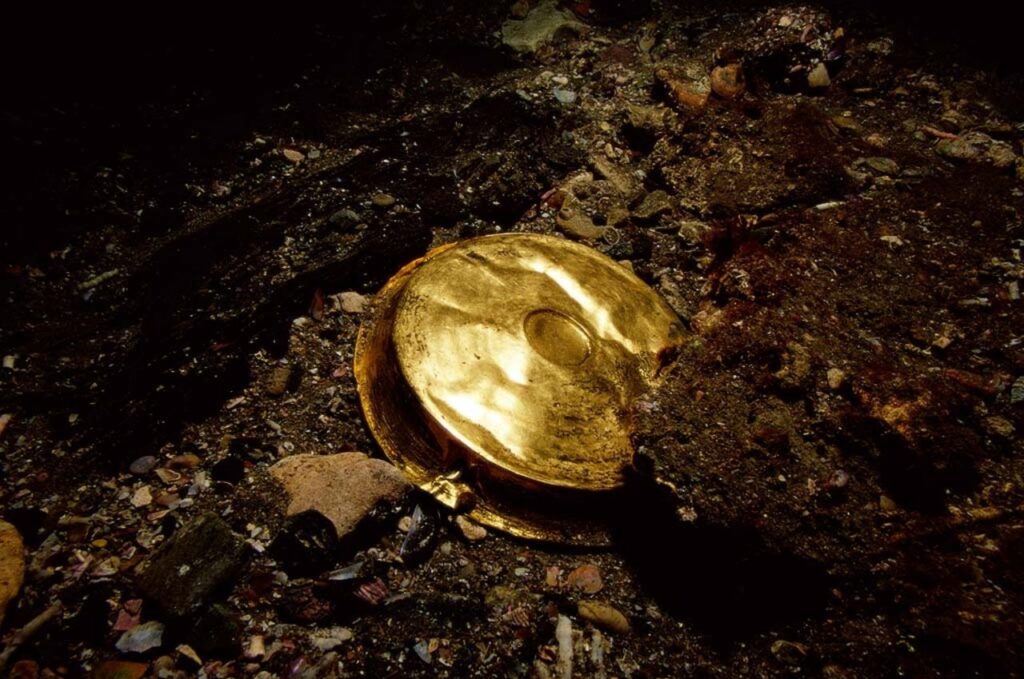
A golden phial found in Thonis-Heracleion. Phials were shallow dishes used throughout the hellenistic world for drinking and pouring libations.©Franck Goddio/Hilti Foundation, photo: Christoph Gerigk

The recovery of the stele of Thonis-Heracleion provides an invaluable glimpse into the history and significance of this ancient port city. It offers crucial information about trade routes, taxation, and the political landscape of the time. This discovery contributes to our understanding of the intricate connections between Egypt and other civilizations of the Mediterranean.
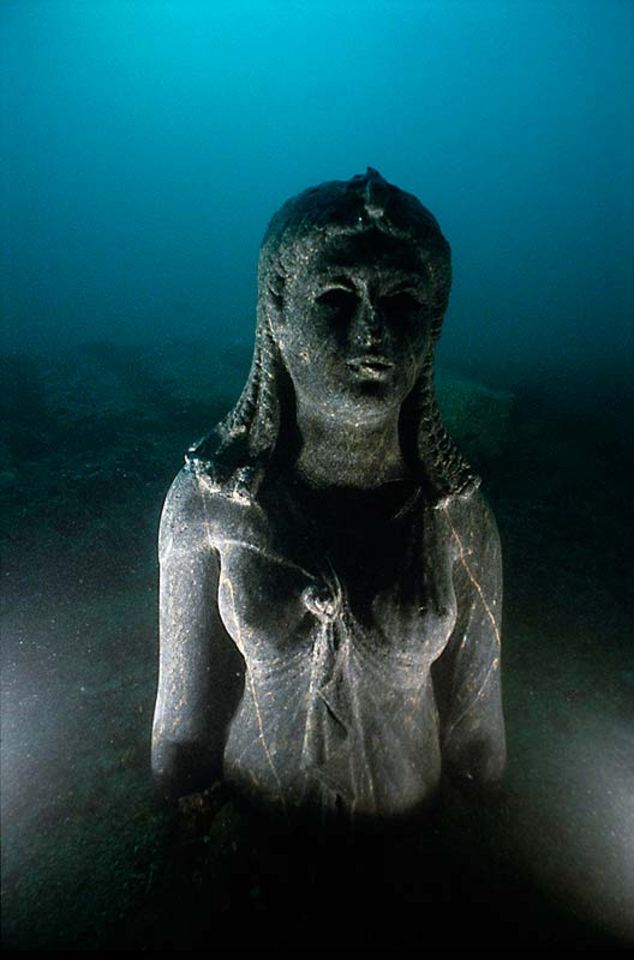
One of the finest finds in Abukir Bay is the remarkable dark stone statue of a 3rd century Ptolemaic queen, very probably Cleopatra II or Cleopatra III, wearing the tunic of the goddess Isis.©Franck Goddio/Hilti Foundation, photo: Christoph Gerigk

The stele’s retrieval from the depths of the sea stands as a testament to the tireless efforts of underwater archaeologists and researchers. Through their dedication and expertise, they have unearthed a treasure trove of knowledge, shedding light on a forgotten chapter of Egypt’s rich past.
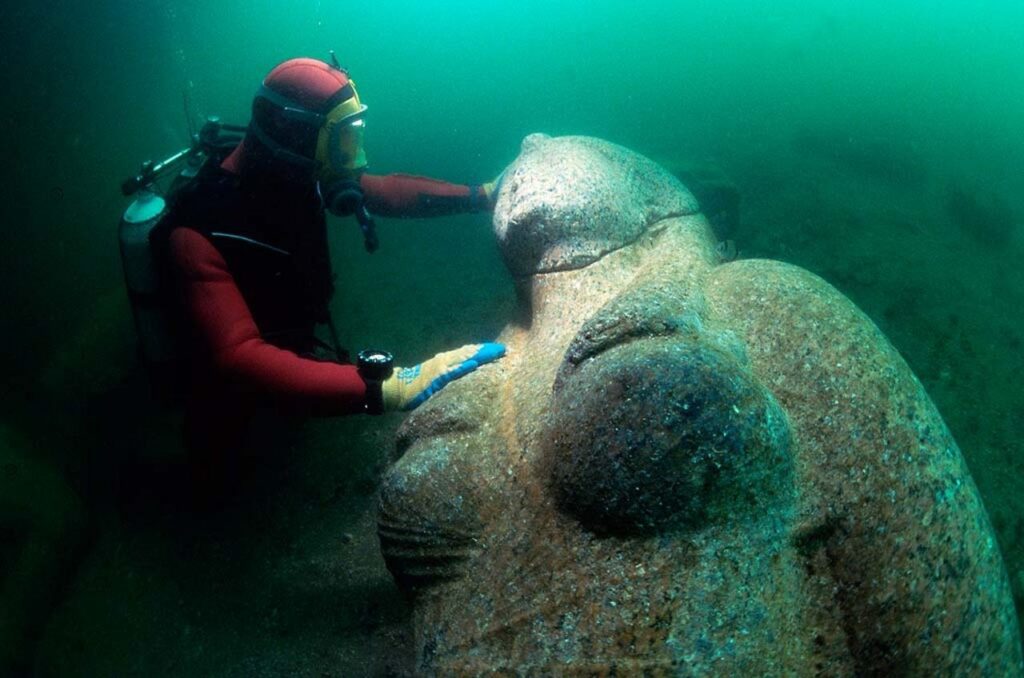
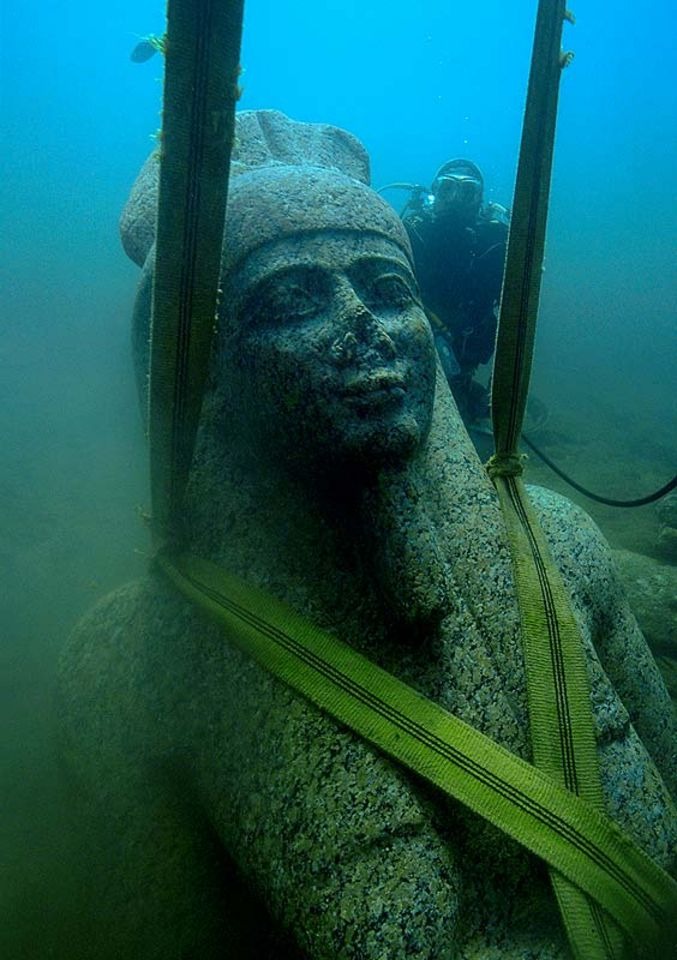
Colossal red granite statue of a Ptolemaic queen, 4.9 m high and weighing 4 tons, found close to the great temple of sunken Heracleion.©Franck Goddio/Hilti Foundation, photo: Christoph Gerigk
Colossal statue of red granite (5.4 m) representing Hapy, god of the Nile flood and symbol of abundance and fertility decorating the temple of Heracleion. Never before was such a huge statue of Hapy or any other god discovered in Egypt, which indicates Hapy’s importance for the Canopic branch, the largest and most important of the Nile branches at the time.©Franck Goddio/Hilti Foundation, photo: Christoph Gerigk

As the stele of Thonis-Heracleion emerges into the world once again, it serves as a poignant reminder of the enduring power of archaeological exploration. It ignites our curiosity, inspires further investigation, and reminds us that there are countless mysteries waiting to be discovered beneath the waves. The photographs capturing this remarkable moment, credited to Franck Goddio, Hilti Foundation, and Christoph Gerigk, provide a visual testament to the significance of this monumental find.
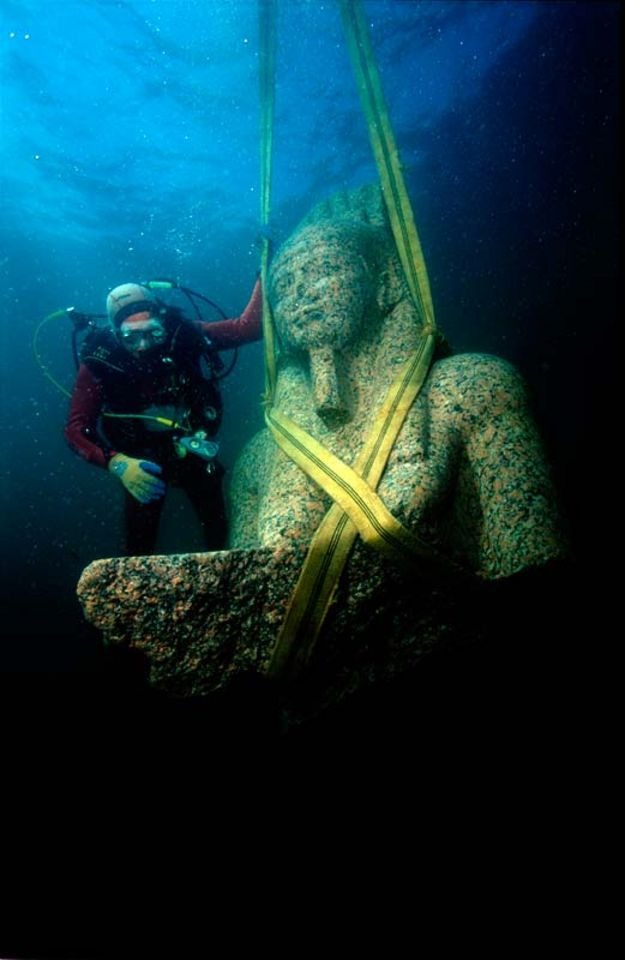
A colossal statue of red granite (5.4 m), representing the god Hapy, god of the Nile flood and symbol of abundance and fertility decorating the temple of Heracleion. Never before was such a huge statue of Hapy or any other god discovered in Egypt, which indicates Hapy’s importance for the Canopic branch, the largest and most important of the Nile branches at the time.©Franck Goddio/Hilti Foundation, photo: Christoph Gerigk
One of the finest finds in Abukir Bay is the remarkable dark stone statue of a 3rd century Ptolemaic queen, very probably Cleopatra II or Cleopatra III, wearing the tunic of the goddess Isis.©Franck Goddio/Hilti Foundation, photo: Christoph Gerigk

The stele of Thonis-Heracleion stands as a remarkable artifact, resurrected from the depths of the sea, reviving the stories of an ancient civilization and reminding us of the profound and lasting impact of our ancestors. It serves as a bridge between our modern world and the mysteries that lie beneath, inviting us to delve deeper into the annals of history and uncover the secrets that still await discovery.
A colossal statue of red granite (5.4 m) representing the god Hapy, god of the Nile flood and symbol of abundance and fertility decorating the temple of Heracleion. Never before was such a huge statue of Hapy or any other god discovered in Egypt, which indicates Hapy’s importance for the Canopic branch, the largest and most important of the Nile branches at the time.©Franck Goddio/Hilti Foundation, photo: Christoph Gerigk
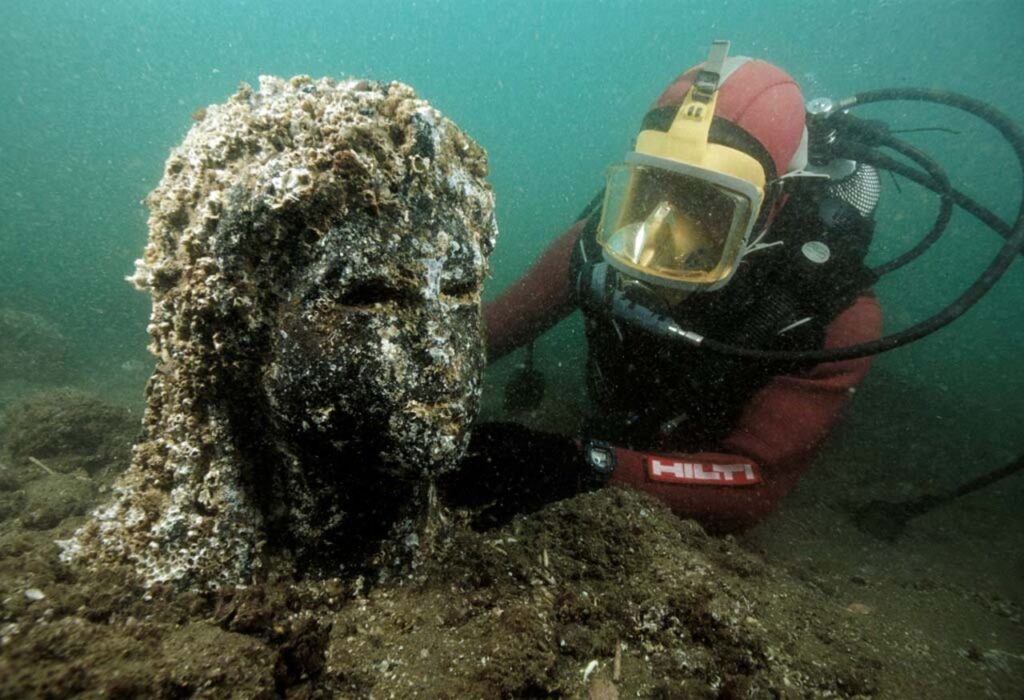
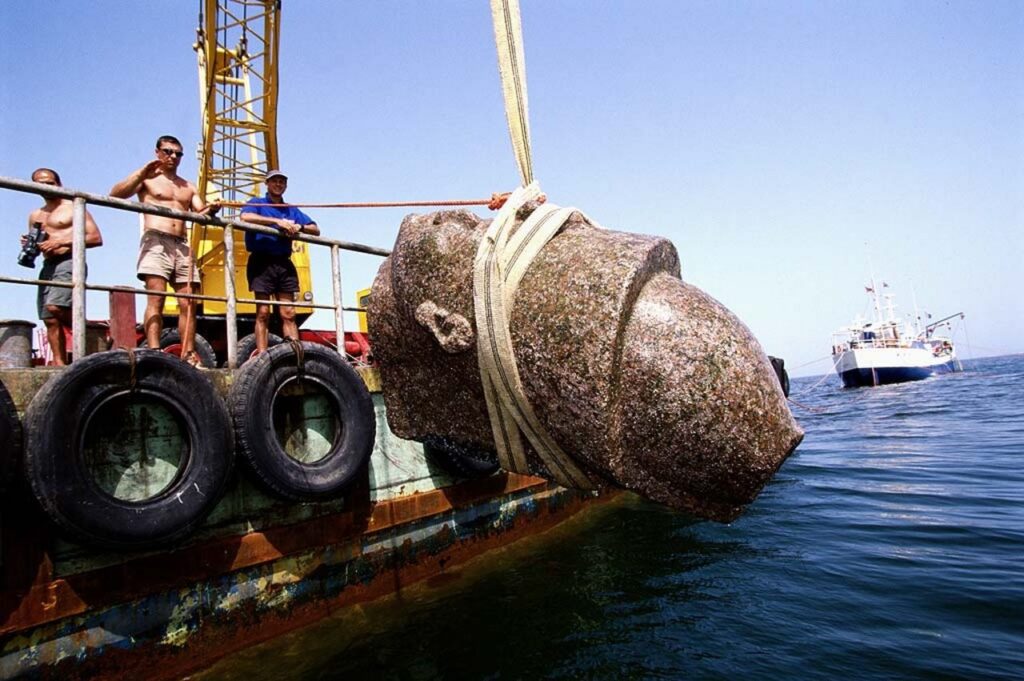
The head of a colossal red granite statue of a pharaoh is raised to the surface. The entire statue measures over 5 metres and was found close to the great temple of sunken Heracleion.©Franck Goddio/Hilti Foundation, photo: Christoph Gerigk
Facebook Comments Box

Filed Under: Trends Worldwide Tagged With: ancient, depths, egypt’s, emerges, from, marvel, stele, submerged, thonis-heracleion:, trends, watery, worldwide

Reader Interactions

Leave a Reply Cancel reply

Your email address will not be published. Required fields are marked *

Primary Sidebar

More to See

Tens of Thousands of Garter Snakes Emerge from Hibernation for Rare Mating Ritual in Southern Manitoba, Canada

By Stephen King

Heart-pounding video shows bear chase dog, then Minnesota woman in driveway: ‘Lunged at me’

By Stephen King

The Sighting of Fin Whales Indicates a Comeback for the Once-Endangered Species

By Stephen King

Are 10 ft ceilings good?

By Stephen King

Fish eater dies after cooking deadly pufferfish given to him as present

By Stephen King

This is what seeing ‘googly-eyed’ creatures in your backyard means

By Stephen King

People Lived in This Cave for 78,000 Years: A Testament to Human Culture and Technology

By Stephen King

Footer

Home and Garden: Timeless Beauty and Smart Investment

Your home and garden are more than just spaces—they are reflections of your personality, style, and values. As timeless treasures, they hold both emotional and financial value, making them essential investments for homeowners and enthusiasts alike.

Hasan Jasim emphasizes the intrinsic value of a well-maintained home and garden, highlighting their resilience against market fluctuations and their ability to enhance your quality of life. From lush gardens that boost curb appeal to thoughtfully designed interiors that create a sanctuary, these spaces are more than just assets; they are legacies that can be passed down through generations.

Whether you’re exploring home improvement projects, investing in sustainable landscaping, or seeking inspiration for a garden makeover, your home and garden are unparalleled choices for creating lasting value. Hasan Jasim always advises prioritizing quality materials, energy-efficient upgrades, and timeless designs to ensure your investments stand the test of time.

Unveil elegance in your home and garden—where beauty meets investment!

Recent

  • Rescuer reaches hand in to pet giant leopard – gets incredible vocal response
  • Lion has slept on concrete floor all his life, now watch his reaction when he sees grass for first time
  • Baby Crawls Toward a Husky to Say “Hi” — The Dog’s Gentle Reaction Melts Hearts Worldwide
  • Man moves into new house and finds abandoned dog in basement – dog’s reaction says everything
  • Owner comes home to depressed dog, gets the shock of his life when he sees what his dog is hiding
  • Owner left with $20,000 vet bill refuses to let dog die, raises money to save her life
  • Man Stops His Car on a Deserted Road — What a Security Camera Captures Sparks Outrage Among Animal Lovers

Search

Copyright © 2025 · Magazine Pro on Genesis Framework · WordPress · Log in