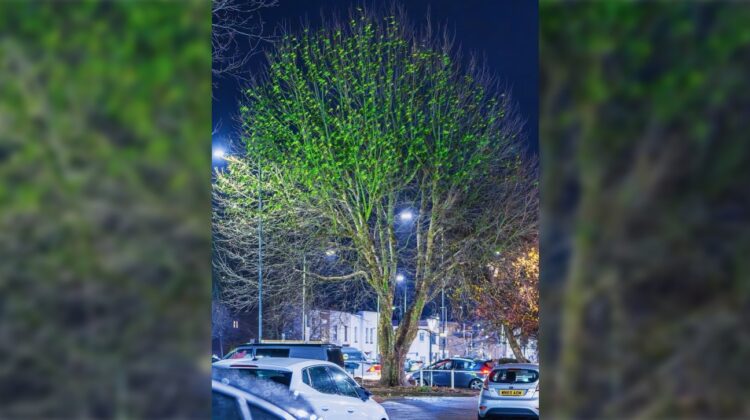
At first glance, the tree looks unusually dense, as if it’s overflowing with thick green leaves. But in several London neighborhoods, this striking sight has nothing to do with foliage. As night falls, these trees are not filled with leaves at all — they are completely covered in ring-necked parakeets.
As the sun sets, the birds gather in massive numbers, settling into the branches for the night. Their bright green feathers blend so closely that individual birds become almost impossible to distinguish. From a distance, the tree appears to glow, ripple, and shift, creating the illusion that it is alive.

From a Handful of Escapees to Tens of Thousands
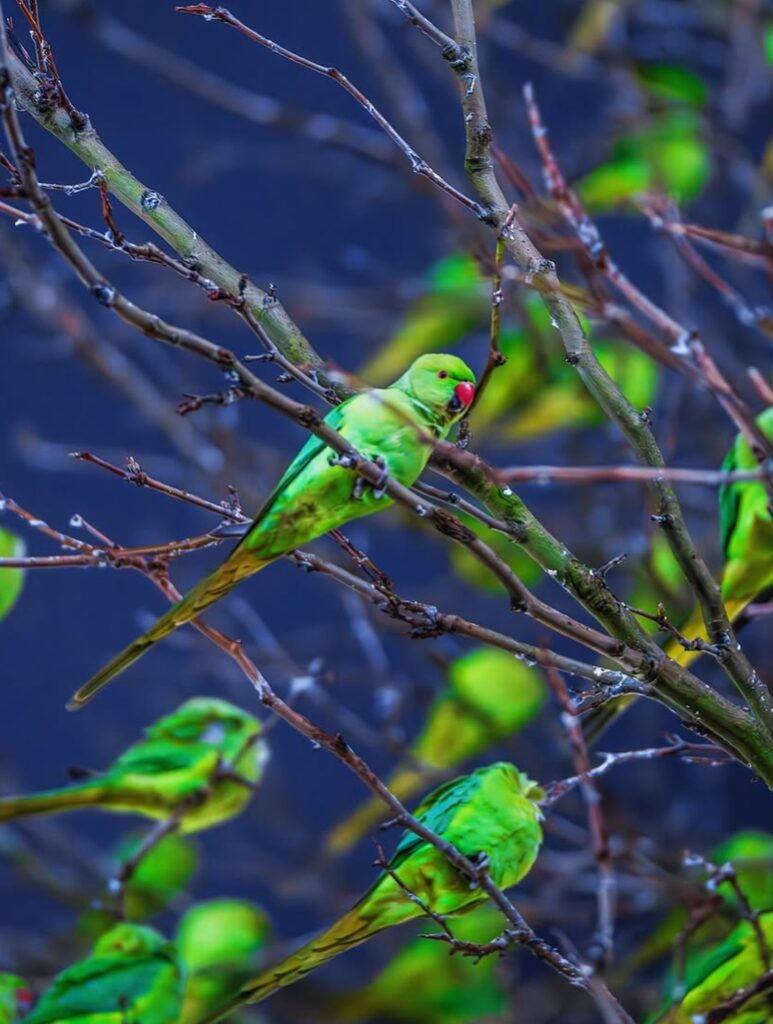
Ring-necked parakeets are not native to the United Kingdom — their natural range stretches across sub-Saharan Africa and South Asia. According to the British Trust for Ornithology (BTO), the species began breeding in the wild in Britain in 1969, most likely the result of accidental escapes and releases from captivity over many decades rather than any single dramatic event — despite popular legends involving Jimi Hendrix or a film set at Shepperton Studios.
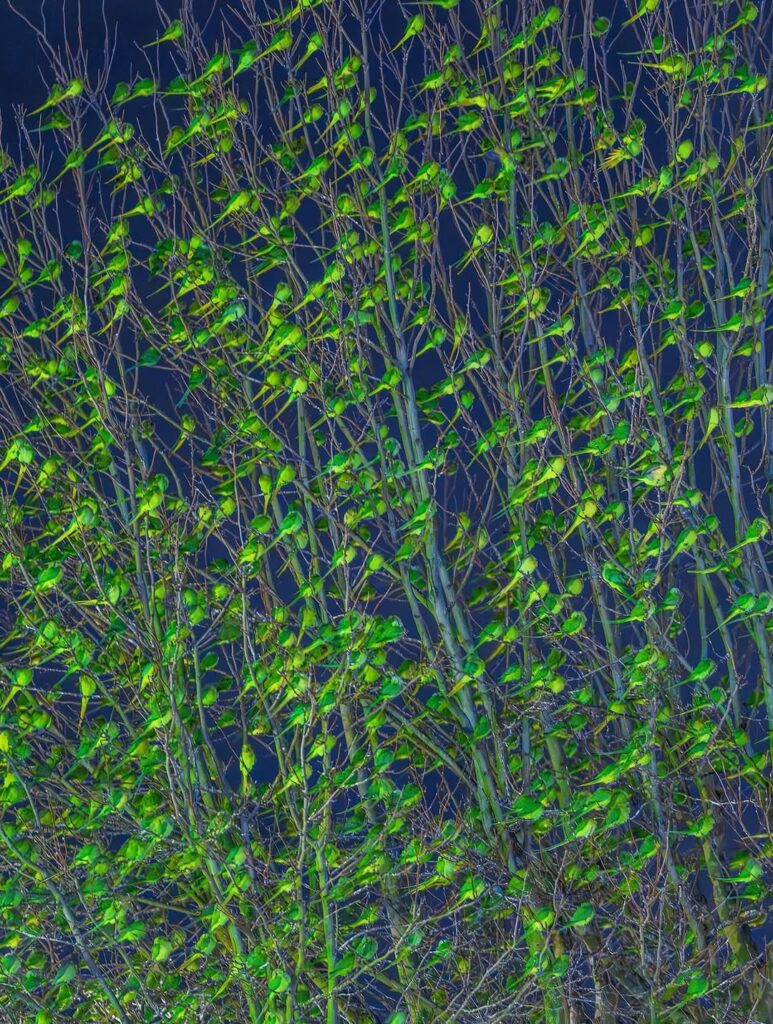
The growth since then has been extraordinary. The RSPB notes the population has increased steadily since establishment, and current estimates put the UK total at around 50,000 birds, concentrated overwhelmingly in south-east England and Greater London.
Why London Suits Them So Well
Despite their tropical origins, parakeets have proven remarkably well-suited to British winters — especially in suburban parks, large gardens, and orchards where food is reliably available. They feed on a wide variety of fruit, berries, nuts, seeds, grain, and garden bird-feeder scraps, and London’s relatively mild urban climate combined with limited natural predators has let the population expand largely unchecked.
The Nightly Roosting Spectacle

As evening approaches, parakeets arrive from all directions in loud, fast-moving flocks. Their high-pitched calls fill the air as they compete for space among the branches, and within minutes entire trees become packed with birds. This communal roosting behavior helps the parakeets stay warm, remain alert to predators, and maintain social bonds within the flock — one of London’s most distinctive urban wildlife spectacles.
A Genuine Ecological Debate
Not everyone welcomes the parakeets. The RSPB has acknowledged that media coverage occasionally raises the question of culling, driven by concerns that the fast-growing population could compete with native cavity-nesting birds — species like woodpeckers, starlings, and nuthatches — for nest holes. As of now, the RSPB has stated it does not support a cull, while emphasizing that the species’ spread and its potential impact on native birds should continue to be monitored.
Frequently Asked Questions
How did ring-necked parakeets end up in London? Researchers believe the population traces back to numerous small, unrelated escapes and releases of pet birds over several decades starting in the late 1960s, rather than any single well-known incident.
Are London’s parakeets a threat to native birds? The RSPB says there’s currently no confirmed evidence of parakeets harming native woodland bird populations, though competition for nesting cavities remains an active area of monitoring and concern.
Where in London can I see the roosting trees? Large communal roosts have been documented in parks and green spaces across south-east England, including well-known sites in areas like Kingston upon Thames, Croydon, and other outer London boroughs.
Sources: RSPB and British Trust for Ornithology (BTO), cited above.
Leave a Reply