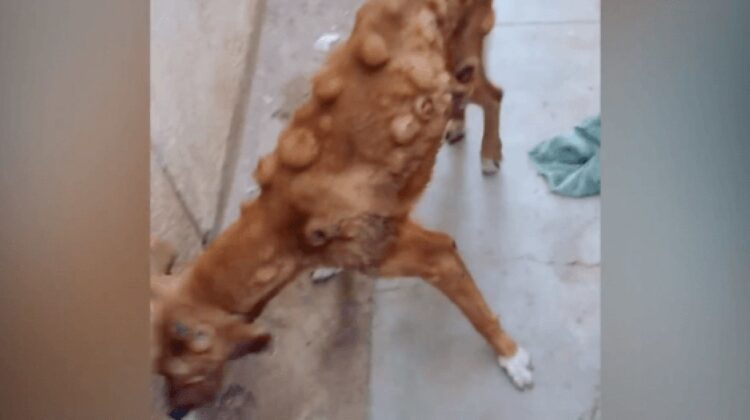
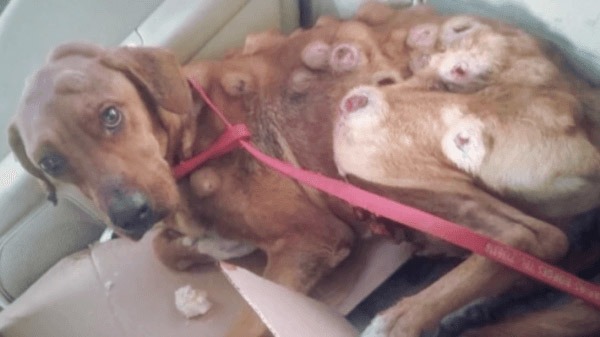
Boby looked like a dog with no future. His body was covered in tumors, many of them open and infected, and he was badly malnourished. In early 2015, a Mexican animal protector decided to give him a chance anyway, and his recovery became one of the most shared rescue stories of the year.
Abandoned and Covered in Tumors
Boby was found in January 2015 in Hermosillo, in Mexico’s Sonora state, according to the Mexican news site SinEmbargo. Viral versions of the story, some of them repeated widely online, have placed the rescue in Mexico City, but the original Spanish-language report points to Sonora.
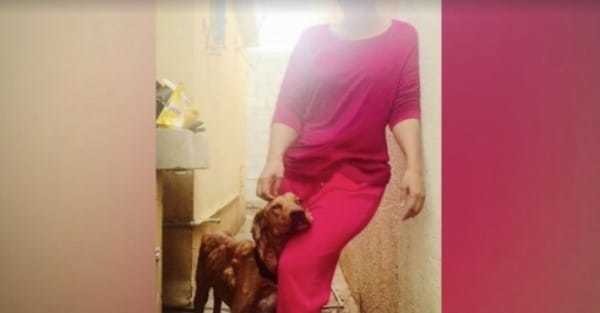
A passerby who could not ignore him contacted Dalia Gámez, a local animal protector, who took him into her home. A veterinarian estimated he was about two years old and said the tumors were cancerous.
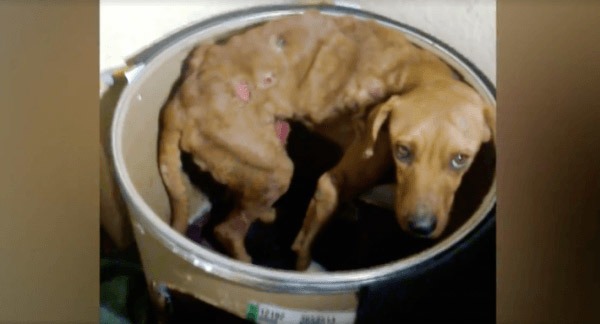
A Long Shot Treatment
Gámez knew chemotherapy would be harsh on such a weak dog, but she decided to try. Boby went through weekly sessions, about eight over roughly two months, according to reports. At first, no one knew whether he would survive.
He did better than anyone expected. As treatment progressed, his wounds healed and fur grew over his scars. “The progress was fast,” Gámez told SinEmbargo. Timid at first and reluctant to leave his temporary shelter in her home, he soon began wagging his tail.
From the Street to a New Home
Gámez shared updates on social media, and strangers followed Boby’s recovery. Her neighbors came by to see the dog everyone was talking about.
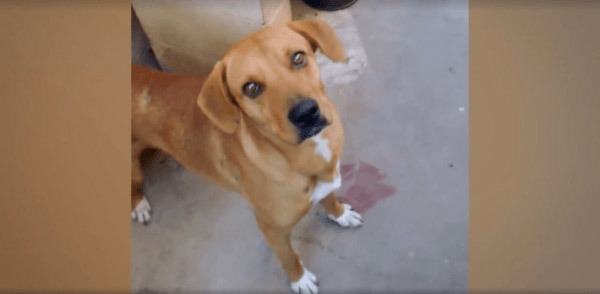
On March 14, 2015, Boby was adopted by a new family in Ciudad Obregón, also in Sonora. His new owner sent Gámez a video of him playing in a big yard with three other dogs.
Why Some Street Dog Cancers Respond to Treatment
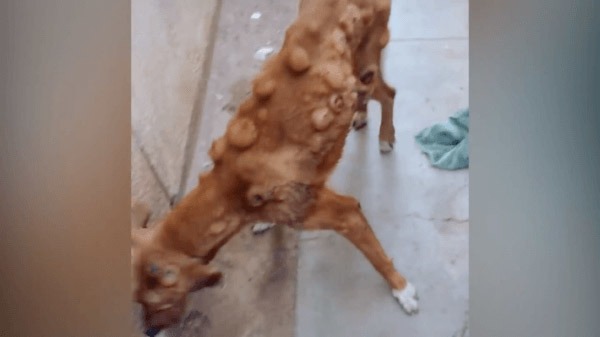
The reports do not say exactly which type of cancer Boby had. One tumor common in free-roaming dogs in warm climates, however, is the transmissible venereal tumor (TVT), which veterinary studies show often responds well to chemotherapy. A 2019 Peruvian veterinary study reported remission in up to 90 percent of dogs treated with the drug vincristine. Every dog’s case is different, but Boby’s recovery shows that even severe-looking tumors are sometimes treatable.
Helping Dogs Like Boby: What It Costs
Cancer treatment for a rescued dog adds up fast. If you want to help, or to prepare for your own pet’s health, consider:
- Pet insurance. Compare pet insurance plans with cancer coverage and check waiting periods and exclusions.
- Vet and chemotherapy costs. Treatments can run into the thousands, so a pet emergency fund or veterinary payment plan can help.
- Spay and neuter programs. Low-cost spay and neuter clinics reduce stray populations and the spread of some tumors.
- Support rescues. A donation to a street dog rescue or fostering helps animals recover.
- Home essentials. A comfortable dog bed, quality dog food and flea and tick prevention help a recovering dog feel at home.
Frequently Asked Questions
Who rescued Boby? Dalia Gámez, a Mexican animal protector, after a passerby alerted her.
Where was Boby found? According to SinEmbargo, in Hermosillo, Sonora, though viral posts often place the story in Mexico City.
How long did his treatment last? Roughly two months, with weekly chemotherapy sessions.
What happened to Boby afterward? He was adopted on March 14, 2015, by a new family in Ciudad Obregón.
Sources: SinEmbargo, Upsocl, No Lo Creo, and Revista de Investigaciones Veterinarias del Perú, all covering the 2015 rescue and recovery of Boby, a stray dog with tumors, and the treatability of canine cancers such as TVT.
Leave a Reply