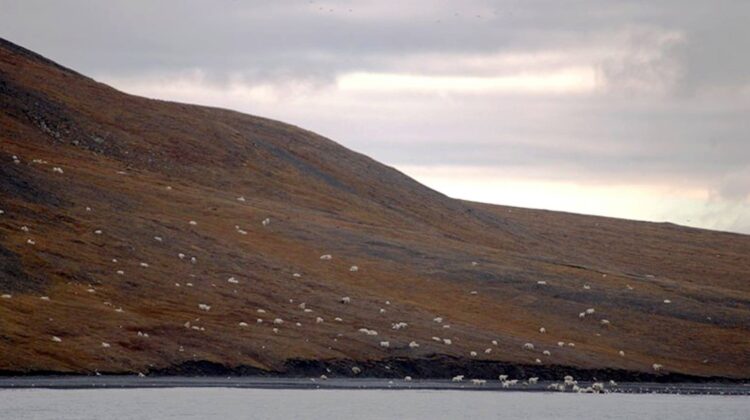
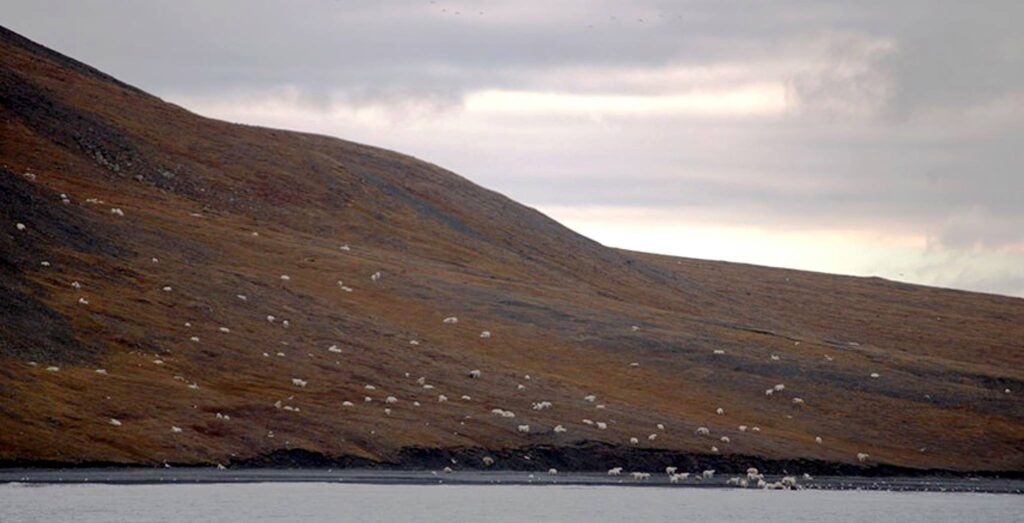
From a distance, the white shapes dotting the coastline of Russia’s remote Wrangel Island looked like a flock of sheep grazing on a hillside. As the cruise ship carrying a group of tourists drew closer, the animals came into focus — and it became clear this was no ordinary sighting.
A Gathering Unlike Anything Seen Before
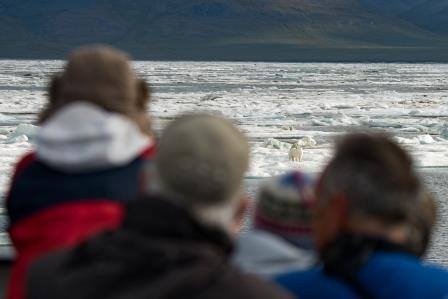
The tourists were traveling aboard the Akademik Shokalskiy, a vessel operated in partnership with New Zealand-based Heritage Expeditions, sailing through the Northeast Passage in September. Expedition leader Rodney Russ described the moment his group first spotted the animals: “We were cruising down the coast and saw a ‘herd’ or ‘convention’ of polar bears on/near the beach.”
Russ initially counted more than 150 bears from the ship, but staff at the Wrangel Island State Nature Reserve, who were aboard as part of the trip, put the number even higher — at least 230 polar bears of “all ages, sexes and sizes,” including single males, single females, and mothers with cubs, some with as many as four cubs each.
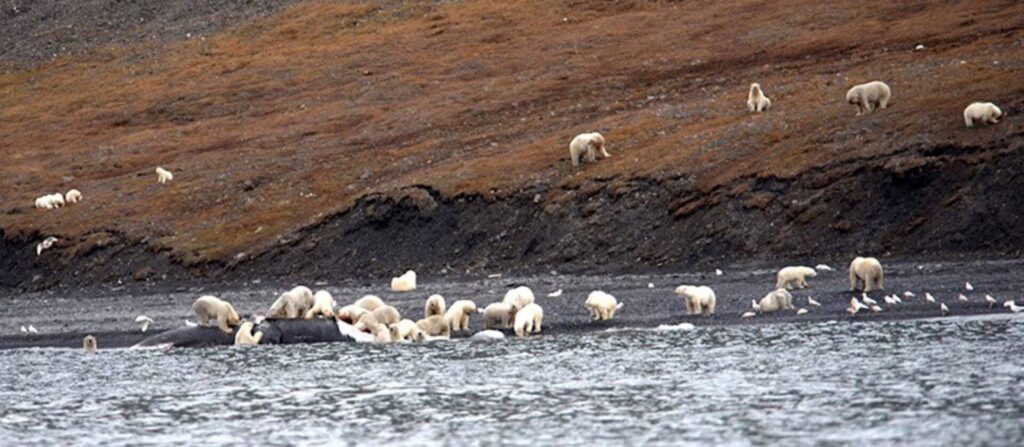
Intrigued by the scale of the gathering, the group left the main vessel and boarded smaller zodiac boats to get a closer look. “That is the memory we will all carry with us,” Russ later wrote. “There are no words to describe it.”
What Brought Them All Together
The reason for the extraordinary congregation was a dead bowhead whale that had washed ashore, offering a rare and massive food source in an environment where meals can be scarce and unpredictable. Alexander Gruzdev, head of the Wrangel Island Nature Reserve, said the scale of the gathering was unprecedented even by the reserve’s own standards: “We have earlier experienced that about 70 polar bears eat from a stranded whale, but we have never before seen anything close to 200.”
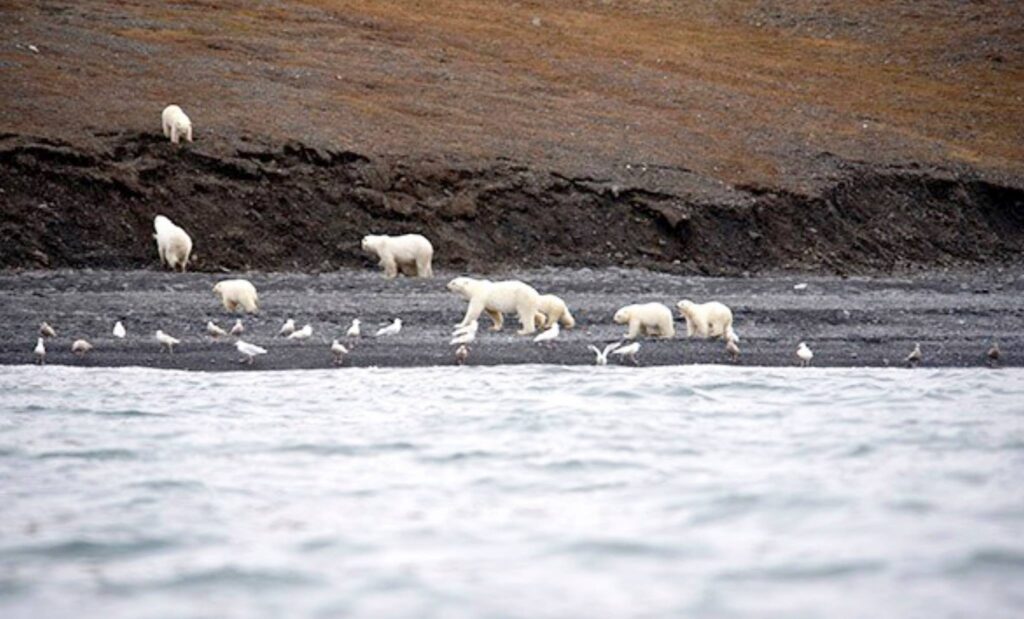
Polar bears are capable of detecting a potential meal from remarkable distances — they can smell seals from up to 20 miles away, according to the San Diego Zoo — which likely explains how so many bears converged on the same stretch of coastline in such a short window of time.
A Snapshot of a Fragile Population
With an estimated wild polar bear population of around 25,000 globally, the tourists effectively witnessed close to 1% of the entire species in a single sighting. The moment was striking not just for its scale, but for what it represented: a rare, well-fed gathering in a species increasingly threatened by habitat loss.
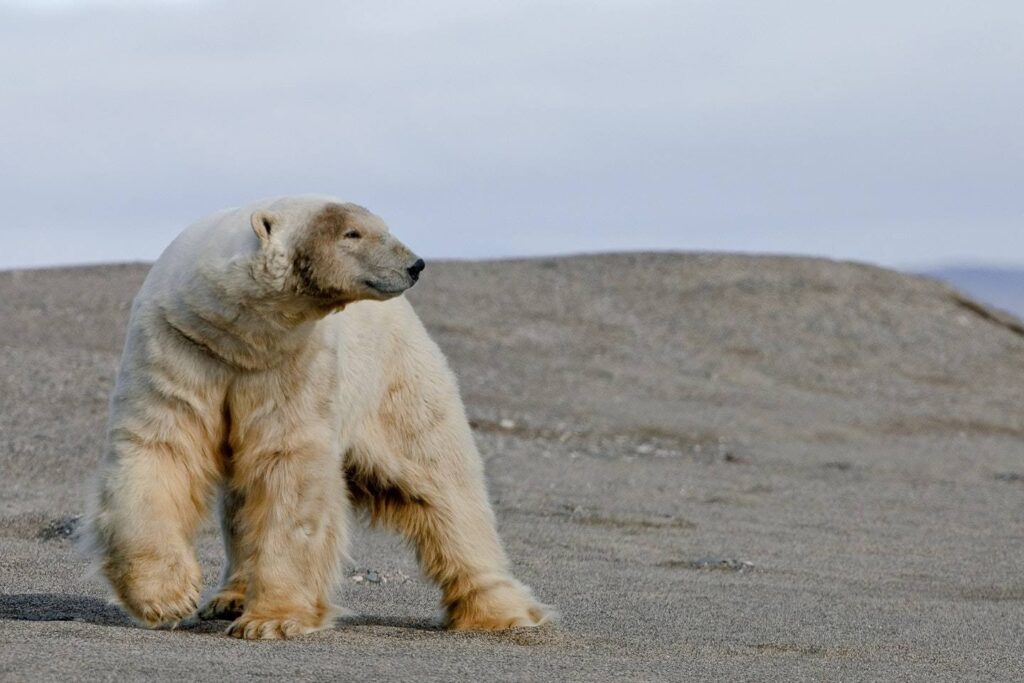
As Arctic sea ice continues to melt, polar bears — which rely on ice platforms to hunt seals, their primary food source — are more frequently stranded on land, cut off from reliable access to food. Extended time on land without adequate nutrition can lead to starvation, a growing concern among researchers tracking the species. According to Polar Bears International, continued warming trends could put the entire wild population at risk by the end of the century if current climate trends aren’t reversed.
Frequently Asked Questions
Why do polar bears sometimes eat whale carcasses instead of seals?
Seals are the primary prey for polar bears, typically hunted from sea ice, but a beached whale offers an enormous, easily accessible calorie source that can sustain dozens of bears at once — a rare windfall in an otherwise resource-scarce environment.
Is it normal for so many polar bears to gather in one place?
No — large gatherings of this size are considered highly unusual. Reserve staff at Wrangel Island noted this event was significantly larger than any previous whale-carcass gathering they had documented.
How does climate change affect polar bear feeding patterns?
Melting sea ice reduces the bears’ ability to hunt seals from ice platforms, their most reliable food source, forcing more bears onto land for longer stretches where food is less predictable — making rare events like a beached whale increasingly significant for survival.
Where is Wrangel Island, and why is it important for polar bears?
Wrangel Island sits in the Arctic Ocean between the Chukchi and East Siberian Seas and is one of the most significant polar bear denning sites in the world, with a nature reserve specifically established to protect the species’ habitat there.
Sources: LiveScience, The Barents Observer, and Eye on the Arctic (Radio Canada International), all citing Wrangel Island State Nature Reserve and expedition leader Rodney Russ of Heritage Expeditions.
Leave a Reply