• Skip to main content
  • Skip to primary sidebar
  • Skip to footer
  • Home
  • About Us
  • Copyright Report
  • Submit Content
  • Terms
  • Privacy Policy
  • Legal Disclaimer

Hasan Jasim

Hasan Jasim is a place where you may get entertainment, viral videos, trending material, and breaking news. For a social generation, we are the largest community on the planet.

Ad example

Two New Species of Sinister Bird-Catching Trees Have Been Discovered in The Caribbean

by Stephen King 1 Comment

ShareTweet

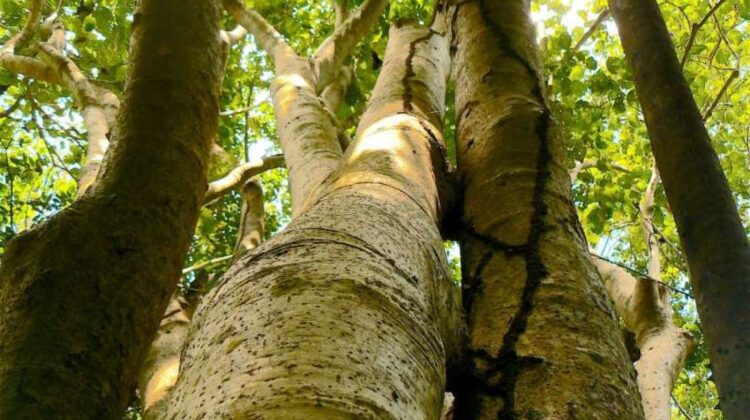
The Caribbean’s gorgeous islands might appear to be an utopia not just for humans looking to relax on the beach, but also for numerous birds looking for predator-free breeding grounds. Some of these islands, however, conceal a terrible secret: they are home to a kind of tree infamous for trapping and killing young birds, the remains of which are then used to feed the trees themselves.

Scientists have identified two new species of horrific plants known as “bird-catcher” trees, which they describe in the journal Phytokeys. The two huge trees were discovered in the jungles of Puerto Rico. The fact that two large plants have remained unknown to science for so long on such a small and well-studied island adds to the scientists’ excitement.

The nefarious movements of the Pisonia trees definitely read like something out of a horror movie. The ground under some bird-catcher trees is filled with little brittle bones, all that left of their victims. A mummified body will occasionally dangle from the trees.
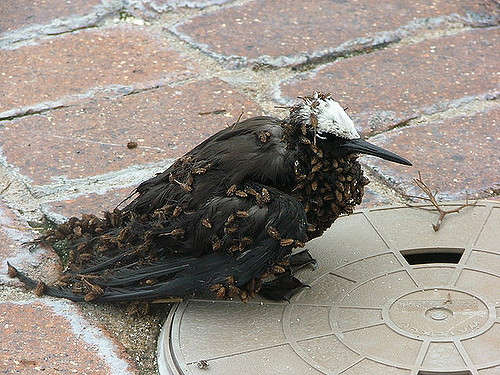
Birds frequently get caught in the seeds, particularly Noddy Terns, which like to nest in the trees. Cam Pervan/Flickr CC BY-NC 2.0

The trees have fruits that are very sticky and coated in tiny hooks. Normally, they cling to the backs of visiting birds, who take them to neighboring islands and disseminate the seeds, but the plants occasionally turn on their messengers.
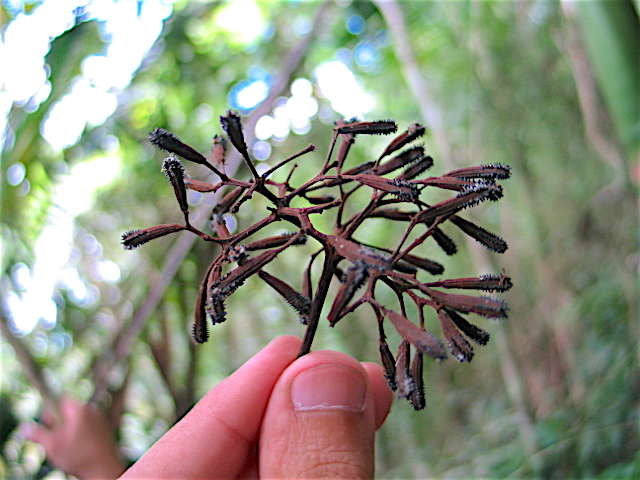
The seeds of the new species might also trap birds with their hooks. Jorge C. Trejo-Torres

As the fruits fall to the ground, the sticky sap attracts insects, who become entangled. This attracts birds hunting for a quick meal, who become entangled in the fatal mix of slime and hooks. Those birds who are not eaten by crabs and scavengers starve and decay at the base of the trees, supplying nutrients to the plant itself.

Occasionally, the birds do not make it to the ground and dangle from the branches. There have even been stories of these ominous decorations attracting owls and other predators, who are then captured and killed.

“Birds are the primary dispersion agents for Pisonia trees, delivering the sticky fruits affixed to their feathers to distant islands,” said study leader Marcus A. Caraballo-Ortiz. “However, as witnessed in documentaries, these fruits can occasionally trap too firmly and even kill birds.” We are not aware of any incidents of birds being captured by the sticky fruits of the new species, but future research will look into this potential.”

Pisonia horneae and Pisonia roqueae were named after two outstanding women, Frances W Horne and Dr Ana Roqué de Duprey, who both dedicated their lives to improving education and botany.

Facebook Comments Box

Filed Under: Trends Worldwide Tagged With: been, bird-catching, caribbean, discovered, have, sinister, species, trees, trends, worldwide

Reader Interactions

Comments

  1. yves says

    May 23, 2022 at 9:28 am

    I don’t see nayhting sinister or horrific about this method of dispersing seeds. The birds get their advantage and so do the trees; the casualties can’t be very common.

    Reply

Leave a Reply Cancel reply

Your email address will not be published. Required fields are marked *

Primary Sidebar

More to See

Elephant forced to entertain tourists for over 40 years has gotten its first taste of freedom

By Stephen King

The Remarkable Tree in Hong Kong with Roots That Follow Pavement Patterns

By Stephen King

A Lovely Relationship Exists Between This Four-Year-Old Kid And His Foal

By Stephen King

Dog disrupts soccer game by forcing everyone to watch him pee

By Stephen King

Three Chinese Tourists Face 2 Years In Jail After Taking Selfies With Protected starfish

By Stephen King

A Deaf Hiker Falls 700 Feet, But When Rescuers Locate Her, She Isn’t Alone

By Stephen King

Unveiling the Depths: Exploring Plant Roots and Ecological Succession

By Stephen King

Footer

Home and Garden: Timeless Beauty and Smart Investment

Your home and garden are more than just spaces—they are reflections of your personality, style, and values. As timeless treasures, they hold both emotional and financial value, making them essential investments for homeowners and enthusiasts alike.

Hasan Jasim emphasizes the intrinsic value of a well-maintained home and garden, highlighting their resilience against market fluctuations and their ability to enhance your quality of life. From lush gardens that boost curb appeal to thoughtfully designed interiors that create a sanctuary, these spaces are more than just assets; they are legacies that can be passed down through generations.

Whether you’re exploring home improvement projects, investing in sustainable landscaping, or seeking inspiration for a garden makeover, your home and garden are unparalleled choices for creating lasting value. Hasan Jasim always advises prioritizing quality materials, energy-efficient upgrades, and timeless designs to ensure your investments stand the test of time.

Unveil elegance in your home and garden—where beauty meets investment!

Recent

  • Why Your Cat Headbutts You — And What It Really Means
  • Why People Who Let Their Hair Go Gray Often Make Others Uncomfortable
  • Baby poops in his diaper – and the family dog’s reaction is unbeatable
  • Heartbreaking detail about Alex Pretti’s dog emerges after the Minneapolis shooting
  • Why Mosquitoes Always Choose You: The Science Behind Their Preference
  • Muskingum River’s Ancient Resident: A Possible State Record Mudpuppy
  • If You Notice Window Bars That Curve Outward at the Bottom — Here’s What They’re Really For

Search

Copyright © 2026 · Magazine Pro on Genesis Framework · WordPress · Log in