Humans appear to be hardwired with a sense of justice. This is perplexing from an evolutionary standpoint, as you would think we were predisposed to seek advantage for ourselves and our families wherever possible. However, a sense of fairness is required for humans to be able to help one another. Human cooperation is based on reciprocal altruism: we help people because they have previously helped us or may help us in the future.
This type of cooperation is only possible when people can keep track of each other’s efforts and payoffs – and a sense of fairness helps with this. But what about animals that aren’t humans? Is it only humans who have a sense of fairness, or has it evolved in other non-human animals as well?
An “inequity aversion task” can be used to test this in animals. One test subject is rewarded for completing a task, while an experimental partner is given a “booby prize” – something they dislike. Individual animals with a strong sense of fair play should either stop participating in the experiment or refuse the treat.
Brown capuchin monkeys were one of the first species to be tested for inequity aversion. One individual was given a piece of cucumber in exchange for a token in a task where the monkeys had to exchange a token for a treat, whereas a model individual – another monkey not the focus of the experiment – in an adjacent cage received a grape for the same action. Capuchin monkeys prefer grapes to cucumbers, and the person who received the cucumber quickly began to “protest” by throwing the unloved vegetable back at the experimenter.
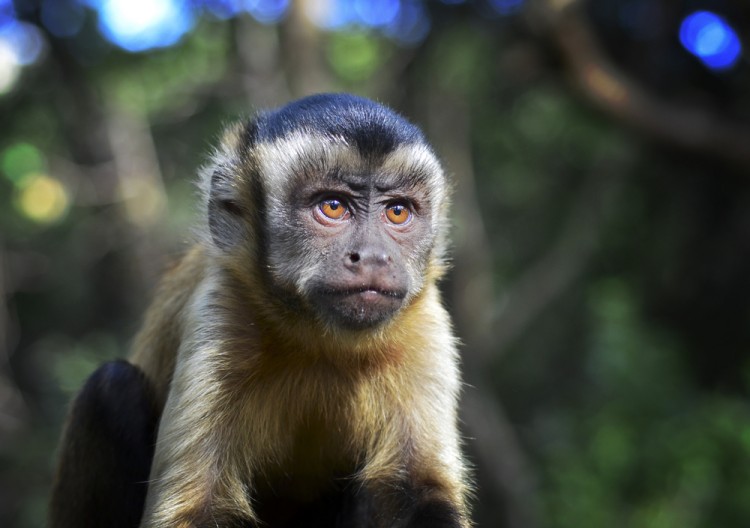
The capuchin monkeys were also aware of the unfairness in the amount of effort required to receive a reward. They stopped participating when they had to “work” for a reward and saw that their experimental partner received the reward as a “gift.”
Other primate species, such as chimps, rhesus macaques, and long-tailed macaques, have been shown to exhibit behavioral responses to inequity. Aside from primates, dogs and rats are two other highly social mammalian species that have been shown to be sensitive to unfairness.
Bird brains
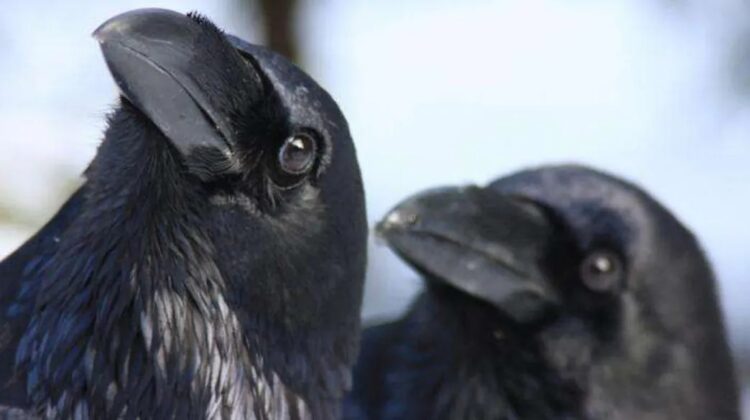
But what about non mammalian species? In recent years, the family of corvids has become one of the prime models when it comes to studying cognition in birds. Corvids are a large family of more than 120 species – including ravens, crows, magpies and jays. Corvids are highly social and have flexible social systems. Adult ravens for example live in territorial pairs, whereas jackdaws live in large community groups. In some species, such as the carrion crow, sociability depends on the environment – they might breed in male-female pairs in some environments as well as cooperative groups in others.
What about non-mammal species? In recent years, the corvid family has emerged as one of the most important models for studying bird cognition. Corvids are a diverse family of over 120 species that includes ravens, crows, magpies, and jays. Corvids are highly social creatures with adaptable social systems. Adult ravens, for example, form territorial pairs, whereas jackdaws form large community groups. Sociability in some species, such as the carrion crow, is environment dependent; they may breed in male-female pairs in some environments and cooperative groups in others.
Different corvid species exhibit various forms of naturally occurring cooperation. They aid one another in aggressive encounters and share resources such as food or predator information. Given how cooperative corvids have been observed in the wild, we expected them to have a sense of fairness and unfairness.
We decided to put them through the same ordeal that the primates did. Four common ravens and six carrion crows were used as test subjects. The birds were rewarded with a piece of cheese (they like cheese) and a piece of grape as the booby prize. In one experiment, both individuals received the same food reward for exchanging a token with a human experimenter, whereas in another, one bird received only grapes and the other received cheese for exchanging.
We also tried a “effort control” experiment, in which the test subject had to exchange its token for either a piece of cheese or a piece of grape, while the other bird received the same reward as a gift and did not have to exchange for it.
In the “inequity” condition, the subject crow – the bird being treated unfairly – stopped accepting the lesser reward. They stopped exchanging their token for the reward in the “effort control” when they saw the other bird get its reward with no effort. They could see how they were being treated unfairly in both cases and decided not to cooperate.
Corvids are thus similar to some mammals in this regard, and the evolution of this awareness of what is fair and what isn’t may have been driven by the high complexity and flexibility of cooperation. The presence of inequity aversion not only in a number of primate species but also in corvids suggests that cooperative species share a sense of fairness and cooperation, which has allowed them to evolve sociability.
Leave a Reply