A new study combines behavioral, neuroscientific and molecular evidence to support the case that insects experience pain in a manner similar to vertebrates.
More data than anybody has been ready to accept points to the fact that insects’ central nervous systems absorb pain in ways that are quite similar to how humans do.
In the past, scientists used animals in what are now recognized as horrifying experiments. Even if there is disagreement on where to draw the line, studies on vertebrates must now present their findings to ethical committees to demonstrate that the benefit of the research surpasses any potential harm to the participants. Octopus and squid are cephalopods that are beginning to get the same protection.
On the other hand, insects are typically considered fair game. Researchers who study fruit flies are not held to the same standards as those who study mice or even monkeys. A recent article published in the journal Proceedings of the Royal Society B questions the argument, which claims that insects don’t feel pain the same way “higher” creatures do.
The authors point out that not much study has been done on the issue, maybe as a result of people being afraid of the answer’s potential implications.
The nervous system’s encoding of damaging or unpleasant stimuli, such as high temperatures, pressure, or a powerful chemical attack, is known as nociception in the jargon of neuroscientists. In order to prevent physical harm to their bodies that may jeopardize their life, animals (including insects) respond to these messages. The question of whether pain is felt by insects locally, such as in an injured limb, or centrally via the nervous system is up for discussion.
After all, insects have more simpler central nervous systems than humans do, and just a small portion of their brain cells are used to interpret sensory inputs. They specifically lack the opioid receptors that are so important for pain regulation in our own brains. However, PhD candidate Matilida Gibbons from Queen Mary University and her co-authors contend it doesn’t imply there aren’t less complex forms of the same skill.
Although they are closely connected, pain and nociception are distinct from one another. In times of necessity when excessive pain can cause us to get distracted from what we need to achieve, our bodies can occasionally modulate pain without altering nociceptive reflexes. Later discomfort prevents us from using a damaged limb, for example. Curiously, the opposite has also been seen, when nociception is increased while pain levels remain unchanged.
The authors investigate insects’ ability to modulate nociception because they believe it to be indicative, if not evidence, that nociception and pain in insects are connected.
According to behavioral research, insects may modify their nocifensive behavior. Since the information facilitating such prioritizing is processed by the brain, the central nervous system at least partially regulates such modulation, according to the report.
The scientists discover certain neuropeptides released in insects during stressful situations that may have pain-suppressing properties, much like opiates do in humans.
The ability of insects, like other animals, to develop specific danger sensitivities provides more support. Fruit flies become more responsive to heat when subjected to high temperatures on a regular basis. The chemicals involved in this sensitization share some similarities with those seen in human beings. Additionally, nociceptive signaling pathways to the brain have been found.
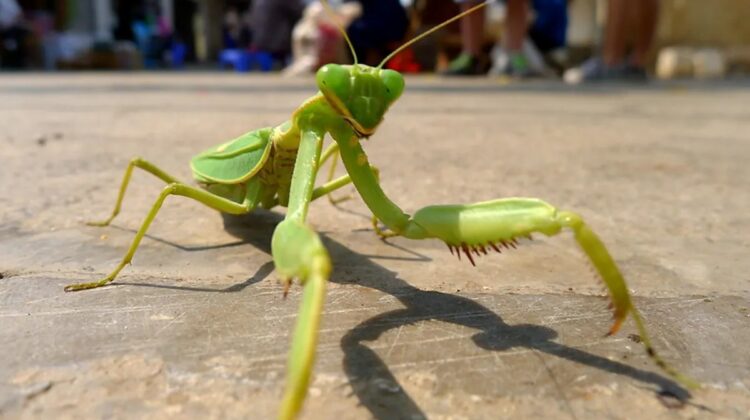
Even one of the most well-known insect behaviors, the sexual cannibalism of female praying mantises, may provide insight into the matter. Male mantises famously become more aggressive in the mating process after having their heads bitten off. The male must suppress his natural defense mechanism in order to do this.
According to the publication, “this data has been proposed to imply the lack of pain in insects.” However, it’s more probable to show that insects may put other behavioral goals ahead of nocifensive behavior in some situations. That suggests a centralized reaction, which increases rather than decreases the plausibility of pain perceptions.
If pain is processed in the insect brain, we still don’t know how it is processed, but that is less essential than figuring out how we will react if it is. Can we really continue to treat insects the way we do if we learn they can feel pain?
Leave a Reply