• Skip to main content
  • Skip to primary sidebar
  • Skip to footer
  • Home
  • About Us
  • Copyright Report
  • Submit Content
  • Terms
  • Privacy Policy
  • Legal Disclaimer

Hasan Jasim

Hasan Jasim is a place where you may get entertainment, viral videos, trending material, and breaking news. For a social generation, we are the largest community on the planet.

Ad example

Reviving a Long-Gone Ancient Species: Bringing Back the Aurochs From Extinction

by Stephen King Leave a Comment

FacebookTweetPinLinkedIn

Embarking on a captivating quest to turn back the pages of time, scientists and conservationists are delving into the intricate realm of genetic technology and selective breeding, aiming to resurrect the aurochs (Bos primigenius), a majestic creature that once graced the grasslands and forests of Eurasia and North Africa. This ancient species, standing tall with a shoulder height of up to 180 cm (71 in) in bulls and 155 cm (61 in) in cows, adorned with massive elongated and broad horns reaching lengths of 80 cm (31 in), holds a storied place in the history of human civilization.
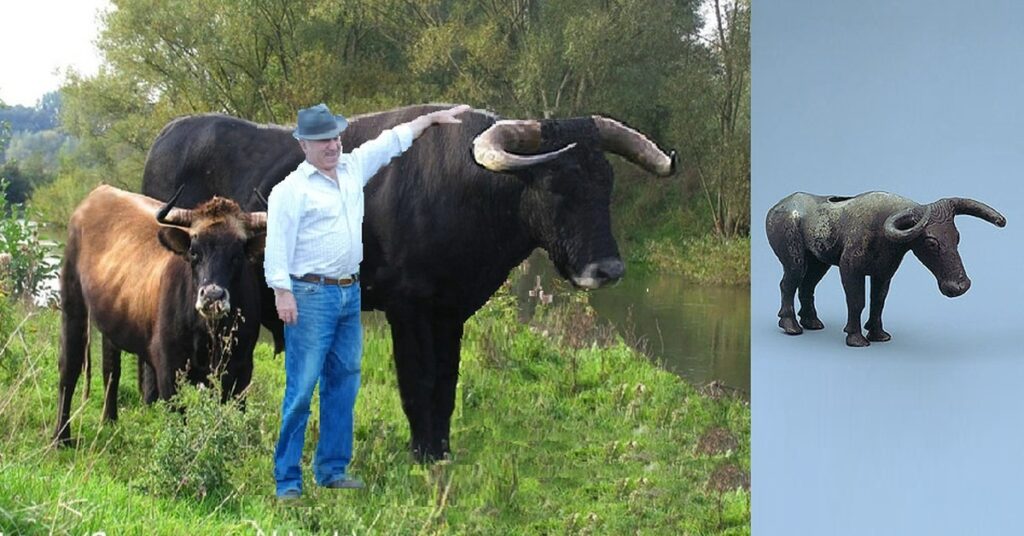
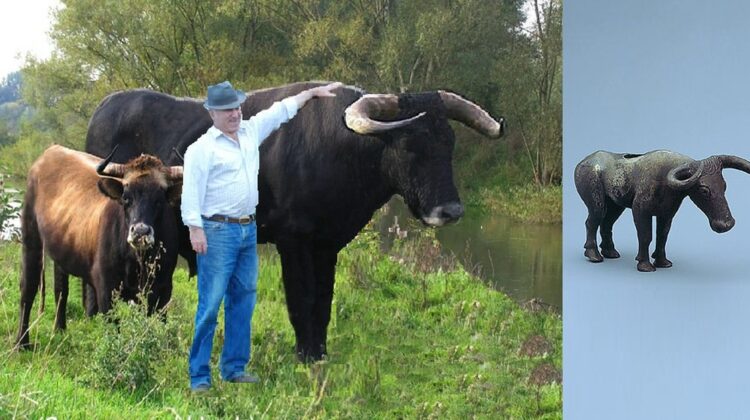
The bull “Lucio” from the Taurus project and an ancient silver sculpture of an auroch. Photo: Miguel Omar Ruiz Hernandez

The aurochs, a giant herbivore of the Holocene and a member of the megafauna in the preceding Pleistocene, likely evolved in Asia and migrated west and north during warm interglacial periods. Its presence echoed through the cultural and religious tapestry of ancient peoples, depicted in Paleolithic cave paintings, Neolithic petroglyphs, Ancient Egyptian reliefs, and Bronze Age figurines. Symbolizing power, sexual potency, and prowess in the religions of the ancient Near East, the aurochs became central to the ancient Roman spectacle, where the finest gladiators faced these majestic creatures.

Life restoration of an aurochs bull discovered in Braunschweig was created by directly referencing the skeleton for proportions and horn details. The body shape and color were informed by our knowledge of the aurochs and primitive cattle breeds. Image: Jaap Rouwenhors

Despite its prominence, the aurochs fell victim to human exploitation and persecution. As human populations expanded and agriculture developed, the aurochs lost its habitat and became the target of hunting for meat, hide, and horns. By the Middle Ages, its numbers had dwindled significantly, surviving only in isolated wilderness pockets. The last known aurochs breathed its last in Poland in 1627, marking the extinction of this magnificent species.
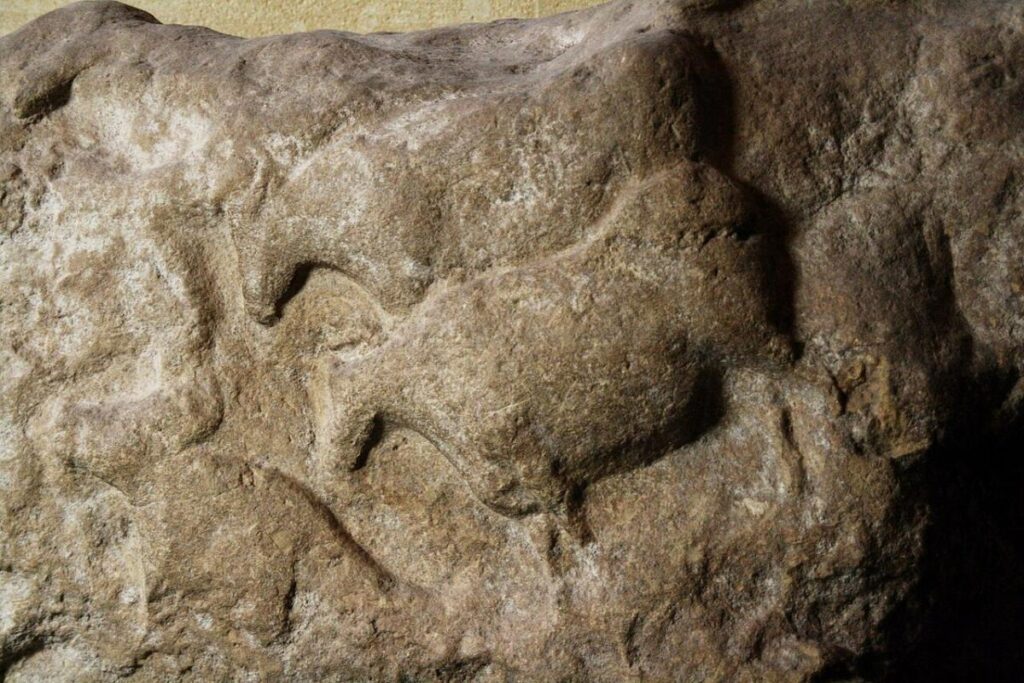
Aurochs carved on the Fourneau-du-Diable (Devil’s Furnace) rock in Bourdeilles, Dordogne, France. Solutrean period, 18,000 BP. Photo: Sémhur

However, the story of the aurochs takes an intriguing turn. While the wild ancestor of modern domestic cattle is no more, its genes endure in some of its descendants. Humans, during the Neolithic Revolution, domesticated two subspecies of aurochs, giving rise to taurine cattle (Bos taurus) in the Near East and zebu cattle (Bos indicus) in India. These domestic cattle, introduced to various regions, interbred with local wild cattle or adapted to different environments, preserving echoes of the aurochs in their features.
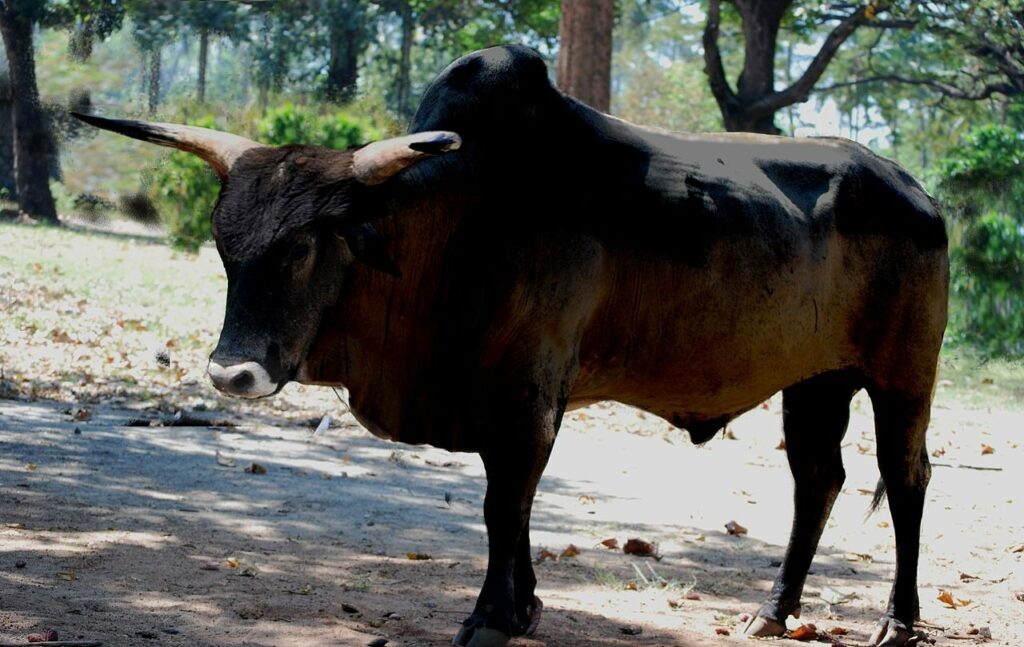
Life reconstruction of an Indian aurochs (Bos (primigenius) namadicus). Image: Jochen Ackermann

Reviving the aurochs becomes conceivable through selective or back breeding, tapping into the ancestral connection it shares with most modern cattle breeds. Initial attempts by Heinz and Lutz Heck resulted in Heck cattle, but these deviated notably from the aurochs in physical traits. Recent endeavors aim for a more faithful recreation, closely resembling the aurochs in morphology, behavior, and genetics.
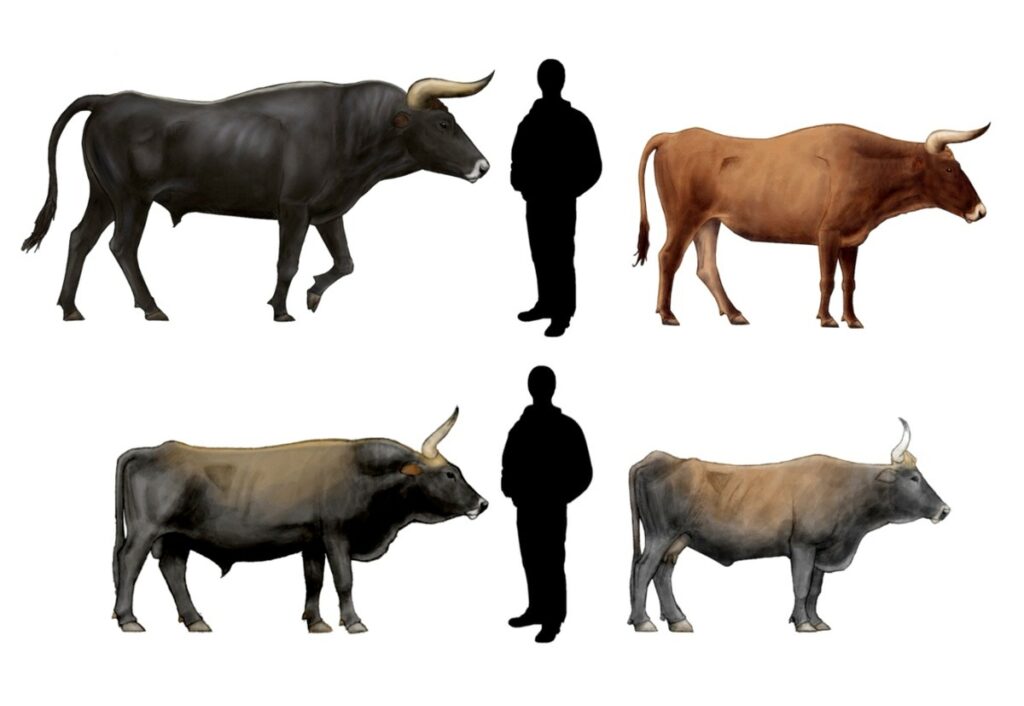
Comparison between the extinct aurochs and average heck cattle. Image: DFoidl

Two pioneering projects, the Tauros Programme in the Netherlands and the Auerrind Project in Germany, lead the resurgence effort. These initiatives, sharing research and breeding stock, draw from historical records, genetic analysis, and artistic representations to guide their breeding goals. Modern breeds carrying substantial portions of aurochs DNA, such as Chillingham white cows, Spanish fighting bulls, and Chianina, contribute to the genetic mosaic.
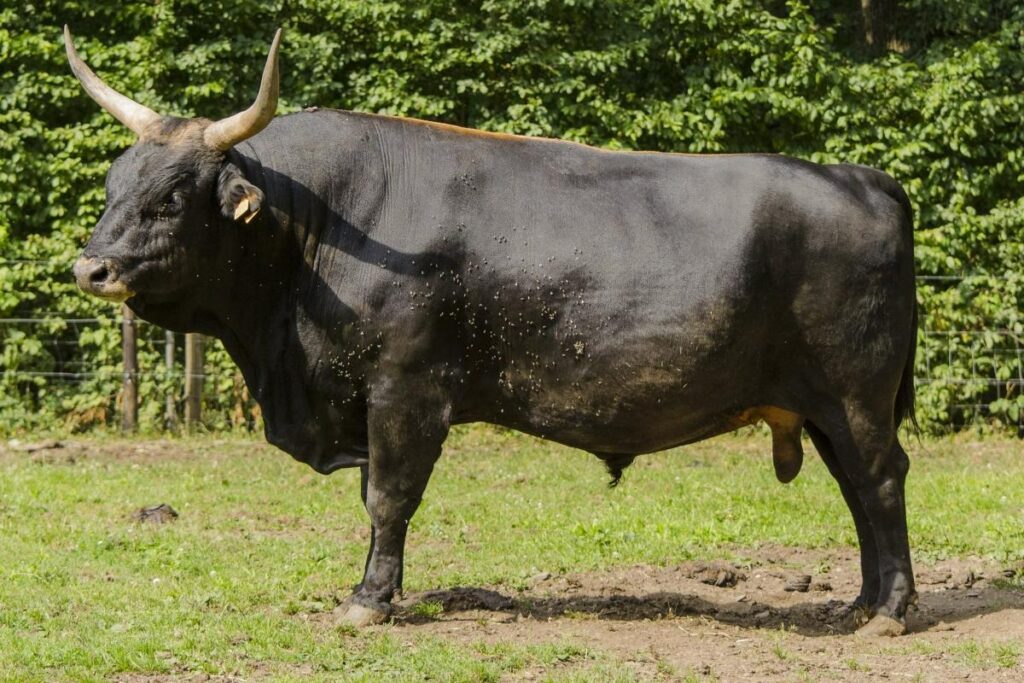
Aurochs de-extinction projects are making great strides towards reviving this ancient animal. Photo: Sébastien FAILLON

Over the past decade, significant progress has been made, resulting in several generations of animals showing increasing similarity to the original aurochs. Some have been released into nature reserves across Europe, contributing to ecosystem restoration and biodiversity conservation. The projects harbor the ambitious goal of producing an animal genetically indistinguishable from the extinct aurochs within this century.
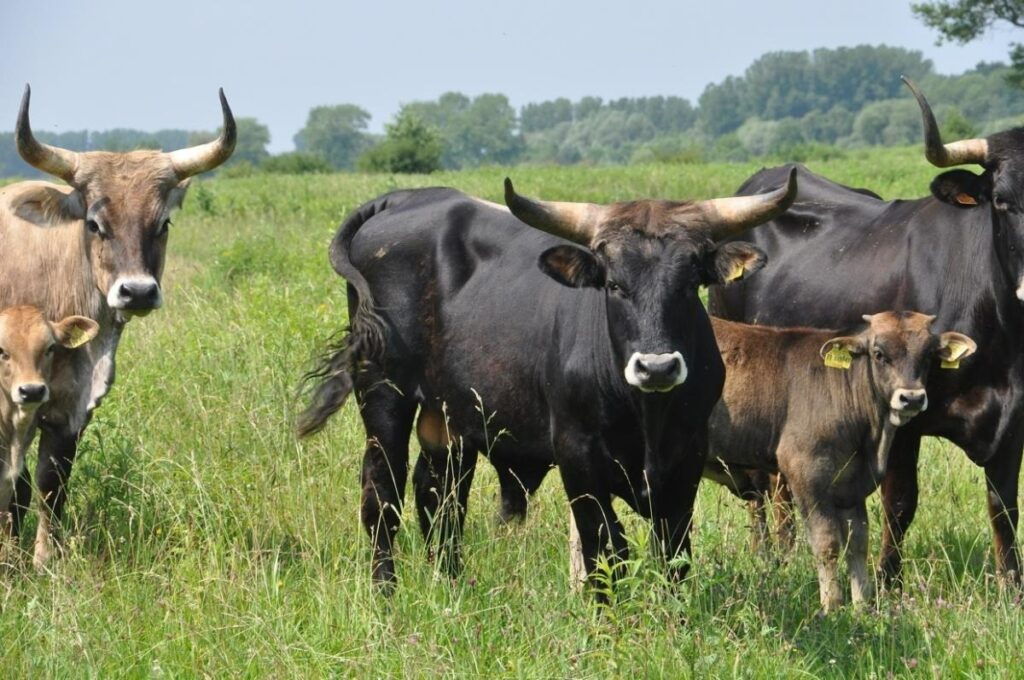
Taurus cattle at Lippeaue nature reserve, Germany. Taurus cattle are a result of cross-breeding Heck cattle (themselves bred in the 1920s and 1930s in an attempt to replicate the aurochs) with aurochs-like cattle, mostly from Southern Europe. Photo: DFoidl

The revival of the aurochs extends beyond a scientific triumph; it embodies a cultural and ethical endeavor to rectify the damage inflicted on nature. It seeks to restore lost beauty and diversity, paying homage to ancient ancestors who revered the aurochs as symbols of strength and fertility. Bringing back the aurochs from extinction is a poignant act of restoring a part of our own history and heritage, a testament to the resilience of life on Earth.

Facebook Comments Box
FacebookTweetPinLinkedIn

Filed Under: Trends Worldwide Tagged With: ancient, aurochs, back, bringing, extinction, from, long-gone, reviving, species, trends, worldwide

Reader Interactions

Leave a Reply Cancel reply

Your email address will not be published. Required fields are marked *

Primary Sidebar

More to See

A dramatic photo captures a rare sight of Hawaii’s 65-foot-tall Lava Dome

By Stephen King

Kitten was dyed with toxic blue paint and left in the rain — rescuers help her make a stunning transformation

By Stephen King

‘Apocalyptic’: ghastly remains of Malibu come into focus

By Stephen King

When Koalas Fail to Find the Right Partner, They Give Up and Go Back to Sleep in Frustration

By Stephen King

Elephant’s Epic Battle: A Mother’s Fierce Defense

By Stephen King

Hunter Killed After Shot Elephant Falls Over And Crushes Him

By Stephen King

The World’s Oldest Forest Is Somewhere You Least Expected

By Stephen King

Footer

Home and Garden: Timeless Beauty and Smart Investment

Your home and garden reflect your personality and values, offering both emotional and financial worth. A well-maintained space enhances your life and withstands market changes.

Hasan Jasim emphasizes the lasting value of homes and gardens, from beautiful gardens that boost curb appeal to interiors that create sanctuary. These spaces are more than assets—they are legacies.

Incorporating health-boosting elements like dates, known for their energy, heart health, and gut benefits, supports your well-being. Whether for diabetes, weight loss, or skin health, dates are a smart, natural choice.

By prioritizing quality materials and timeless design, your home and garden remain valuable investments for years to come.

Recent

  • The University in Japan That Lets Students Graduate in Anything — Even Full Cosplay
  • The Cat Who Calls an Ancient Temple Home: Meet Cece of Dendera
  • Scientists Just Captured The Flash of Light That Sparks When a Sperm Meets an Egg
  • She Gave Up Her Crown So Her Friend Could Feel Like a Princess
  • Deaf and Blind Dog Reunites with Dad After a Year — Her Reaction Will Melt Your Heart
  • What Does It Mean to Encounter a Black Cat? Mysteries, Myths, and Ancient Symbolism
  • Mars Up Close: Stunning New Photos from 200 Million Miles Away

Search

Contact us

Hasan Jasim LLC is proudly based in the United States, delivering professional and reliable services. You can reach us by phone at +1 (914) 575-5957 or visit our office at 1234 Block Blvd., San Francisco, CA 94120. We are always here to assist you with any inquiries and provide the support you need promptly and efficiently.

Copyright © 2025 · Magazine Pro on Genesis Framework · WordPress · Log in