• Skip to main content
  • Skip to primary sidebar
  • Skip to footer
  • Home
  • About Us
  • Copyright Report
  • Submit Content
  • Terms
  • Privacy Policy
  • Legal Disclaimer

Hasan Jasim

Hasan Jasim is a place where you may get entertainment, viral videos, trending material, and breaking news. For a social generation, we are the largest community on the planet.

Kale, Brussels Sprouts, Cauliflower, and Cabbage: Varieties of a Single Magical Plant Species

by Hasan Jasim Editorial Team Leave a Comment

ShareTweet

In recent years, kale has surged in popularity, becoming a darling of health food enthusiasts and even making headlines in national news segments. Predictions are even suggesting that kale salads might soon appear on the menus at TGI Friday’s and McDonald’s.

Cabbage, however, tells a different story. Its per capita consumption peaked in the 1920s when Americans ate an average of 22 pounds per year. Today, that number has dropped to around eight pounds, with most cabbage now appearing as cole slaw or sauerkraut.
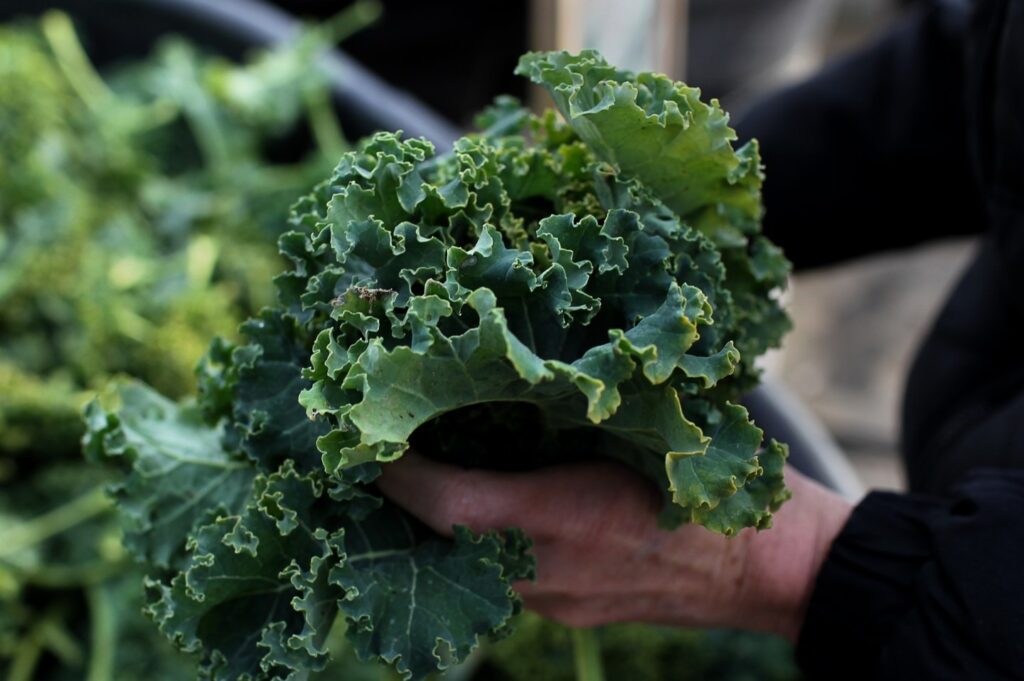
Kale is cabbage is broccoli is cauliflower.  ( Jonathan Wiggs/The Boston Globe via Getty Images)

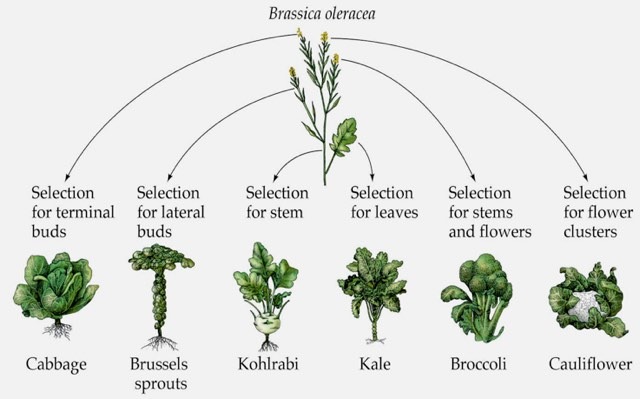
What’s fascinating is that kale, cabbage, broccoli, Brussels sprouts, cauliflower, collard greens, kohlrabi, and several other vegetables all originate from the same plant species: Brassica oleracea.

How did this come to be? Around 2500 years ago, B. oleracea was a wild plant growing along the coasts of Britain, France, and the Mediterranean. This wild form, known as wild mustard, still exists today.
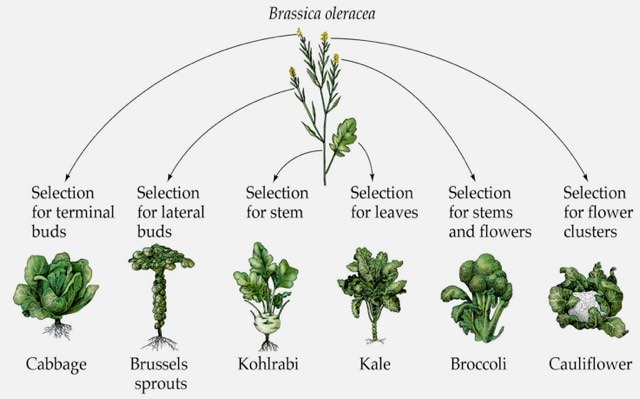
In Ancient Greece and Rome, people began cultivating the plant in their gardens. To increase their yield, they selectively planted seeds from plants that produced more leaves. Over many generations, this artificial selection created a leafy variant of wild mustard resembling modern kale or collard greens.

Later, after the year 1600, farmers focused on developing variants with enlarged leaf buds. This led to the creation of cabbage, with its large heads of tightly rolled leaves.
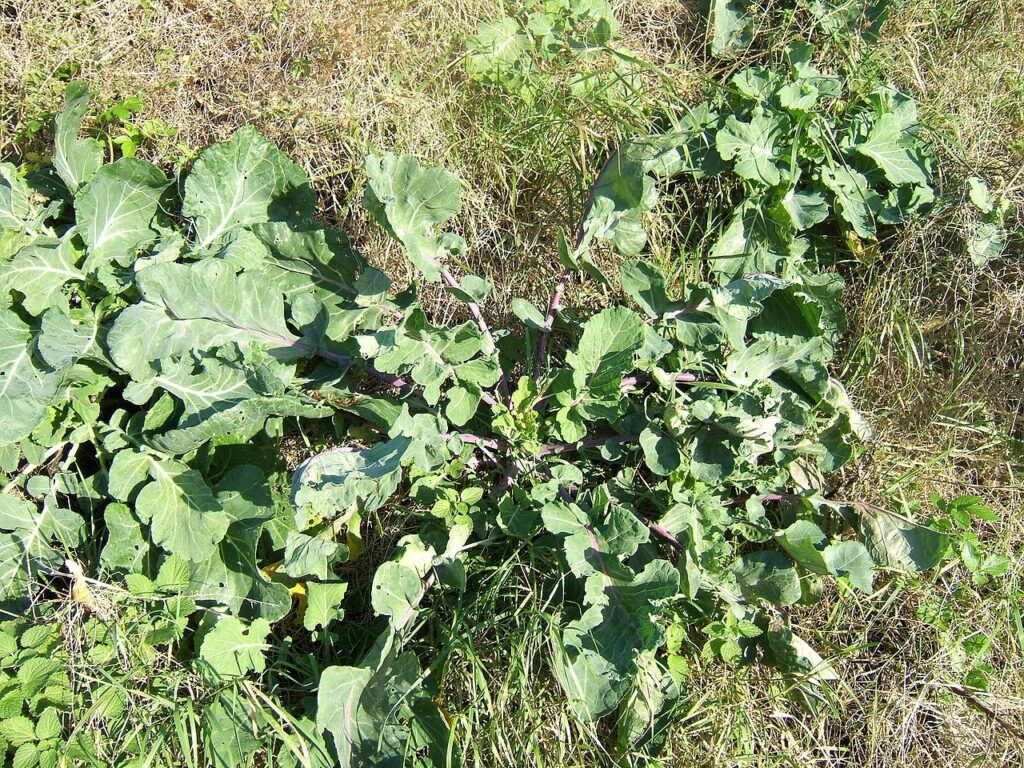
Wild mustard. (MPF/Wikimedia commons)

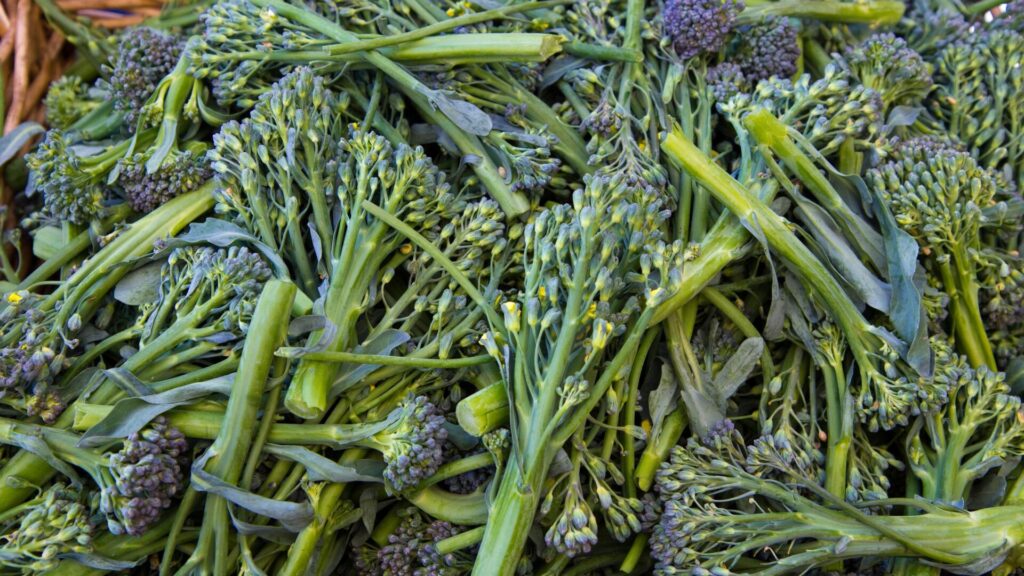
Farmers elsewhere selected for enlarged flowering structures, resulting in broccoli and cauliflower; enlarged stems, creating kohlrabi; and many small heads, producing Brussels sprouts. The trend of selective breeding continues, as evidenced by the 1993 development of broccolini, a hybrid between broccoli and kai-lan (Chinese broccoli).

Despite their common ancestry, these crops are cultivars—varieties bred for specific human needs. While B. oleracea exhibits a remarkable range of appearances and tastes, this diversity stems from its broad geographic origin, providing a rich genetic pool for selective breeding.
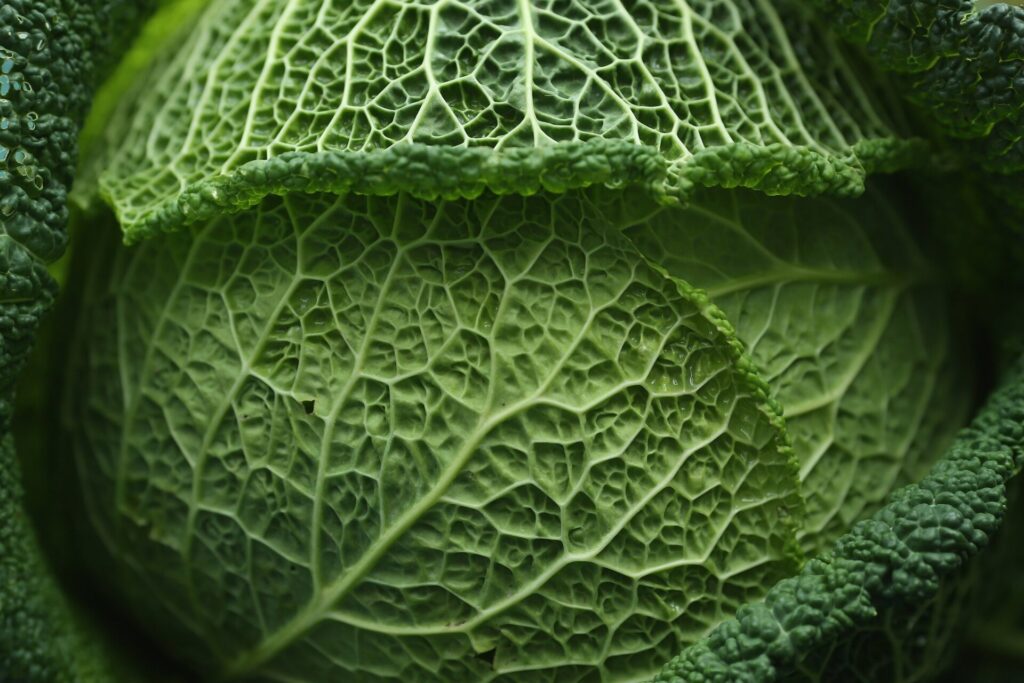
Good ol’ cabbage. (Dan Kitwood/Getty Images)
Broccolini. (eeetthaannn)

This phenomenon highlights the power of human breeding and artificial selection. Changes that would naturally take thousands of years can be achieved in just a few hundred years under human control, underscoring the extraordinary influence of selective cultivation on plant and animal species alike.

Filed Under: Trends Worldwide Tagged With: brussels, cabbage:, cauliflower,, kale,, magical, plant, single, species, sprouts,, trends, varieties, worldwide

Reader Interactions

Leave a Reply Cancel reply

Your email address will not be published. Required fields are marked *

Primary Sidebar

More to See

Thousands of Ancient Horseshoe Crabs Are Dying Off The Japanese Coast

By Hasan Jasim Editorial Team

The Elusive Iraqi Brown Bear: A Symbol of Resilience in a Troubled Land

By Hasan Jasim Editorial Team

New Jersey Homeowner Faces Staggering Fine for Felling Neighbor’s Trees: The $1,000 Per Tree Penalty

By Hasan Jasim Editorial Team

An Environmental Activist Wears A Custom Suit That Displays All Of The Trash He Generated In month

By Hasan Jasim Editorial Team

Capturing the Delicate Dance of Mantises: Macro Photography in Malaysia

By Hasan Jasim Editorial Team

Fish Is So Content In His New Home That He Changes Colors

By Hasan Jasim Editorial Team

Record Ocean Heat In 400 Years Means Great Barrier Reef Should Be Officially “In Danger”

By Hasan Jasim Editorial Team

Footer

ABOUT HASANJASIM.ONLINE

Hasanjasim.online is a digital platform dedicated to publishing well-researched articles about the animal kingdom, nature, and the environment. Our editorial team works to source stories from credible outlets, scientific research, and verified reports, aiming to inform as much as we entertain. From wildlife conservation and animal behavior to natural wonders and environmental science, we cover the topics that help readers better understand and appreciate the natural world. Whether you're a lifelong nature lover or simply curious about the planet we share, Hasanjasim.online aims to be a trustworthy destination for stories worth reading — and worth citing.

Recent

  • Hiding in Plain Sight: The Shieldbug Nymphs Sheltering in a Garden Beside the M25
  • Foxes Rarely Live Past a Few Years, and Their Hunting May Help Keep Ticks in Check
  • Starving Puppy Found Crawling Through a Bronx Apartment Hallway Gets a Second Chance
  • Hit by a Car and Alone on the Roadside, an Injured Dog Found Comfort in a Deputy’s Jacket
  • Beavers were brought to the desert to save a dying river. 6 years later, here are the results.
  • Nor’easter Uncovers What May Be More of a 19th-Century Shipwreck on Nantucket
  • The Viral Trend of Dogs Getting Their Own Maternity Photoshoots

Search