
For 15 years, Agatha believed she had found her forever home.
The small dog was first rescued from the streets and taken to a Texas shelter in 2011. Shortly afterward, she was adopted by a family, leaving behind the uncertainty of kennel life for what seemed like a lifetime of love and security.
But at the age of 22, blind and deaf, Agatha’s world changed once again.
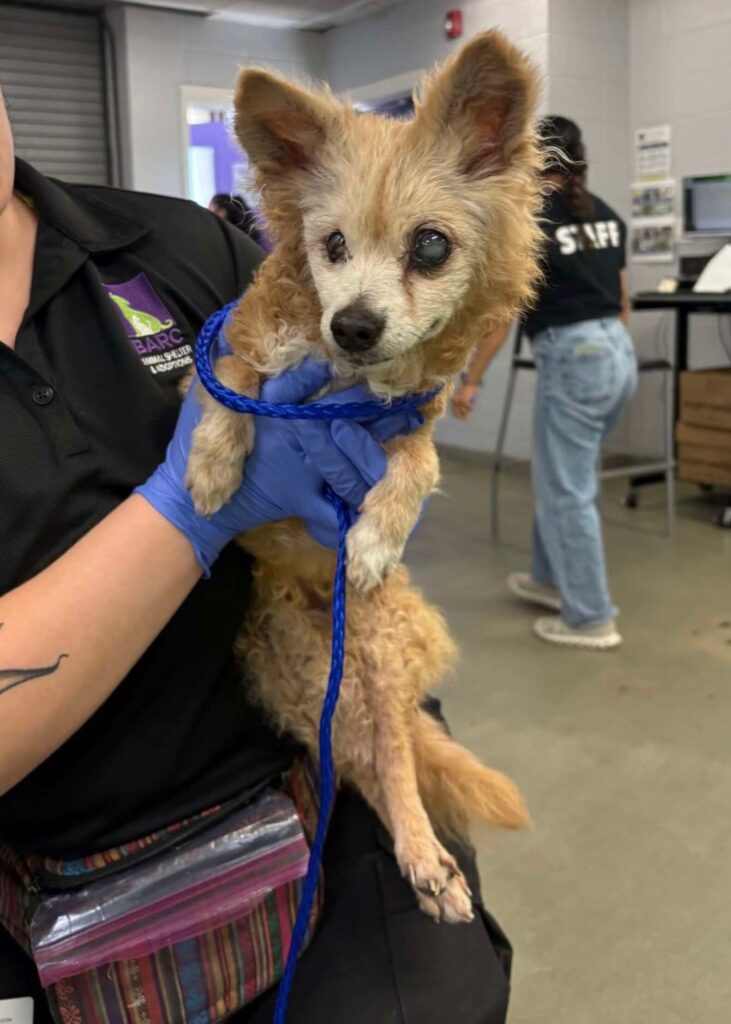
Her family returned her to the shelter, citing only one reason: she was old.
“The moment I saw her, I gasped,” said Maddie Cantrell, founder of The Senior Dog Squad. “She was such a gentle and beautiful dog, and I couldn’t imagine what it must have felt like for her to be back in an unfamiliar place at her age.”

Fortunately, Agatha’s stay at the shelter was brief. With help from Pippy’s Pals Rescue, she was taken into Cantrell’s home, where she now lives alongside other senior rescue dogs.
Despite her age, Agatha still enjoys a healthy appetite, plenty of rest, and the comfort of a loving environment. She has already claimed a favorite spot in the house and is settling into what many hope will be the happiest chapter of her life.

Cantrell has dedicated years to caring for elderly dogs, many of whom are abandoned as they approach the end of their lives. In the past three years alone, her organization has welcomed more than 20 senior dogs in need of care, hospice support, or permanent homes.
For Agatha, the future is finally secure.

“She will stay with me for the rest of her life,” Cantrell said. “She still has quality of life and plenty of love left to give.”
Why Senior Pet Adoption Matters
Stories like Agatha’s highlight a growing challenge facing animal shelters worldwide. Older pets are often overlooked despite being calm, affectionate, and deeply loyal companions. Animal welfare organizations encourage fostering, adopting, and supporting senior pets, reminding people that even in their final years, animals deserve comfort, dignity, and a loving home.
Leave a Reply