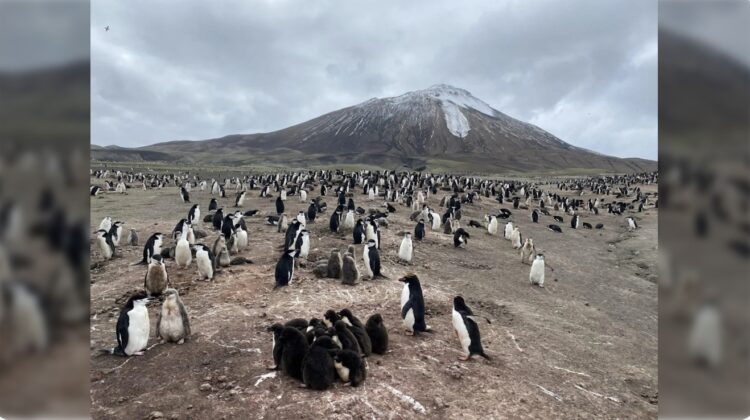
For years, Zavodovski Island looked like the one place where chinstrap penguins were holding their ground. A new study says that picture has collapsed. Between 2011 and 2025, the number of occupied chinstrap nests on the remote volcanic island fell by 63%, according to research published on October 7 in the journal Current Biology, as reported by CNN.
From World’s Biggest Colony To Second Place
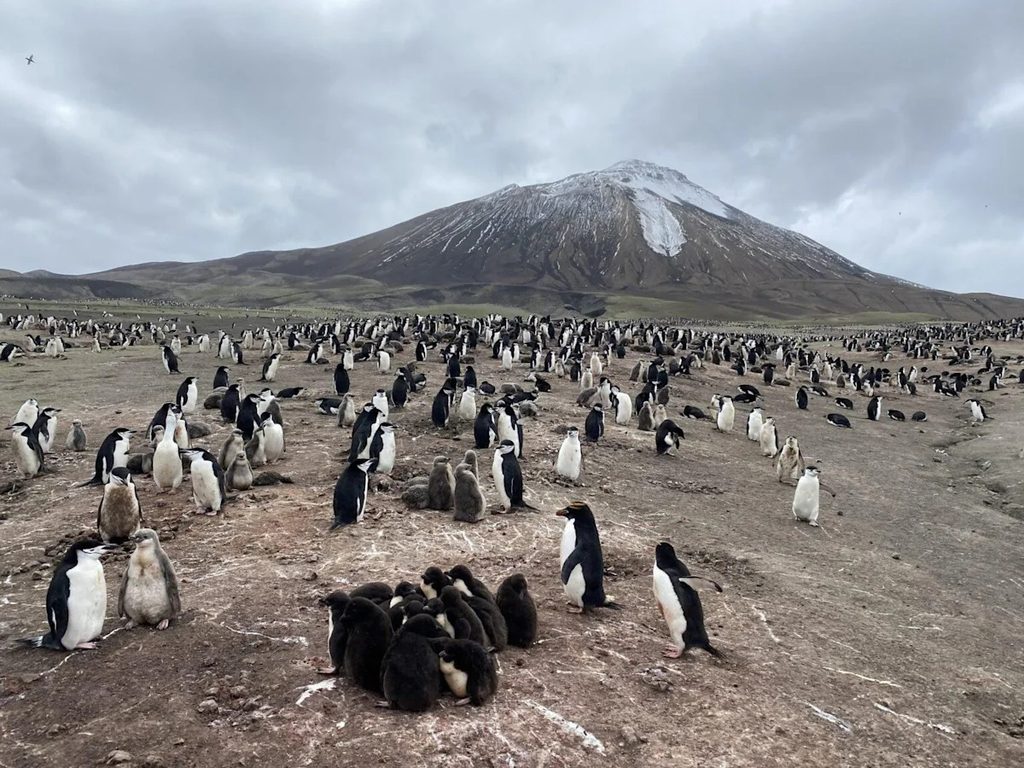
Zavodovski is the northernmost of the South Sandwich Islands, in the Southern Ocean. When it was surveyed in 2011, it held the largest penguin colony on Earth: roughly 600,000 chinstrap pairs and about 90,000 macaroni pairs, according to the figures cited in The Guardian’s coverage of the study.
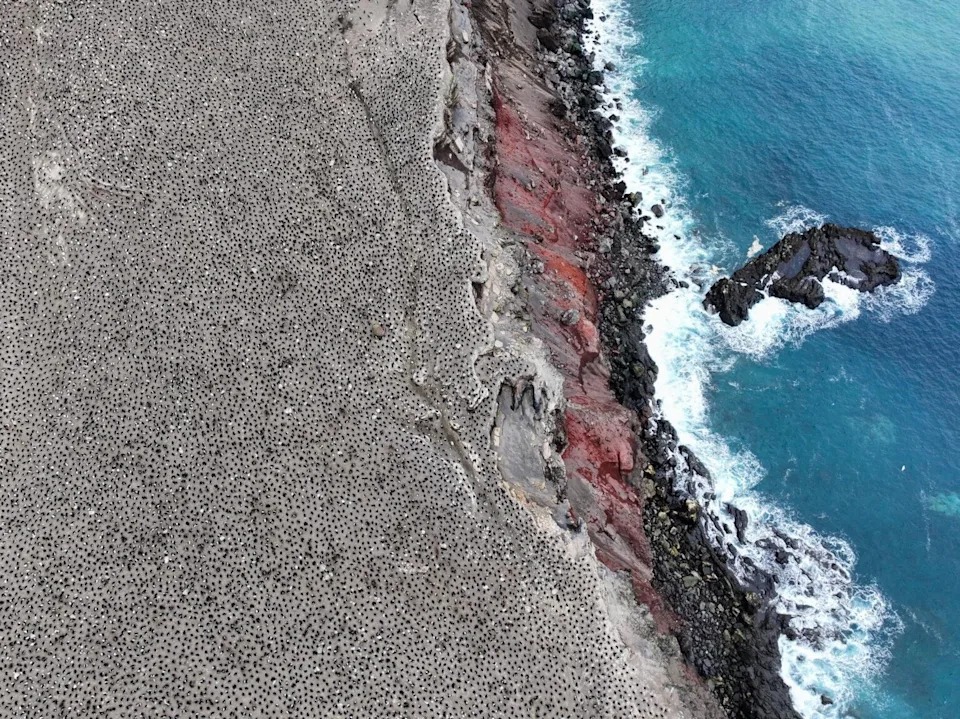
Researchers from the British Antarctic Survey (BAS) combined drone and satellite imagery with ground observations to measure the change. Their count shows the island has lost its title to the Adélie penguin colony at Cape Adare in the Ross Sea, which numbered more than one million as of 2018, per CBS News.
The absolute numbers vary by outlet because some report breeding pairs and others individual birds. The Guardian described a loss equivalent to half a million breeding individuals, while AFP reported a drop of more than 680,000 penguins. The 63% decline is the figure that holds steady across coverage.
“An Enormous Population Crash”
Lead researcher Norman Ratcliffe, a penguin ecologist at BAS, called it “an enormous population crash,” Common Dreams reported. He added that Zavodovski now has the fastest-declining chinstrap population in the world, with annual losses of around 7%, two to three times the rate seen elsewhere, per CNN.
What Scientists Think Is Driving It
The team points to climate disruption. The Guardian reported that winter temperatures around the Antarctic Peninsula have risen about 5 degrees Celsius above preindustrial levels, one of the fastest increases anywhere on the planet. It also noted that the Argentinian Esperanza base recorded a winter high of 15.4°C on June 6, roughly 20°C above normal for the time of year.
The link to penguins runs through food. Chinstraps are specialists that feed mostly on Antarctic krill and prefer the cooler waters northwest of the island. As those waters warm, the krill appear to have shifted south toward the Weddell Sea, the Guardian reported. Macaroni penguins, which eat a broader diet, increased by about 30%, but not enough to offset the chinstrap losses.
“Chinstraps are giving quite a clear signal of the impacts of warming,” Ratcliffe said, as quoted by CNN.
What The Researchers Ruled Out
The team tested several other explanations. There was no sign that the two penguin species were competing for food or nesting space, and the nearest people live thousands of miles away. Krill fisheries in the region were also ruled out, according to Euronews.
The island’s volcano, Mount Curry, erupted in 2016, which raised the “Penguin Pompeii” idea of a sudden die-off. The data didn’t support it. The decline began before the eruption and continued at a steady rate afterward, CBS reported, and the penguins avoided the area where ash and lava landed.
Why It Matters Beyond Penguins
Ratcliffe warned that losing a species like the chinstrap raises the risk of wider ecosystem collapse. The Guardian quoted him comparing ecosystems to a “giant Jenga set,” where each removed piece makes the whole structure less stable. The study also suggests chinstraps may need to be reassessed for a higher threat category, the Guardian reported, given how quickly the decline is moving.
Frequently Asked Questions
Where is Zavodovski Island? It is the northernmost island in the South Sandwich Islands, an uninhabited volcanic chain in the Southern Ocean.
How much has the chinstrap population fallen? Occupied chinstrap nests dropped by 63% between 2011 and 2025, according to the study.
What is the world’s largest penguin colony now? The Adélie penguin colony at Cape Adare in the Ross Sea, with more than one million birds as of 2018.
Why are chinstrap penguins declining? Scientists believe warming is the most likely cause, since it appears to be pushing their main food, Antarctic krill, away from the waters where chinstraps forage.
Did the volcanic eruption cause the decline? The researchers say no. The decline started before the 2016 eruption and continued at a constant rate afterward.
Are macaroni penguins affected too? They have fared better, rising about 30% on the island, but not enough to make up for the chinstrap losses.
Sources: The Guardian, CNN (via ABC17 News), CBS News/AFP, Common Dreams, Euronews, National Geographic, and the British Antarctic Survey study published in Current Biology.
Leave a Reply