After we’ve overcome all of the obstacles to traveling to Mars, we’ll have to find out how to make life there viable – and producing and nurturing food will be a big part of that.
If you’ve watched Matt Damon’s hardships in the film The Martian, you’ll know that the red planet’s terrain could theoretically grow food, a possibility supported by NASA research.
However, it would be far from simple. The grit and dust are not only empty of organic matter and beneficial bacteria, but they are also high in salts and minerals, which cause most plants fight for existence.
A recent study provides a solution: alfalfa plants. According to researchers, this forage crop might survive in harsh volcanic soil like that found on Mars and could subsequently be used as fertilizer to grow food like turnips, radishes, and lettuce.
“The low nutrient content of Martian soil and excessive salinity of water render them unsuitable for direct use in establishing food crops on Mars,” the researchers wrote in their report.
“It is thus critical to discover ways for increasing nutritional content in Mars soil and desalinating salty water for long-term missions.”
Previous study has shown that plants will struggle to flourish on the Martian surface unless extra nutrients are provided to the soil (or regolith) they are planted in. This is where alfalfa comes in.
It’s difficult to get an exact match for the regolith on Mars, so the researchers made the best imitation they could before testing different seeds in it.
They discovered that alfalfa may grow as well as it does in natural soil without any additional fertilizer.
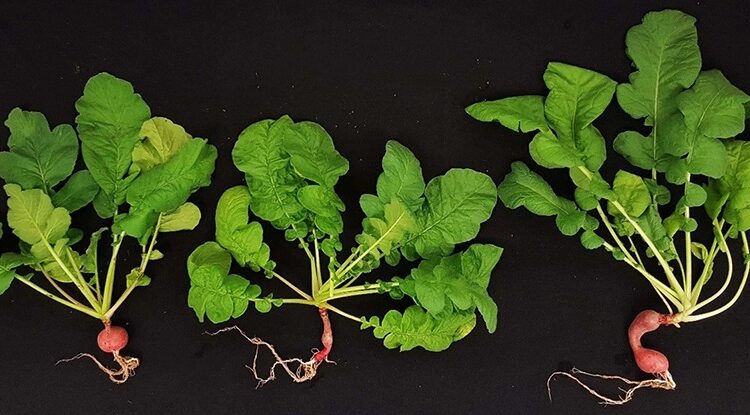
After that, simulated Martian regolith was tried with alfalfa as a fertilizer. Turnips, radishes, and lettuces – three plants that require little upkeep, grow quickly, and don’t require much water – were all successfully cultivated.
However, there was a catch: fresh water was also required. Based on more research, the team believes that the briny water accessible on Mars might be treated with a type of marine bacteria and then filtered through volcanic rock to provide the fresh water required for agricultural growth.
“For the first time,” the researchers write, “we disclose an integrated use of a biofertilizer and microbe for successful treatment of basaltic regolith soil and brackish water simulants, respectively, for adequate resources that sustain plant growth.”
There are many unanswered concerns, not the least of which is how well we can simulate Martian soil here on Earth. It’s possible that when we finally get to Mars, the surface regolith won’t be exactly what we expected.
The simulated soil also lacked some of the poisonous perchlorate salts that would have to be rinsed out of Martian soil by desalinated water.
However, the experiments described in this article provide scientists and astronauts with some more intriguing avenues to pursue. The methodologies suggested by the researchers are simple to implement and efficient in operation.
Growing alfalfa for fertilizer on Mars would almost likely be less expensive than hauling massive refrigerators of food across millions of kilometers to the red planet – and it’s not the only source of nutrients we might be able to generate away from Earth.
“This work shows that it is conceivable to treat in situ soil and water resources for farming on Mars in the long run to sustain human missions and permanent communities,” the researchers conclude.
Leave a Reply